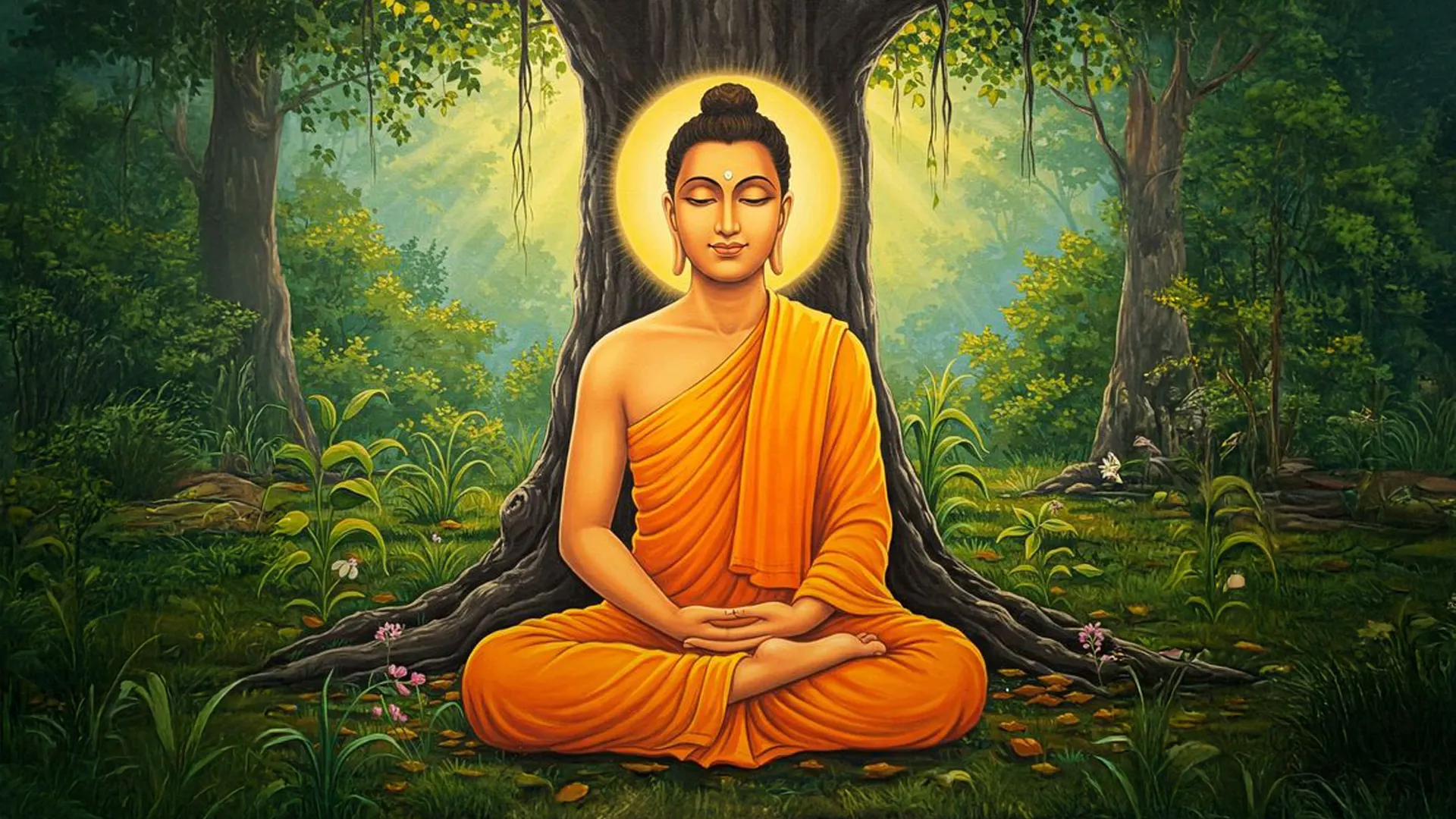
Crossing the Stream: The Journey Beyond Samsara
Buddha's profound observation, "Him I call a Brahmana who has crossed this stream, this difficult and dangerous Samsara, who has gone through and reached the other shore, who is thoughtful, calm, free from doubts, attached to nothing, and content," invites us to reflect on the essence of liberation. In this statement, the Buddha delineates the qualities of a true Brahmana—not merely one of birth or caste, but of spiritual attainment. The stakes are high; to cross the turbulent waters of Samsara is to transcend the cycle of suffering and illusion, reaching a state of profound peace and contentment.
This quote encapsulates a journey that is both individual and universal, one that speaks to the heart of human experience. The stream represents the tumultuous nature of existence, filled with desires, attachments, and the inevitable suffering that arises from them. To reach the other shore is to attain liberation, a state of being that is characterized by tranquility, clarity, and an absence of doubt. This journey is not just about escaping suffering; it is about cultivating a deep-seated contentment that arises from within, independent of external circumstances.
The image / the metaphor
The imagery of crossing a stream evokes a vivid sense of transition and transformation. The stream symbolizes the challenges and distractions of life—Samsara, with its currents of desire and fear, can be both difficult and dangerous. The verbs chosen—"crossed," "gone through," and "reached"—imply an active engagement with one's spiritual journey. It is not a passive escape but a deliberate act of moving through the trials of existence to arrive at a place of safety and serenity.
Diving deeper into this metaphor, we can see that the stream is not merely an obstacle but also a teacher. Each wave and current represents the trials that shape our understanding and growth. The act of crossing requires courage, mindfulness, and a commitment to self-awareness. In this sense, the journey across the stream becomes a metaphor for the inner work necessary to confront our fears, attachments, and doubts, ultimately leading us to the other shore of enlightenment.
In the speaker's tradition
Within the context of Buddhism, this quote resonates with the core teachings of Dharma, which emphasizes the path to liberation through understanding and practice. The concept of Samsara is central to Buddhist thought, representing the cycle of birth, death, and rebirth that is driven by ignorance and attachment. To be a Brahmana, in this sense, is to embody the qualities of wisdom (prajna) and detachment, moving beyond the illusions that bind us to suffering. This aligns with the notion of kenosis, or self-emptying, where one relinquishes the ego to embrace a more profound state of being.
This teaching echoes the sentiments found in the Dhammapada, where the Buddha articulates the importance of mindfulness and self-mastery. For instance, in verse 23, he states, "One who conquers oneself is greater than one who conquers a thousand men in battle." This highlights the internal struggle that must be faced to cross the stream of Samsara, emphasizing that true victory lies in the mastery of one's own mind and heart.
Living the teaching
Consider a modern scenario where this teaching can be applied: a person facing the pressures of work and personal life, feeling overwhelmed by expectations and responsibilities. In this context, the stream represents the chaos of daily life, filled with deadlines, social obligations, and the relentless pursuit of success. By embodying the qualities of the Brahmana—thoughtfulness, calmness, and detachment—this individual can navigate the turbulent waters with grace, finding moments of contentment amidst the chaos. The practice of mindfulness can serve as a lifeline, allowing them to remain anchored in the present moment, rather than being swept away by the currents of anxiety and stress.
In relationships, this teaching can manifest in the way we engage with others. Imagine a conflict arising between friends, where misunderstandings and attachments to being right create tension. By applying the principles of the quote, one can approach the situation with a calm and thoughtful demeanor, free from the need to cling to one's perspective. This detachment fosters open communication and understanding, allowing both parties to cross the stream of discord and reach a place of reconciliation and contentment.
A reflection
As we contemplate the wisdom of the Buddha's words, we are invited to ask ourselves: What streams are we currently navigating in our lives, and how can we cultivate the qualities of the Brahmana to cross them? This question encourages a deep introspection into our attachments, doubts, and the sources of our discontent. By reflecting on our own journeys, we can begin to identify the practices and mindsets that will help us reach the other shore, embracing the peace and contentment that lies beyond the tumult of Samsara.




Join the BrightStar Community
Stay connected with daily inspiration, event announcements, and community wisdom