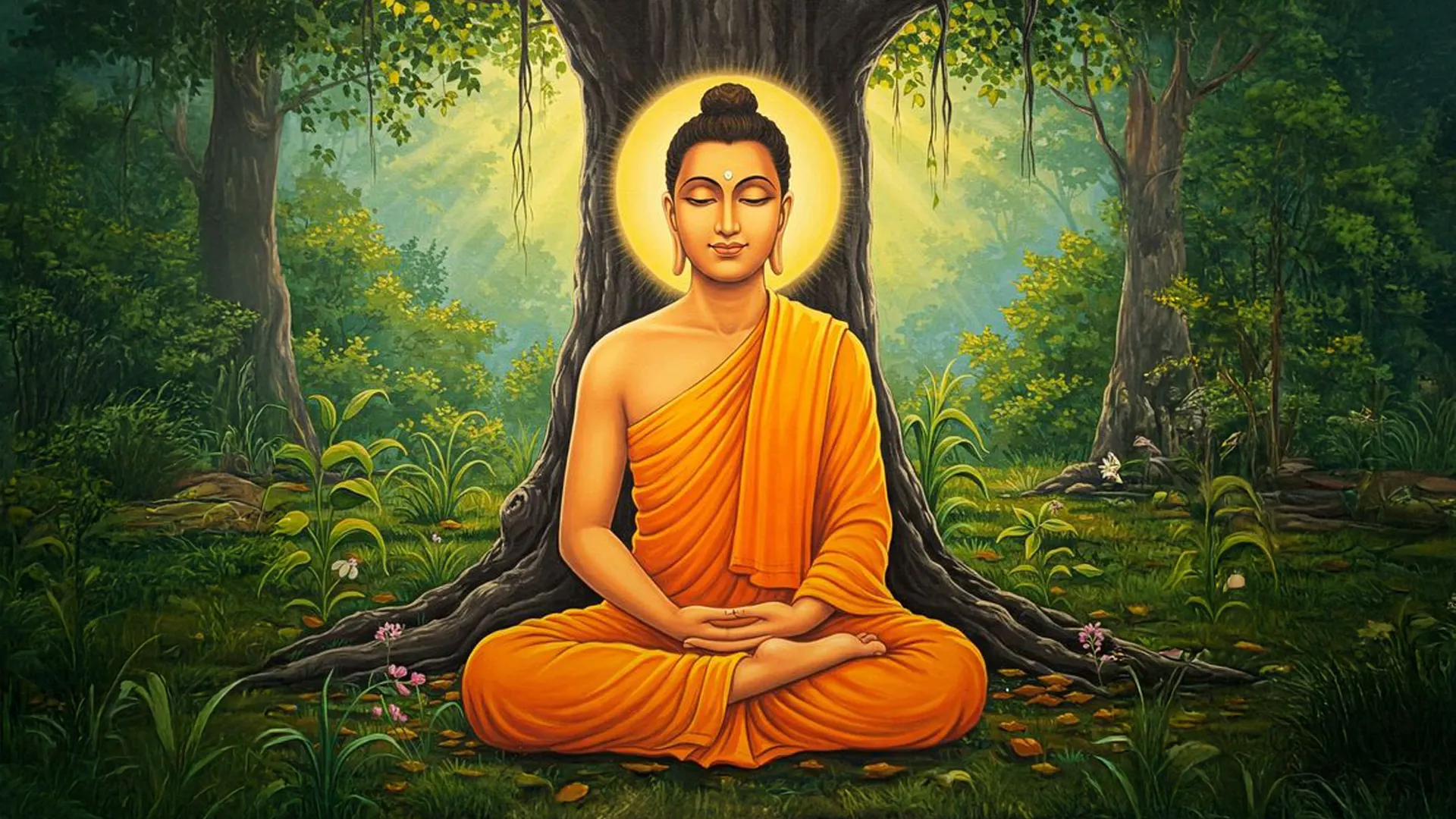
The Liberation of Letting Go
In the profound words of the Buddha, "Him I call a Brahmana whose desire to live is extinguished, who has cast off every burden." This statement invites us to reflect on the essence of liberation, suggesting that true freedom arises not from the accumulation of desires or possessions, but from their relinquishment. The stakes are high; in a world that often equates success with attachment and desire, this teaching challenges us to reconsider what it means to live a fulfilled life.
At its core, this quote speaks to the heart of Buddhist philosophy, where the path to enlightenment is paved with the understanding of suffering and the release from it. The Buddha's insights encourage us to examine our own burdens—those emotional, psychological, and material weights that tether us to a cycle of craving and dissatisfaction. By extinguishing our desires and letting go of our burdens, we open ourselves to a deeper experience of existence, one that is marked by peace and clarity.
The image / the metaphor
The imagery in the Buddha's quote is striking, evoking a sense of profound stillness and release. The phrase "desire to live is extinguished" suggests a radical transformation, where the relentless pursuit of life’s pleasures and pains is replaced by a serene acceptance of the present moment. The verb "cast off" conjures a vivid picture of shedding heavy weights, as if one were removing a cumbersome cloak that has long been worn. This act of letting go is not merely physical; it is an emotional and spiritual unburdening that allows for a lighter, more liberated existence.
Diving deeper into the metaphor, we can see that the "Brahmana" represents not just a social class but an ideal of spiritual attainment. In this context, the Brahmana is one who has transcended the ordinary concerns of life, embodying wisdom and compassion. The extinguishing of desire is akin to the Buddhist concept of "nirvana," a state of liberation from the cycles of birth and rebirth, where one is free from the attachments that cause suffering. This metaphor invites us to envision a life where we are not defined by our desires but rather by our capacity to embrace the fullness of existence without clinging.
In the speaker's tradition
Within the rich tapestry of Buddhist thought, the Buddha's assertion resonates deeply with the concepts of "dharma" and "sunyata." Dharma, or the natural law that governs the universe, encourages us to align our lives with the truth of impermanence and interconnectedness. Sunyata, often translated as "emptiness," teaches that clinging to desires and identities leads to suffering. The liberation described in the quote is a direct manifestation of understanding these principles, where one realizes that true peace comes from recognizing the transient nature of all things.
In the Dhammapada, the text from which this quote is drawn, the Buddha emphasizes the importance of mindfulness and self-awareness as tools for achieving liberation. For instance, he states, "All that we are is the result of what we have thought." This highlights the transformative power of our mental states and the necessity of cultivating a mind free from the burdens of desire. The teachings encourage practitioners to engage in meditation and reflection, fostering a deeper understanding of the self and the nature of reality.
Living the teaching
Consider a modern scenario where this teaching can be applied: a person grappling with the pressures of career advancement. In a society that often glorifies ambition and success, one might feel compelled to chase after promotions, accolades, and material wealth. However, by reflecting on the Buddha's words, this individual can begin to recognize the burdens of desire that lead to stress and dissatisfaction. By consciously choosing to let go of the relentless pursuit of external validation, they may find a sense of peace and fulfillment in their current role, allowing them to engage more authentically with their work and colleagues.
Another application of this teaching can be found in personal relationships. Imagine someone who clings to the idea of perfection in their partner, constantly striving for an ideal that is ultimately unattainable. This attachment can lead to disappointment and conflict. By embracing the Buddha's wisdom, they can learn to release their expectations and appreciate their partner for who they are, fostering a deeper connection rooted in acceptance and love. In this way, the act of casting off burdens transforms not only the individual but also the dynamics of their relationships.
A reflection
As we contemplate the Buddha's profound insight, we are invited to ask ourselves: What burdens am I carrying that prevent me from experiencing true liberation? This question encourages a deep introspection, prompting us to identify the desires, attachments, and expectations that weigh us down. In the stillness of reflection, we may discover pathways to release, leading us toward a more authentic and peaceful existence.




Join the BrightStar Community
Stay connected with daily inspiration, event announcements, and community wisdom