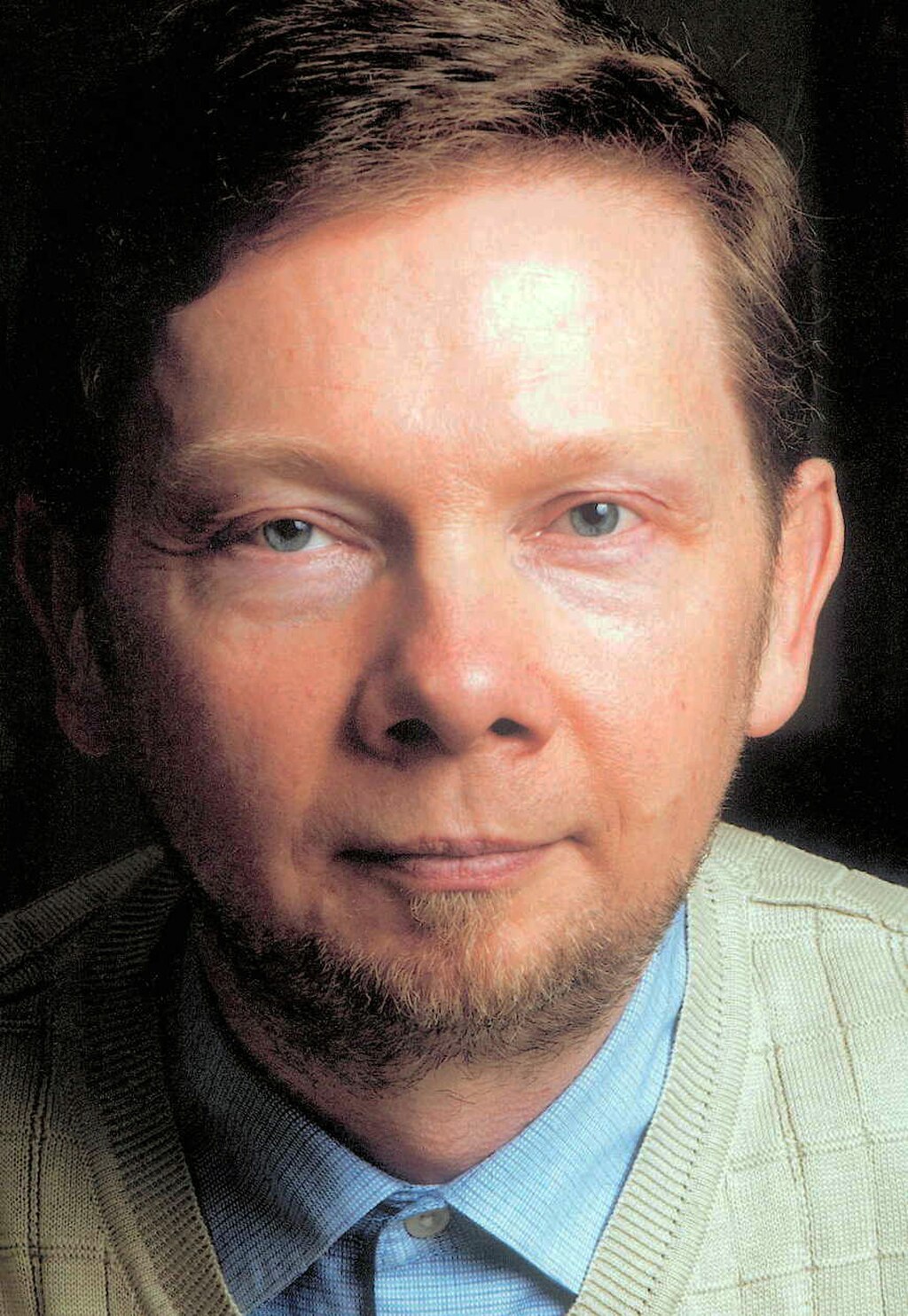
Awakening to the Witness Within
In the profound words of Eckhart Tolle, we find a liberating realization: the incessant chatter of our minds, the 'voice in my head,' does not define our true essence. This insight invites us to explore the nature of our identity, suggesting that we are not merely the thoughts that arise but rather the awareness that observes them. Understanding this distinction is crucial for anyone seeking a deeper sense of self and liberation from the burdens of incessant mental noise.
As we delve into this quote, we are beckoned to confront the very fabric of our existence. The question of "Who am I?" emerges not as a mere philosophical inquiry but as a profound invitation to engage with our consciousness. This exploration is not only a personal journey but also a universal one, resonating with the struggles of many who seek clarity amidst the chaos of thought. Tolle's assertion serves as a reminder that our true nature lies in the stillness of awareness, a sanctuary from the tumult of our minds.
The image / the metaphor
At the heart of Tolle's quote lies a vivid metaphorical landscape. The 'voice in my head' evokes the image of a relentless stream of thoughts, akin to a turbulent river that obscures the clarity of the deeper waters beneath. The verbs chosen—'realize,' 'see,' and 'is'—suggest an awakening, a moment of clarity where one steps back from the cacophony of internal dialogue to observe it from a distance. This act of witnessing is not passive; it is an active engagement with one's own consciousness, a recognition that we are not the thoughts but the observer of those thoughts.
Diving deeper into this metaphor, we can envision the witness as a serene lake, reflecting the chaos of the sky above while remaining undisturbed. This imagery invites us to consider the nature of awareness itself: it is vast, expansive, and unchanging, even as the thoughts and emotions that arise may be fleeting and tumultuous. The liberation Tolle speaks of is akin to discovering this lake within ourselves, a place of refuge where we can observe the storms of our minds without being swept away by them.
In the speaker's tradition
Eckhart Tolle's teachings are deeply rooted in the non-dual tradition, which emphasizes the interconnectedness of all existence and the illusion of separateness. Concepts such as *sunyata* (emptiness) and *fana* (annihilation of the self) resonate with Tolle's assertion that our true identity transcends the ego and its incessant narratives. In this context, the realization that the 'voice in my head' is not who we are aligns with the understanding that our essence is beyond the transient thoughts and emotions that arise within us.
In Tolle's seminal work, *The Power of Now*, he draws upon various spiritual traditions, weaving together insights from Buddhism, Taoism, and mystical Christianity. The notion of witnessing, or *sakshi*, is prevalent in these traditions, where the observer is seen as the ultimate reality, separate from the fluctuations of the mind. This perspective invites us to cultivate a state of awareness that allows us to experience life more fully, unencumbered by the limitations of our conditioned thoughts.
Living the teaching
Consider a modern scenario where this teaching can be applied: imagine a busy day at work, filled with deadlines and the pressure to perform. The voice in your head may be filled with self-doubt, anxiety, and the relentless pursuit of perfection. In this moment, Tolle's insight encourages you to step back and recognize that these thoughts do not define your worth or capabilities. By cultivating awareness, you can observe these thoughts without judgment, allowing them to pass like clouds in the sky, while you remain anchored in the stillness of your true self.
In the realm of relationships, this teaching can also transform interactions. Picture a disagreement with a loved one, where emotions run high and the voice in your head may be quick to assign blame or defend your position. By embracing the role of the witness, you can observe your reactions and the thoughts that arise, creating space for empathy and understanding. This practice not only fosters deeper connections but also allows for a more compassionate response, rooted in awareness rather than reactivity.
A reflection
As we contemplate Tolle's profound statement, we are invited to engage with a contemplative question: What would it mean for you to identify more with the witness of your thoughts rather than the thoughts themselves? This inquiry encourages us to explore the layers of our identity and the freedom that arises when we recognize our true essence as the observer. In this exploration, we may find a pathway to greater peace, clarity, and connection with ourselves and the world around us.




Join the BrightStar Community
Stay connected with daily inspiration, event announcements, and community wisdom