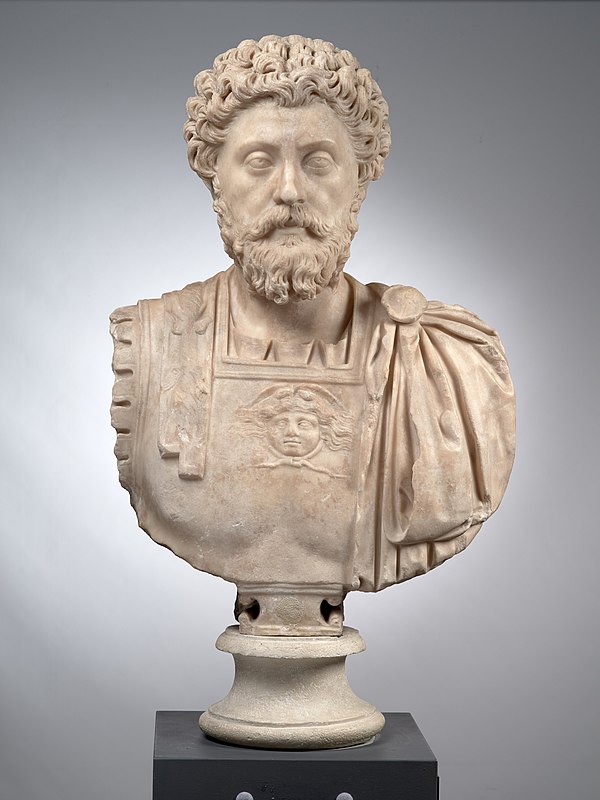
The Power of Perception: A Stoic Reflection
Marcus Aurelius, the revered Stoic philosopher and Roman Emperor, offers a profound insight when he states, "External things are not the problem. It's your assessment of them." This quote invites us to consider the nature of our experiences and the role our perceptions play in shaping our reality. In a world often fraught with chaos and uncertainty, understanding that our assessments—our interpretations and judgments—hold the key to our emotional responses can be transformative. This teaching is not merely philosophical; it is a practical guide to navigating the complexities of life.
At its core, Aurelius's assertion challenges us to shift our focus from the external circumstances that we often blame for our distress to the internal landscape of our thoughts and beliefs. By recognizing that our reactions stem from our interpretations, we gain agency over our emotional well-being. This perspective is particularly relevant in today's fast-paced society, where external pressures can easily overwhelm us. The Stoic practice of examining our thoughts and reframing our assessments can lead to a more serene and resilient existence.
The image / the metaphor
In this quote, Aurelius employs a straightforward yet powerful metaphor that distinguishes between the external world and our internal responses. The imagery suggests a separation between what happens to us and how we choose to interpret those events. The verbs "are" and "assessment" imply a static reality contrasted with a dynamic process of evaluation. This distinction evokes a felt sense of empowerment; while we cannot control external events, we possess the ability to shape our perceptions and reactions.
Diving deeper into this metaphor, we can see that Aurelius is inviting us to become active participants in our emotional lives. The notion of "assessment" implies a conscious choice, a deliberation that can lead to wisdom or folly. This understanding encourages us to cultivate mindfulness, to pause before reacting, and to consider the narratives we construct around our experiences. By doing so, we can transform potential suffering into opportunities for growth and understanding.
In the speaker's tradition
Marcus Aurelius's teachings are deeply rooted in Stoicism, a philosophy that emphasizes the importance of virtue, reason, and self-control. Central to Stoic thought is the idea of distinguishing between what is within our control and what is not. This aligns with concepts found in other spiritual traditions, such as the Buddhist notion of "sunyata," or emptiness, which teaches that our perceptions are often clouded by attachments and aversions. Both traditions encourage a detachment from external circumstances to find inner peace.
In his work "Meditations," Aurelius frequently reflects on the nature of the mind and its power over our experiences. For instance, he writes about the importance of rational thought in overcoming negative emotions. This echoes the teachings of Epictetus, another Stoic philosopher, who famously stated, "It's not what happens to you, but how you react to it that matters." Together, these texts form a cohesive understanding of the mind's role in shaping our reality, urging us to cultivate a discerning and rational approach to life's challenges.
Living the teaching
Consider a modern scenario where this teaching can be applied: imagine receiving critical feedback at work. The immediate reaction might be one of defensiveness or self-doubt, leading to a spiral of negative thoughts. However, by recalling Aurelius's wisdom, one can pause and assess the situation differently. Instead of viewing the feedback as a personal attack, it can be reframed as an opportunity for growth and improvement. This shift in perception not only alleviates emotional distress but also fosters a more constructive response.
Another application of this teaching can be found in personal relationships. When conflicts arise, it is easy to focus on the actions of others and assign blame. Yet, Aurelius's insight encourages us to examine our assessments of those actions. Are we interpreting a partner's words through the lens of past hurts or insecurities? By recognizing that our emotional reactions are often rooted in our perceptions, we can approach conflicts with greater empathy and understanding, ultimately leading to healthier and more fulfilling relationships.
A reflection
As we contemplate Marcus Aurelius's profound statement, we are invited to explore the nature of our own assessments. How often do we find ourselves attributing our emotional turmoil to external circumstances, rather than examining the narratives we create around them? In this moment of reflection, consider this question: What is one situation in your life where a shift in perception could lead to greater peace and clarity?




Join the BrightStar Community
Stay connected with daily inspiration, event announcements, and community wisdom