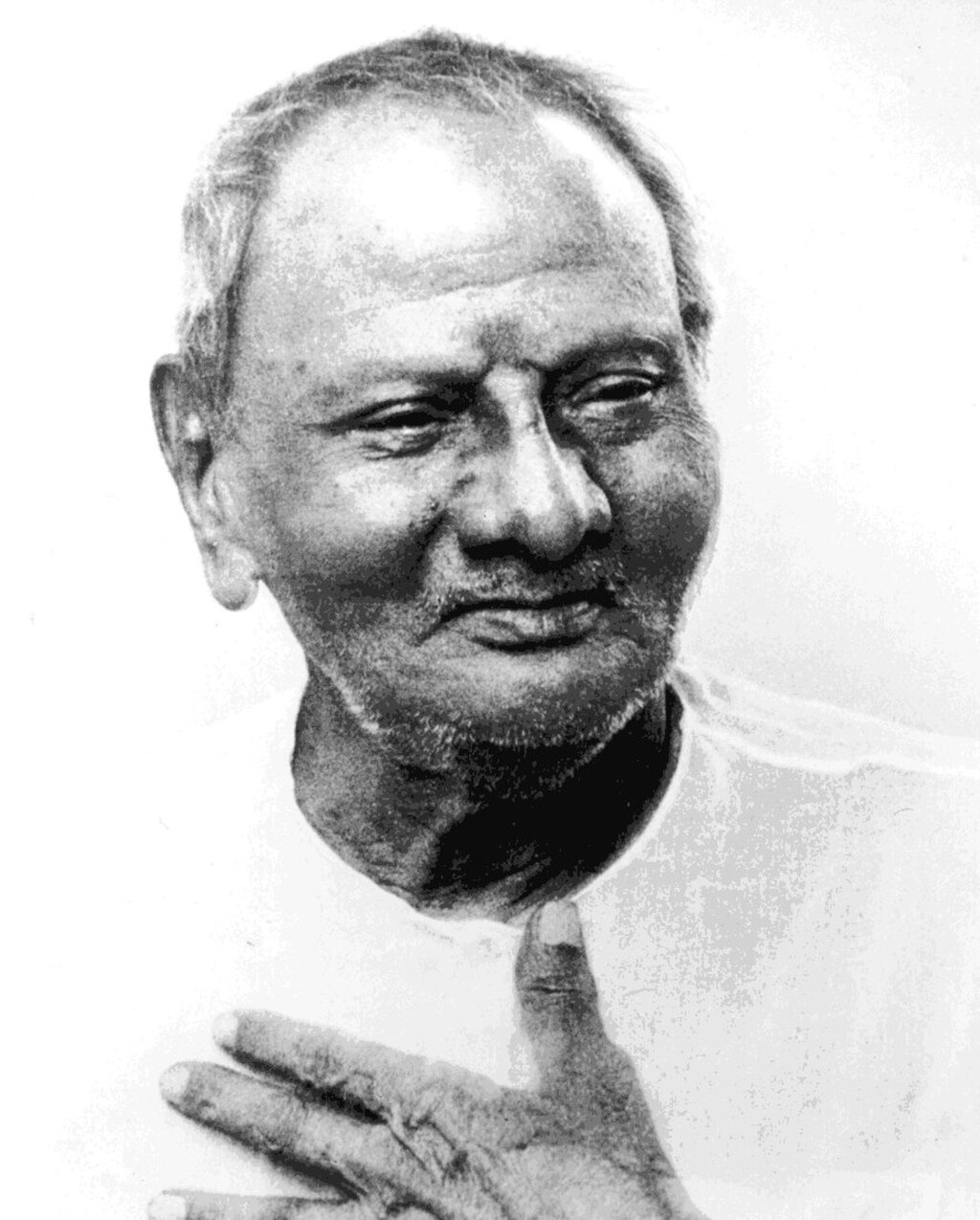
Embracing the Unfolding of Reality
Nisargadatta Maharaj's profound assertion, "What is must be," invites us into a contemplative space where acceptance of reality becomes a pathway to deeper understanding. This statement encapsulates the essence of non-duality, urging us to recognize that the present moment, with all its complexities and challenges, is not only inevitable but also necessary. In a world often marked by resistance and longing for what could be, this teaching beckons us to embrace the unfolding of life as it is, fostering a sense of peace and clarity.
To delve deeper into this quote is to confront the very nature of existence and our relationship with it. The phrase suggests a surrender to the flow of life, an acknowledgment that what exists in the present moment is not merely a circumstance to be endured but a vital aspect of our spiritual journey. By accepting "what is," we open ourselves to the possibility of transformation and insight, allowing the layers of our conditioned responses to fall away and revealing the essence of our true nature.
The image / the metaphor
The imagery within "What is must be" evokes a sense of inevitability, as if life itself is a river flowing toward the ocean of existence. The verb "must" carries a weight of necessity, suggesting that the unfolding of reality is not arbitrary but rather an essential aspect of the cosmic order. This phrase invites us to visualize our experiences as part of a larger tapestry, where each thread, no matter how frayed or vibrant, contributes to the overall design of life.
Diving deeper into the metaphor, we can see that acceptance does not imply passivity; rather, it is an active engagement with reality. To accept "what is" is to recognize the inherent value in every moment, even those that challenge us. This perspective transforms our relationship with suffering and joy alike, allowing us to see them as integral parts of our spiritual evolution. In this light, acceptance becomes a powerful act of love toward ourselves and the world around us.
In the speaker's tradition
Nisargadatta Maharaj's teachings are rooted in the non-dual tradition, where concepts such as *advaita* (non-duality) and *sunyata* (emptiness) play pivotal roles. In this context, "What is must be" resonates with the understanding that all phenomena arise from a single source, and thus, every experience is a manifestation of that ultimate reality. This acceptance of the present moment aligns with the practice of *kenosis*, or self-emptying, where one relinquishes the ego's grasp to embrace the fullness of existence.
Living the teaching
Consider a modern scenario where this teaching can be applied: a person facing a significant life change, such as a job loss. Initially, the individual may experience feelings of fear and uncertainty, resisting the reality of their situation. However, by embracing the notion that "what is must be," they can begin to shift their perspective, recognizing this moment as an opportunity for growth and exploration. This acceptance can lead to new possibilities, allowing them to pursue paths they may not have considered otherwise.
A reflection
As we contemplate the depth of Nisargadatta Maharaj's words, we are invited to reflect on our own lives: What aspects of our reality are we resisting? In what ways can we cultivate acceptance of "what is" in order to foster growth and understanding? This inquiry encourages us to explore the transformative power of acceptance, guiding us toward a more profound relationship with ourselves and the world around us.




Join the BrightStar Community
Stay connected with daily inspiration, event announcements, and community wisdom