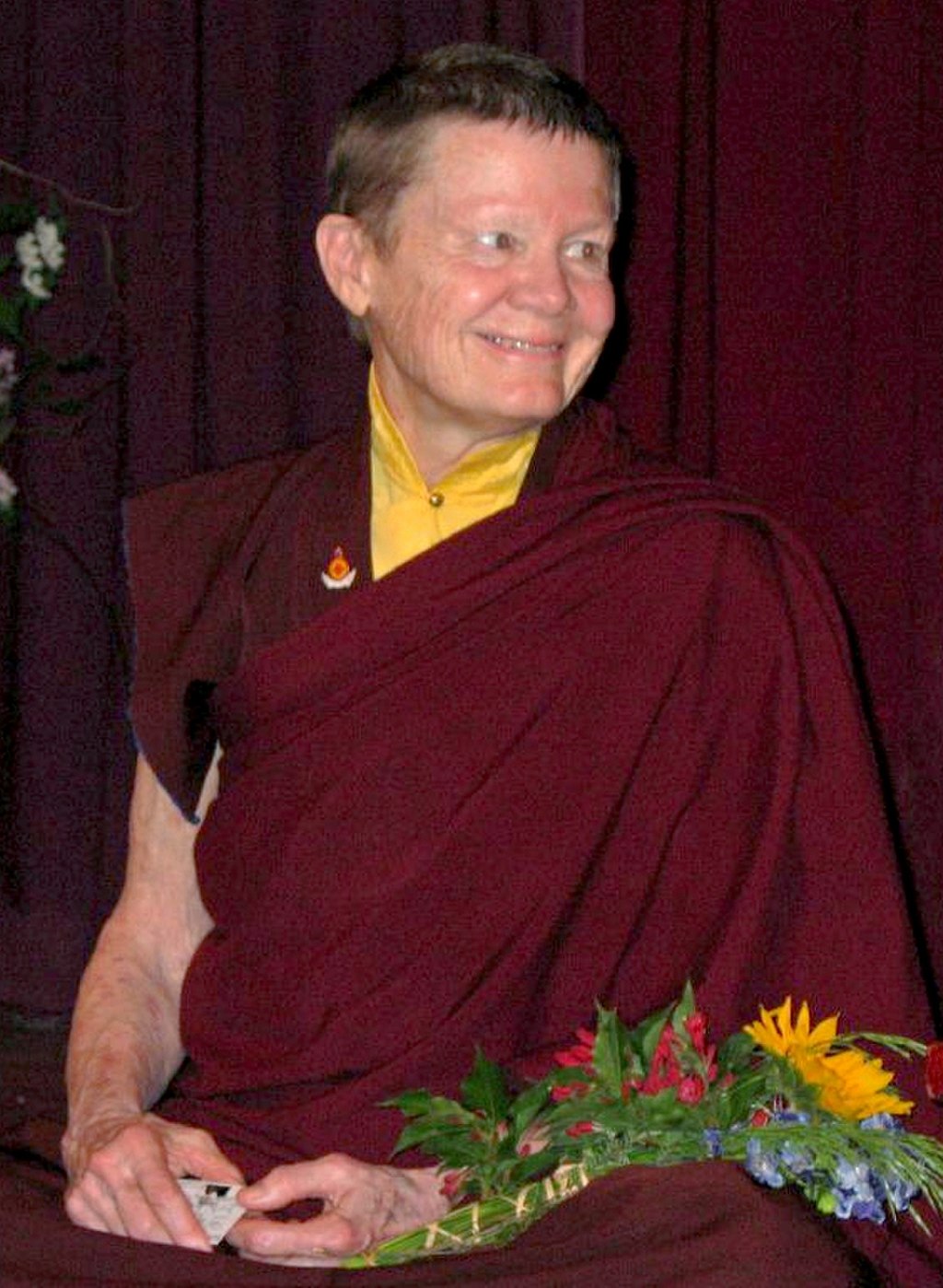
The Awakening Within: Understanding Pema Chödrön's Insight on Enlightenment
Pema Chödrön's assertion that "Enlightenment is not a place we reach. It is a way of being awake" invites us to reconsider our understanding of spiritual attainment. Rather than viewing enlightenment as a distant goal or a final destination, she encourages us to recognize it as a state of consciousness that can be cultivated in our everyday lives. This perspective shifts the focus from striving for an elusive ideal to embracing the present moment, where true awakening resides. The stakes are high; in a world often characterized by distraction and disconnection, this teaching offers a path to deeper awareness and connection with ourselves and others.
Chödrön's words resonate deeply within the context of contemporary spiritual practice, where the quest for enlightenment can sometimes feel like a race against time. By framing enlightenment as a way of being, she emphasizes the importance of presence and mindfulness in our daily experiences. This understanding invites us to engage with our thoughts, emotions, and surroundings with a sense of curiosity and openness, rather than judgment or expectation. In doing so, we can begin to cultivate a more profound sense of peace and clarity, allowing us to navigate the complexities of life with grace and compassion.
The image / the metaphor
The imagery in Chödrön's quote evokes a sense of movement away from the conventional notion of enlightenment as a distant summit to be conquered. The verbs "reach" and "being awake" suggest a dynamic interplay between effort and presence. To "reach" implies a linear journey, often fraught with obstacles and challenges, while "being awake" conveys a state of awareness that is accessible in every moment. This subtle shift in language invites us to reconsider our relationship with spiritual practice, moving from a mindset of achievement to one of embodiment.
Diving deeper into the metaphor, we can see that awakening is not a singular event but rather a continuous unfolding. It is akin to the gradual opening of a flower, where each petal represents a layer of understanding and experience. This process requires patience and gentleness, as we learn to embrace the unfolding of our lives without the pressure of reaching a predetermined endpoint. In this way, Chödrön's teaching encourages us to cultivate a sense of curiosity and wonder about our own existence, recognizing that each moment holds the potential for awakening.
In the speaker's tradition
Pema Chödrön's insights are deeply rooted in the Buddhist tradition, which emphasizes the importance of mindfulness and awareness in the pursuit of enlightenment. Concepts such as dharma, the teachings of the Buddha, and sunyata, or emptiness, play a crucial role in understanding her perspective. In Buddhism, enlightenment is often described as the realization of one's true nature, which is inherently interconnected with all beings. This understanding aligns with Chödrön's assertion that awakening is not a solitary achievement but a shared experience that fosters compassion and connection.
In her work, Chödrön often references the teachings found in texts such as the Heart Sutra, which speaks to the nature of emptiness and the interdependence of all phenomena. The Heart Sutra teaches that form is emptiness and emptiness is form, suggesting that our perceptions of reality are shaped by our awareness. This aligns beautifully with Chödrön's notion of enlightenment as a way of being awake, as it invites us to see beyond the surface of our experiences and recognize the deeper truths that lie within. By engaging with these teachings, we can cultivate a more profound understanding of ourselves and our place in the world.
Living the teaching
Consider a modern scenario where this teaching can be applied: a busy professional navigating the demands of work and personal life. In the midst of deadlines and responsibilities, it is easy to become consumed by the idea of success and achievement, often at the expense of our well-being. By embracing Chödrön's perspective, this individual can shift their focus from reaching a specific goal to being fully present in each moment. This might involve taking mindful breaks throughout the day, practicing deep breathing, or simply pausing to appreciate the beauty of their surroundings. In doing so, they can cultivate a sense of peace and clarity that transcends the pressures of their external circumstances.
Another application of this teaching can be found in relationships, particularly during challenging moments. When conflicts arise, it is common to become reactive, driven by emotions and the desire to be "right." However, by embodying the principle of being awake, individuals can approach these situations with a sense of curiosity and openness. This might involve actively listening to the other person's perspective, acknowledging their feelings, and responding with compassion rather than defensiveness. In this way, Chödrön's teaching serves as a reminder that enlightenment is not a distant ideal but a practical approach to navigating the complexities of human connection.
A reflection
As we contemplate Pema Chödrön's profound insight, we are invited to reflect on our own relationship with awakening. How often do we find ourselves caught in the pursuit of external achievements, overlooking the richness of the present moment? In what ways can we cultivate a deeper sense of awareness in our daily lives, allowing us to experience the fullness of our existence? By engaging with these questions, we can begin to embody the essence of Chödrön's teaching, discovering that enlightenment is not a destination but a way of being that is available to us at every turn.




Join the BrightStar Community
Stay connected with daily inspiration, event announcements, and community wisdom