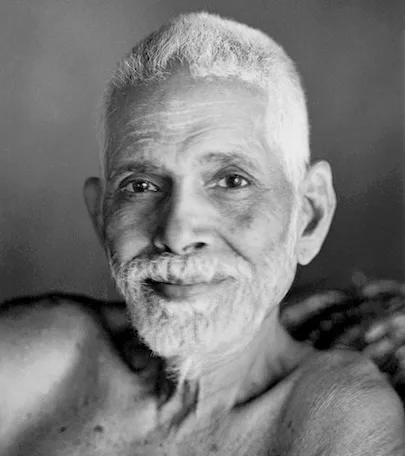
The Easiest Path: A Journey Within
Ramana Maharshi's assertion that "by following any path you can certainly reach the goal. But that path which is the easiest, the most direct, is the path of Self-enquiry" invites us to reflect on the nature of our spiritual journeys. In a world filled with myriad practices and philosophies, the simplicity of self-inquiry stands out as a beacon of clarity. This teaching emphasizes that while many routes may lead to enlightenment, the most profound and accessible one lies within ourselves, urging us to explore our own consciousness.
This notion of self-inquiry as the most direct path is not merely a suggestion; it is a profound invitation to engage deeply with our own essence. Maharshi's wisdom encourages us to turn our gaze inward, to question the very nature of our existence, and to seek the truth of who we are beyond the layers of identity and conditioning. In doing so, we may find that the journey inward is not only the simplest but also the most transformative, leading us to a deeper understanding of our place in the universe.
The image / the metaphor
The imagery in Maharshi's quote evokes a sense of exploration and navigation. The term "path" suggests a journey, a movement through space and time, while "goal" implies a destination that we aspire to reach. The verbs "following" and "reach" convey a sense of action and purpose, inviting us to consider the various ways we engage with our spiritual pursuits. The contrast between the "easiest" and "most direct" path versus other, perhaps more convoluted routes, highlights the potential for simplicity in our quest for truth.
In the speaker's tradition
Ramana Maharshi's teachings are deeply rooted in the Hindu tradition, particularly in the Advaita Vedanta philosophy, which emphasizes non-duality and the oneness of the self with the ultimate reality, Brahman. Concepts such as dharma, the moral order of the universe, and prajna, or wisdom, are integral to understanding the context of self-inquiry. Maharshi's approach aligns with the idea of kenosis, the self-emptying of the ego, as one seeks to dissolve the false sense of self and realize their true nature.
In the context of sacred texts, the Upanishads serve as a foundational reference for Maharshi's teachings. These ancient texts explore the nature of reality and the self, often posing questions that lead to self-inquiry. For instance, the famous phrase "Tat Tvam Asi," meaning "That Thou Art," encapsulates the essence of self-realization, urging seekers to recognize their inherent unity with the divine. Maharshi's emphasis on self-inquiry resonates with this timeless wisdom, inviting us to engage in a direct exploration of our own consciousness.
Living the teaching
Consider a modern scenario where an individual feels overwhelmed by the demands of life—work, relationships, and societal expectations. In such moments, the path of self-inquiry offers a refuge. Instead of seeking external validation or solutions, one can pause and turn inward, asking fundamental questions: "Who am I?" and "What do I truly desire?" This practice of self-inquiry can lead to clarity and a renewed sense of purpose, allowing the individual to navigate life's challenges with greater ease and authenticity.
In the realm of relationships, the teaching of self-inquiry can be transformative as well. When conflicts arise, instead of reacting impulsively or placing blame, one can engage in introspection. By asking oneself, "What is my role in this situation?" or "What fears or insecurities are being triggered?" the individual can cultivate a deeper understanding of their emotional landscape. This reflective practice not only fosters personal growth but also enhances communication and connection with others, creating a more harmonious relational dynamic.
A reflection
As we contemplate Maharshi's profound insight, we are invited to consider our own paths. What does it mean for us to engage in self-inquiry, and how might this practice illuminate our understanding of ourselves and our place in the world? In moments of uncertainty or confusion, how can we turn inward to seek clarity and truth? Reflecting on these questions can deepen our spiritual journey and guide us toward the simplicity and directness that Maharshi so eloquently advocates.




Join the BrightStar Community
Stay connected with daily inspiration, event announcements, and community wisdom