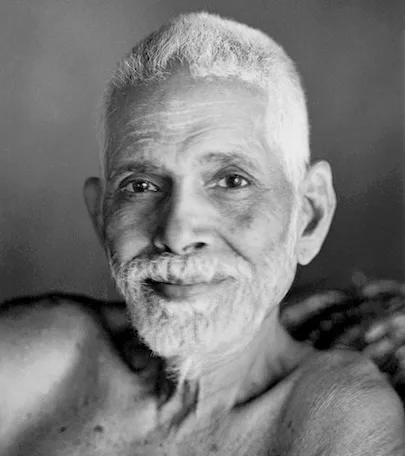
Finding the Divine Within: The Wisdom of Ramana Maharshi
Ramana Maharshi's assertion that "Do not delude yourself by imagining such source to be some God outside you. One's source is within oneself" invites us to reconsider our understanding of divinity and selfhood. This profound statement challenges the common notion of seeking spiritual fulfillment in external deities or external practices, urging us instead to turn inward. The stakes are high; in a world often preoccupied with external validation and material pursuits, recognizing the divine essence within ourselves can lead to a transformative journey of self-discovery and spiritual awakening.
By emphasizing the internal source of divinity, Maharshi encourages a deeper exploration of the self, suggesting that the answers we seek are not found in distant heavens but rather in the quiet recesses of our own being. This perspective is not merely philosophical; it is a call to action, inviting us to engage in a contemplative practice that fosters self-awareness and inner peace. In a society that often equates worth with external achievements, this teaching serves as a reminder that true fulfillment arises from recognizing and nurturing the divine spark that resides within each of us.
The image / the metaphor
The imagery in Maharshi's quote is strikingly intimate, suggesting that the divine is not an abstract concept or a distant entity but an integral part of our very essence. The use of the phrase "do not delude yourself" implies a gentle yet firm admonition against the distractions of external worship and the allure of idolization. The verbs chosen—"delude" and "imagine"—convey a sense of self-deception that can arise when we project our spiritual aspirations onto something outside ourselves. This imagery evokes a journey inward, where the seeker must confront illusions and recognize the profound truth that lies within.
Diving deeper into the metaphor, we can see that Maharshi's words serve as a mirror reflecting our own inner landscape. The notion of "source" suggests a wellspring of wisdom, love, and authenticity that is inherently ours to access. This metaphor of the inner source invites us to cultivate a relationship with ourselves that is nurturing and compassionate, allowing us to tap into our innate divinity. In this light, the journey of self-exploration becomes not just a personal endeavor but a sacred pilgrimage toward recognizing our interconnectedness with the universe.
In the speaker's tradition
Ramana Maharshi's teachings are deeply rooted in the Advaita Vedanta tradition, which emphasizes non-duality and the oneness of the self with the ultimate reality, Brahman. Concepts such as dharma, the moral order of the universe, and prajna, or wisdom, are integral to understanding the path he illuminates. Maharshi's insistence on looking within aligns with the practice of self-inquiry, or "Atma Vichara," which encourages seekers to question the nature of their own existence and to realize that the divine essence is not separate from the self. This approach resonates with the idea of kenosis, or self-emptying, where one sheds the layers of ego to reveal the true self that is inherently divine.
In the context of Hindu scriptures, the Upanishads echo this sentiment, particularly in the famous phrase "Tat Tvam Asi," meaning "That Thou Art." This declaration underscores the unity of the individual soul (Atman) with the universal spirit (Brahman), reinforcing Maharshi's message that the divine is not an external force but an intrinsic part of our being. Such texts invite us to explore the depths of our consciousness and to recognize that the journey toward understanding the divine is, in essence, a journey toward understanding ourselves.
Living the teaching
Consider a modern scenario where an individual grapples with feelings of inadequacy and seeks validation through external achievements, whether in career, relationships, or social status. In this context, Maharshi's teaching serves as a powerful reminder that true worth is not contingent upon external accolades but is rooted in the recognition of one's intrinsic value. By turning inward and engaging in practices such as meditation or self-reflection, this individual can begin to uncover the profound truth of their own divinity, leading to a more authentic and fulfilling life.
Another application of this teaching can be found in interpersonal relationships, particularly during moments of conflict or misunderstanding. When faced with challenges, one might instinctively look to blame external circumstances or others for their distress. However, Maharshi's wisdom encourages us to pause and reflect on our own inner state. By recognizing that our reactions and feelings stem from our own perceptions and beliefs, we can cultivate a sense of compassion and understanding, both for ourselves and for others. This shift in perspective not only fosters healthier relationships but also deepens our connection to the divine essence that resides within each person.
A reflection
As we contemplate Maharshi's profound assertion, we are invited to engage in a reflective practice that asks us to consider: In what ways do I seek validation or connection outside of myself, and how might I turn inward to discover the divine source that resides within? This question encourages a journey of self-exploration, inviting us to peel back the layers of societal conditioning and to embrace the truth of our own being. By fostering this inner connection, we can cultivate a deeper sense of peace and fulfillment, ultimately recognizing that the divine is not a distant entity but a vibrant presence within us all.




Join the BrightStar Community
Stay connected with daily inspiration, event announcements, and community wisdom