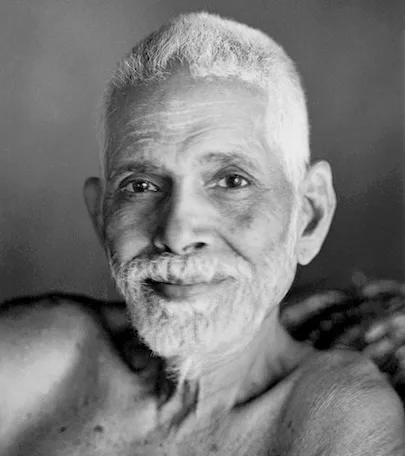
Rooted in Presence: The Wisdom of Being Here
In the profound words of Ramana Maharshi, "I am not going anywhere. Where would I go? I am here." This statement encapsulates a deep understanding of presence and the nature of self. It invites us to explore the essence of existence, urging us to recognize that our true home is not a distant place but rather the very moment we inhabit. In a world often characterized by distraction and a relentless pursuit of future goals, this teaching serves as a gentle reminder to anchor ourselves in the now.
To grasp the weight of Maharshi's assertion, we must consider the implications of being fully present. The notion of "going somewhere" suggests a longing for escape or transformation, yet Maharshi's declaration challenges this impulse. It compels us to confront the reality that all we seek is already within us, accessible through the simple act of being. This understanding is not merely philosophical; it is a call to live authentically, to embrace the richness of our current experience without the incessant yearning for what lies ahead.
The image / the metaphor
At first glance, Maharshi's words evoke a sense of stillness and simplicity. The imagery of being "here" conjures a grounding force, a sanctuary amidst the chaos of life. The verbs "am" and "go" highlight a stark contrast between existence and the desire for movement or change. This juxtaposition invites us to reflect on our habitual tendencies to seek fulfillment outside ourselves, often overlooking the profound depth of the present moment.
Diving deeper into the metaphor, we can see that Maharshi's statement speaks to the illusion of separation. The idea of "going" implies a journey, a quest for something perceived as lacking. Yet, by asserting "I am here," he emphasizes the completeness of our being in the present. This recognition dismantles the barriers we construct around ourselves, revealing that the essence of our existence is not found in distant aspirations but in the acceptance of our current reality.
In the speaker's tradition
Ramana Maharshi's teachings are deeply rooted in the Advaita Vedanta tradition, which emphasizes non-duality and the oneness of existence. Concepts such as *dharma* (righteous duty) and *bhakti* (devotion) resonate with the essence of his message, as they encourage individuals to align with their true nature rather than chase external validations. The idea of *kenosis*, or self-emptying, parallels Maharshi's invitation to relinquish the ego's demands and embrace the fullness of being present.
In the context of Hindu philosophy, Maharshi's assertion can be likened to the concept of *sunyata*, or emptiness, found in Buddhist texts. Both traditions converge on the understanding that liberation arises from recognizing the illusory nature of the self and the world. In the *Upanishads*, we find echoes of this wisdom, where the realization of the self as *Brahman*—the ultimate reality—underscores the importance of being fully present and aware of our true nature.
Living the teaching
Consider a modern scenario where this teaching resonates: a busy professional caught in the whirlwind of deadlines and expectations. In the pursuit of success, they often find themselves mentally racing toward future goals, neglecting the richness of their current experiences. By embracing Maharshi's wisdom, they can learn to pause, breathe, and engage fully with the present moment, discovering that true fulfillment arises not from external achievements but from the depth of their current reality.
This teaching also finds application in relationships, particularly during moments of conflict or misunderstanding. When tensions arise, it is easy to become preoccupied with past grievances or future fears. However, by embodying the essence of "I am here," individuals can cultivate a space of presence and empathy, allowing for genuine connection and understanding. This practice of being fully present transforms interactions, fostering deeper bonds and a sense of shared humanity.
A reflection
As we contemplate Maharshi's profound declaration, we are invited to ask ourselves: What does it mean to truly be present in my life? In a world that often pulls us in multiple directions, how can I cultivate a deeper awareness of the here and now? This question serves as a guiding light, encouraging us to explore the richness of our existence and to embrace the beauty of simply being.




Join the BrightStar Community
Stay connected with daily inspiration, event announcements, and community wisdom