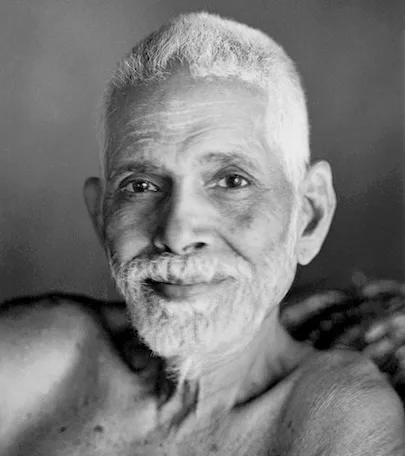
Awakening to the Self: The Journey Beyond Thought
In the profound words of Ramana Maharshi, “If a thought arises, do not pursue it. Inquire to whom this thought has come. To you. Who are you?” This invitation to self-inquiry serves as a guiding light for those navigating the complexities of the mind. It beckons us to pause and reflect on the nature of our thoughts and, more importantly, the essence of our being. In a world often dominated by incessant mental chatter, this teaching holds the potential to liberate us from the confines of our conditioned identities.
At its core, this quote challenges us to reconsider our relationship with our thoughts. Rather than becoming entangled in the narratives they weave, we are encouraged to turn inward and question the very source of these thoughts. This act of self-inquiry is not merely an intellectual exercise; it is a transformative practice that invites us to explore the depths of our consciousness and uncover the true nature of the self. By asking, “Who am I?” we embark on a journey that transcends the superficial layers of identity, leading us toward a more profound understanding of existence.
The image / the metaphor
Ramana Maharshi’s words evoke a vivid imagery of the mind as a vast ocean, where thoughts are like waves that rise and fall. The verbs “arises” and “pursue” suggest a dynamic interplay between the observer and the observed. When a thought arises, it is akin to a wave breaking upon the shore, momentarily capturing our attention. However, the invitation to inquire “to whom this thought has come” shifts our focus from the transient wave to the stillness of the ocean beneath. This metaphor highlights the distinction between the fleeting nature of thought and the enduring essence of the self.
Diving deeper into this metaphor, we can see that the act of pursuing thoughts often leads us into turbulent waters, where we become lost in the currents of our emotions and beliefs. By inquiring into the source of these thoughts, we are encouraged to anchor ourselves in the deeper, unchanging aspect of our being. This process of self-inquiry acts as a stabilizing force, allowing us to navigate the waves of thought with greater clarity and equanimity. In this way, Maharshi’s teaching becomes a tool for cultivating inner peace amidst the chaos of the mind.
In the speaker's tradition
Ramana Maharshi’s teachings are deeply rooted in the Advaita Vedanta tradition, which emphasizes the non-duality of the self and the ultimate reality. Concepts such as *dharma* (righteous duty) and *prajna* (wisdom) resonate with the essence of self-inquiry, guiding practitioners toward a realization of their true nature. The inquiry into “Who am I?” aligns with the practice of *neti-neti*, or “not this, not that,” a method of negation that helps to peel away the layers of false identification. This approach encourages seekers to transcend the ego and recognize their inherent unity with the cosmos.
In the context of other spiritual texts, we can draw parallels to the teachings found in the *Upanishads*, where the quest for self-knowledge is central. The *Chandogya Upanishad* states, “Tat tvam asi,” or “That thou art,” affirming the interconnectedness of the individual self with the universal consciousness. This ancient wisdom echoes Maharshi’s call to inquire into the nature of the self, reinforcing the idea that true liberation arises from understanding our oneness with all that exists.
Living the teaching
Consider a modern scenario where this teaching can be applied: imagine a moment of frustration at work when a colleague’s comment triggers a cascade of negative thoughts. Instead of allowing these thoughts to spiral into self-doubt or anger, one can pause and ask, “To whom has this thought come?” This simple inquiry can create a space for reflection, allowing the individual to recognize that these thoughts do not define them. By stepping back from the emotional reaction, they can respond with clarity and composure, transforming a potentially volatile situation into an opportunity for growth.
In the realm of relationships, this teaching can also illuminate the dynamics between partners. When conflicts arise, it is easy to become entangled in the narratives we create about each other. By applying the practice of self-inquiry, one can ask, “Who am I in this moment?” This question encourages a shift from blame and defensiveness to understanding and compassion. It invites individuals to explore their own insecurities and fears, fostering deeper connections and healing within the relationship.
A reflection
As we contemplate Ramana Maharshi’s profound invitation to self-inquiry, we are left with a contemplative question: “What thoughts arise in my mind, and to whom do they belong?” This inquiry invites us to explore the nature of our thoughts and the identities we cling to, urging us to seek the deeper truth of who we are beyond the transient waves of thought. In this exploration, may we find the courage to embrace our authentic selves and cultivate a sense of peace that transcends the fluctuations of the mind.




Join the BrightStar Community
Stay connected with daily inspiration, event announcements, and community wisdom