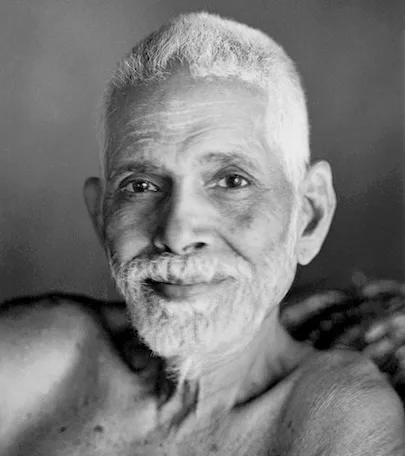
The Elusive Nature of the Self
Ramana Maharshi's assertion, "If through enquiry the Self could be reached, it follows that the Self was not there," invites us into a profound exploration of identity and existence. At its core, this statement challenges the very notion of a fixed, discoverable self. It suggests that the act of searching for the Self implies that it is not an object to be found, but rather a deeper reality that transcends our conventional understanding. This inquiry is not merely philosophical; it holds significant implications for how we perceive ourselves and our place in the world.
In a culture that often equates self-worth with achievement and external validation, Maharshi's words resonate with a liberating truth. They prompt us to reconsider our relentless pursuit of self-definition and the identities we construct. The inquiry into the Self, rather than leading us to a solid conclusion, reveals the fluidity and impermanence of our existence. This realization can be both unsettling and freeing, as it invites us to embrace a more expansive understanding of who we are beyond the confines of our thoughts and experiences.
The image / the metaphor
The imagery in Maharshi's quote evokes a paradoxical journey. The term "enquiry" suggests a quest, a search for something hidden or lost. Yet, the conclusion that the Self is not there flips this expectation on its head. It implies that the very act of searching is predicated on a misunderstanding of what the Self is. Instead of a tangible entity waiting to be uncovered, the Self emerges as an elusive presence, one that cannot be grasped through conventional means. This evokes a sense of both mystery and liberation, as it invites us to let go of our preconceived notions of identity.
Diving deeper into this metaphor, we can see that the search for the Self mirrors the experience of seeking light in a dark room. The more we search for the light, the more we realize that it is not an object to be found but rather an inherent quality of the space itself. In this way, Maharshi's teaching encourages us to shift our focus from the search for a definitive self to an understanding of our existence as a dynamic interplay of awareness and presence. This shift can lead to a profound transformation in how we relate to ourselves and the world around us.
In the speaker's tradition
Ramana Maharshi's teachings are deeply rooted in the Advaita Vedanta tradition, which emphasizes non-duality and the interconnectedness of all existence. Concepts such as *dharma* (righteous duty), *kenosis* (self-emptying), and *sunyata* (emptiness) resonate with his assertion about the Self. In this context, the Self is not a separate entity but rather a manifestation of the universal consciousness that pervades all beings. This understanding aligns with the idea of *fana* in Sufism, where the dissolution of the self leads to a union with the divine, highlighting the universality of this spiritual insight across traditions.
In texts such as the *Upanishads*, the exploration of the Self is a central theme. The *Chandogya Upanishad* famously states, "Tat tvam asi," or "That thou art," suggesting that the individual self is not separate from the ultimate reality. This echoes Maharshi's assertion that the Self cannot be reached through inquiry, as it is not an object of discovery but rather the essence of our being. By situating Maharshi's quote within this rich tradition, we can appreciate the depth of his insight and its alignment with centuries of spiritual wisdom.
Living the teaching
Consider a modern scenario where this teaching might resonate: a person grappling with a career change. They may feel compelled to define themselves by their job title or professional achievements. In their quest for clarity, they might engage in extensive self-enquiry, asking questions about their passions and aspirations. However, Maharshi's teaching reminds them that the essence of who they are cannot be confined to a job description. Instead, they might discover that their true self is a tapestry woven from experiences, relationships, and values that transcend any single role.
This teaching can also manifest in interpersonal relationships. Imagine a conflict between friends where each person clings to their perspective, seeking validation for their feelings. In this moment, the inquiry into the Self can serve as a transformative practice. By recognizing that their identities are not rigid but fluid, they can approach the situation with compassion and openness. This shift allows them to move beyond the need to be right, fostering a deeper connection rooted in understanding rather than ego. In both scenarios, the essence of Maharshi's teaching encourages us to embrace the fluidity of our identities and the interconnectedness of our experiences.
A reflection
As we contemplate Maharshi's profound statement, we are invited to explore the nature of our own identities. What does it mean to seek the Self? Are we searching for something that is inherently elusive, or can we find peace in the understanding that our essence is not confined to our thoughts and experiences? In this inquiry, we might ask ourselves: How can I embrace the fluidity of my identity and let go of the need to define myself in fixed terms? This question opens the door to a deeper exploration of presence, awareness, and the interconnectedness of all beings.




Join the BrightStar Community
Stay connected with daily inspiration, event announcements, and community wisdom