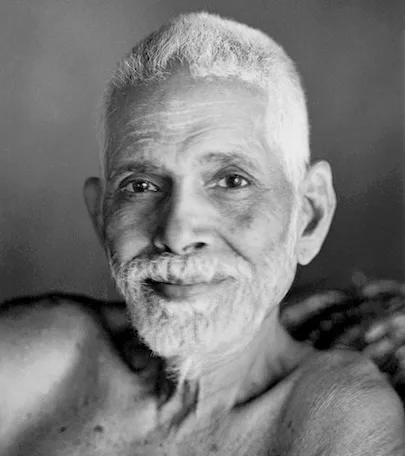
The Stillness Within: Embracing Silence in a Chaotic World
Ramana Maharshi's profound instruction, "Just keep quiet and do not allow any thought to disturb you," invites us to cultivate a state of inner tranquility amidst the tumult of our thoughts and emotions. In a world that often feels overwhelming, this guidance serves as a beacon, urging us to step back from the incessant chatter of the mind. The stakes are high; our ability to find peace hinges on our relationship with our thoughts, which can either anchor us in stillness or drown us in distraction.
To truly grasp the essence of Maharshi's words, we must recognize the profound implications of silence and stillness. In a culture that often equates busyness with productivity, the call to quietude may seem counterintuitive. Yet, it is precisely in this stillness that we can uncover deeper truths about ourselves and our existence. By learning to quiet the mind, we open ourselves to a more profound awareness, allowing the essence of our being to emerge unencumbered by the noise of thought.
The image / the metaphor
The imagery in Maharshi's quote evokes a serene landscape, where the mind is likened to a turbulent sea, and silence is the calm shore. The verbs "keep quiet" and "do not allow" suggest an active engagement with our inner landscape, requiring both discipline and intention. This is not a passive resignation to chaos; rather, it is a conscious choice to cultivate stillness, to create a sanctuary within ourselves where thoughts cannot intrude.
Diving deeper into the metaphor, we can see that the act of keeping quiet is not merely about refraining from verbal expression but encompasses a broader invitation to silence the internal dialogue that often dominates our consciousness. This stillness is akin to the practice of meditation, where the mind is trained to observe thoughts without attachment. In this space, we can experience the profound peace that arises when we disengage from the relentless stream of mental activity, allowing us to connect with our true nature.
In the speaker's tradition
Ramana Maharshi's teachings are deeply rooted in the Advaita Vedanta tradition, which emphasizes non-duality and the realization of the Self. Concepts such as *dharma* (righteousness) and *prajna* (wisdom) are integral to understanding the significance of stillness. By quieting the mind, we align ourselves with our *dharma*, allowing us to act from a place of clarity rather than confusion. This alignment fosters a deeper connection to the universal consciousness, where the distinction between self and other begins to dissolve.
In the context of Maharshi's teachings, we can draw parallels with the concept of *sunyata*, or emptiness, found in Buddhist philosophy. Just as *sunyata* encourages the relinquishing of attachments to thoughts and identities, Maharshi's call to silence invites us to let go of the mental constructs that bind us. The *Upanishads*, ancient texts that explore the nature of reality and the Self, echo this sentiment, urging seekers to transcend the limitations of thought to experience the ultimate truth of existence.
Living the teaching
Consider a modern scenario where this teaching can be applied: imagine a hectic day at work, filled with deadlines and distractions. In such moments, the mind races, bombarded by thoughts of what needs to be done and the pressures of performance. By consciously choosing to "keep quiet," one can take a brief pause, perhaps stepping outside for a moment of fresh air. This act of stillness allows the individual to reset, creating a mental space where clarity can emerge, enabling them to approach their tasks with renewed focus and calm.
This teaching also finds relevance in interpersonal relationships, particularly during conflicts or misunderstandings. When emotions run high, the instinct may be to react impulsively, allowing thoughts to spiral into arguments. However, by embracing Maharshi's wisdom and choosing to remain quiet—both externally and internally—one can create a space for reflection. This pause allows for a more thoughtful response, fostering understanding and compassion rather than escalating tension.
A reflection
As we contemplate Maharshi's invitation to silence, we might ask ourselves: What thoughts or beliefs disturb my inner peace, and how can I cultivate a practice of stillness to transcend them? This question encourages us to explore the nature of our thoughts and their impact on our well-being. By engaging with this inquiry, we can begin to uncover the layers of distraction that cloud our awareness, guiding us toward a more profound experience of stillness and presence.




Join the BrightStar Community
Stay connected with daily inspiration, event announcements, and community wisdom