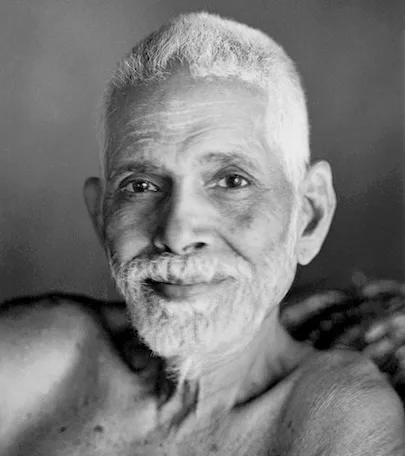
The Profound Dialogue of Silence
Ramana Maharshi's assertion that "Silence is also conversation" invites us to reconsider the nature of communication itself. In a world often dominated by noise and incessant chatter, this statement serves as a gentle reminder of the depth and richness that silence can offer. It suggests that true dialogue transcends mere words, and that in the stillness of our being, we can engage in a profound exchange that speaks to the essence of existence. This understanding is crucial, as it opens pathways to deeper relationships with ourselves and others, fostering a sense of presence that is often lost in the clamor of daily life.
Delving deeper, we recognize that silence is not merely the absence of sound; it is a vibrant space filled with potential and meaning. In this context, Maharshi's words challenge us to explore the subtleties of our interactions, encouraging us to listen not only with our ears but with our hearts and minds. Silence can be a powerful form of communication, one that allows for reflection, understanding, and connection on a level that words alone may fail to convey. This exploration of silence as conversation invites us to cultivate a more mindful approach to our interactions, both with ourselves and with the world around us.
The image / the metaphor
At first glance, the imagery in Maharshi's quote evokes a paradox: how can silence, often associated with absence, be equated with conversation, which implies presence and exchange? The verbs chosen—"is" and "conversation"—suggest a state of being that is dynamic and alive. Silence, in this sense, is not a void but a canvas upon which the nuances of our inner lives can be expressed. It is a space where thoughts can crystallize, emotions can settle, and insights can emerge, allowing for a dialogue that is rich and meaningful.
Going deeper into this metaphor, we can see silence as a form of presence that invites authenticity. In moments of silence, we are often confronted with our true selves, stripped of the distractions and facades that words can create. This confrontation can lead to a more genuine form of communication, one that acknowledges the complexities of our experiences without the need for verbal elaboration. Silence becomes a bridge, connecting us to our own inner wisdom and to the shared humanity of those around us, fostering a deeper understanding that transcends the limitations of language.
In the speaker's tradition
Ramana Maharshi's teachings are deeply rooted in the Hindu tradition, particularly in the concepts of self-inquiry and the realization of the Self. In this context, silence is not merely a cessation of sound but a profound state of awareness that aligns with the principles of dharma and the pursuit of truth. The practice of self-inquiry, or "atma vichara," encourages individuals to turn inward, cultivating a silence that reveals the essence of one's being. This inner silence is akin to the concept of "sunyata," or emptiness, which in Buddhist philosophy denotes a state of openness and potential, free from the attachments of the ego.
Moreover, Maharshi's emphasis on silence resonates with the idea of "bhakti," or devotion, where the heart speaks in the language of love and surrender. In this light, silence becomes a form of worship, a way to connect with the divine presence that permeates all existence. Texts such as the "Upanishads" echo this sentiment, illustrating that the ultimate truth is often found in the stillness of the mind, where the seeker can experience the unity of all things. Thus, Maharshi's assertion is not merely a personal insight but a reflection of a broader spiritual truth that has been explored throughout the ages.
Living the teaching
In our modern lives, the teaching that "silence is also conversation" can manifest in various scenarios. Consider a moment of conflict in a relationship, where words may escalate tension rather than resolve it. In such instances, choosing to embrace silence can create space for reflection and understanding. By pausing to listen—both to oneself and to the other person—individuals can foster a deeper connection that transcends the immediate emotional turmoil. This practice of silence allows for a more thoughtful response, transforming potential discord into an opportunity for growth and healing.
Another application of this teaching can be found in daily practices such as meditation or mindful walking. In these moments of intentional silence, one can cultivate a profound sense of presence that enhances awareness of the self and the surrounding world. This silence becomes a conversation with the universe, where insights and clarity can emerge without the interference of incessant thoughts. By integrating moments of silence into our daily routines, we can deepen our understanding of ourselves and our relationships, ultimately enriching our experience of life.
A reflection
As we contemplate Ramana Maharshi's profound insight that "silence is also conversation," we are invited to explore the layers of communication that exist beyond words. In what ways can we cultivate silence in our lives to enhance our connections with ourselves and others? This question encourages us to reflect on the power of presence and the transformative potential of listening, both to the stillness within and to the world around us.




Join the BrightStar Community
Stay connected with daily inspiration, event announcements, and community wisdom