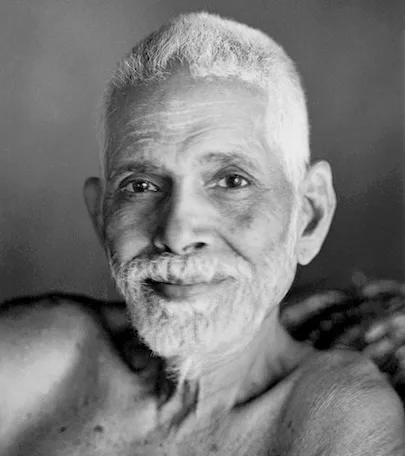
The Essence of Unity: Embracing What Is
Ramana Maharshi's profound assertion, "What is is just That. There is no difference at all," invites us to contemplate the nature of reality and our relationship to it. In a world often defined by dualities and distinctions, this statement beckons us to recognize the inherent unity that underlies all existence. The stakes of this realization are high; understanding this truth can lead to a profound sense of peace and liberation from the incessant grasping and aversion that characterize much of human experience.
At its core, this quote challenges our conditioned perceptions, urging us to see beyond the surface of things. It speaks to the heart of spiritual inquiry, where the quest for truth often leads us to confront the illusions of separation and difference. Maharshi's words resonate deeply within the contemplative traditions, inviting us to explore the essence of being and the interconnectedness of all life. This exploration is not merely intellectual; it is a transformative journey that can reshape our understanding of ourselves and the world around us.
The image / the metaphor
In the phrase "What is is just That," Maharshi employs a simplicity that belies the depth of its meaning. The repetition of "is" emphasizes presence, urging us to recognize the reality of existence as it is, without the filters of judgment or interpretation. The term "just That" suggests an acceptance of reality in its purest form, devoid of the labels and distinctions that often cloud our perception. This imagery evokes a sense of immediacy and direct experience, inviting us to immerse ourselves in the present moment.
Diving deeper into the metaphor, we can see that Maharshi's statement serves as a reminder of the non-dual nature of existence. The phrase implies that what we perceive as separate entities—ourselves, others, the world—are, in essence, manifestations of the same underlying reality. This understanding can dissolve the barriers we construct in our minds, revealing a profound interconnectedness that transcends the apparent differences. It is an invitation to experience life not as a series of fragmented moments but as a unified whole.
In the speaker's tradition
Ramana Maharshi's teachings are deeply rooted in the Advaita Vedanta tradition, which emphasizes non-duality and the realization of the self as one with the ultimate reality, Brahman. Concepts such as *sunyata* (emptiness) and *fana* (annihilation of the self) resonate with Maharshi's assertion, as they point to the dissolution of the ego and the recognition of a singular existence. In this context, the idea of *dharma*—the natural order of the universe—aligns with the understanding that all things are interconnected and part of a greater whole.
In the *Upanishads*, ancient texts that form the philosophical foundation of Hindu thought, we find echoes of Maharshi's insights. The *Chandogya Upanishad* famously states, "Tat Tvam Asi," meaning "That Thou Art," which encapsulates the essence of non-duality. This phrase reinforces the idea that the individual self is not separate from the universal consciousness, mirroring Maharshi's assertion that "What is is just That." Both teachings invite seekers to transcend the illusion of separateness and embrace the unity of existence.
Living the teaching
Consider a modern scenario where this teaching can be applied: a heated argument between friends. In the midst of conflict, it is easy to become entrenched in our perspectives, viewing the other as an adversary rather than a fellow traveler on the path of life. By embracing Maharshi's teaching, one can pause and reflect on the shared humanity that exists beneath the surface of disagreement. This shift in perception allows for compassion and understanding to emerge, transforming the conflict into an opportunity for deeper connection.
Another application of this teaching can be found in the realm of personal relationships. When we encounter difficulties with loved ones, it is common to focus on perceived differences and grievances. However, by recognizing that "What is is just That," we can cultivate a sense of acceptance and love that transcends the ego's need to be right or to hold onto grievances. This perspective fosters a nurturing environment where healing can take place, allowing relationships to flourish in the light of unity rather than division.
A reflection
As we contemplate Maharshi's profound statement, we are invited to explore the nature of our own perceptions and the ways in which we create divisions in our lives. What would it mean for you to embrace the idea that "What is is just That"? In moments of challenge or conflict, how might this understanding shift your experience? Reflecting on these questions can open pathways to deeper awareness and connection, guiding us toward a more unified existence.




Join the BrightStar Community
Stay connected with daily inspiration, event announcements, and community wisdom