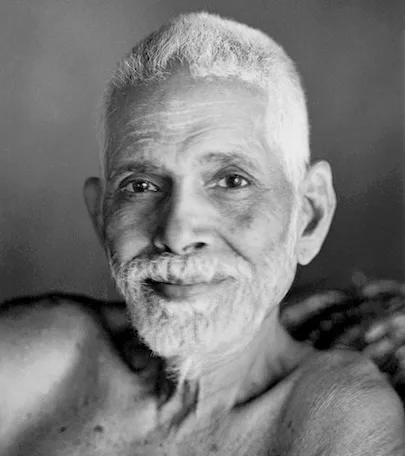
The Unveiling of the Great Self
Ramana Maharshi's profound assertion, "When the I-thought has vanished there will be revealed the great Self, which is the substratum of all," invites us to explore the depths of our own consciousness. In this statement, Maharshi points to the dissolution of the ego—the "I-thought"—as a necessary step toward realizing our true nature, the universal Self that underlies all existence. This realization is not merely an intellectual exercise; it is a transformative journey that can lead to profound peace and understanding. The stakes are high, as this journey challenges our most fundamental beliefs about identity and existence.
Delving deeper, we recognize that the "I-thought" represents the individual ego, the sense of self that is often tied to personal narratives, desires, and fears. Maharshi's teaching suggests that this egoic self is a veil obscuring our inherent unity with the greater Self. The significance of this teaching lies in its promise: the dissolution of the ego not only liberates us from suffering but also reveals the interconnectedness of all beings. This realization can lead to a life imbued with compassion, wisdom, and a sense of belonging to something far greater than ourselves.
The image / the metaphor
The imagery in Maharshi's quote evokes a profound transformation, akin to the peeling away of layers to reveal a hidden treasure. The "I-thought" serves as a barrier, a fog that clouds our perception of reality. The verbs "has vanished" and "will be revealed" suggest an active process of letting go and uncovering, emphasizing that this is not a passive experience but rather a dynamic unfolding of truth. The felt sense of this journey is one of liberation, as the burdens of personal identity dissolve and the vastness of the great Self comes into focus.
In the speaker's tradition
Ramana Maharshi's teachings are deeply rooted in the Advaita Vedanta tradition, which emphasizes non-duality and the oneness of existence. Concepts such as dharma, the moral order of the universe, and prajna, or wisdom, are integral to understanding the implications of Maharshi's statement. The dissolution of the "I-thought" aligns with the idea of kenosis, or self-emptying, found in various spiritual traditions, where the relinquishing of the ego leads to a fuller experience of divine presence. This journey toward self-realization is not merely personal; it is a return to the universal essence that binds all beings.
In the context of Hindu scriptures, the Bhagavad Gita offers a parallel exploration of the self and the greater Self. In Chapter 2, Krishna speaks of the eternal nature of the soul, urging Arjuna to see beyond the transient nature of the body and ego. This echoes Maharshi's assertion that the great Self is the substratum of all, inviting us to recognize our true nature as eternal and unchanging amidst the flux of life.
Living the teaching
Consider a modern scenario where this teaching can be applied: a person grappling with anxiety about their career. The constant preoccupation with personal success and identity can create a cycle of stress and dissatisfaction. By reflecting on Maharshi's insight, this individual might begin to question the validity of the "I-thought" that ties their worth to external achievements. As they practice letting go of this attachment, they may find a sense of freedom and clarity, realizing that their true value lies not in their job title but in their inherent being.
In a different context, imagine a relationship strained by misunderstandings and ego clashes. Each partner may be entrenched in their own "I-thought," leading to conflict and disconnection. By embracing Maharshi's teaching, they can cultivate a practice of empathy and self-reflection, recognizing that their individual identities are not the entirety of who they are. This shift in perspective can foster deeper connection and understanding, allowing the great Self to emerge in their interactions, transforming the relationship into a space of love and unity.
A reflection
As we contemplate Maharshi's profound statement, we are invited to reflect on our own lives: What aspects of the "I-thought" do we cling to that may be obscuring our perception of the great Self? In what ways can we begin to let go of these attachments to experience a deeper sense of unity with ourselves and others? This inquiry can serve as a guiding light on our journey toward self-realization, encouraging us to explore the vastness of our being beyond the confines of the ego.




Join the BrightStar Community
Stay connected with daily inspiration, event announcements, and community wisdom