The Illusion of Separation: Understanding the Self and the World
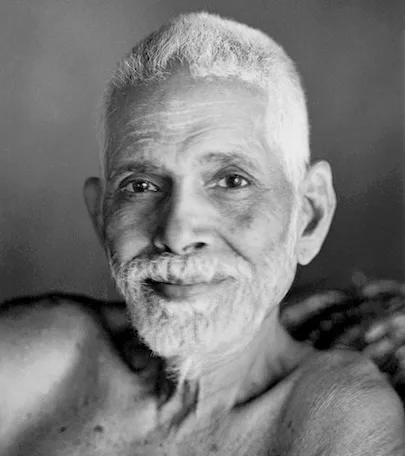
Ramana Maharshi's assertion, "When the mind comes out from the Self, the world appears," invites us to explore the intricate relationship between our inner consciousness and the external world. This statement encapsulates a profound truth about perception and reality, suggesting that our understanding of the world is deeply influenced by the state of our mind. The stakes are high, as this insight challenges us to reconsider how we engage with our surroundings and ourselves, urging us to seek a deeper awareness that transcends mere appearances.
In a world often dominated by distractions and external stimuli, Maharshi's words serve as a reminder of the importance of introspection. The mind, when detached from the essence of the Self, becomes a lens that distorts our perception, leading us to experience the world as separate and fragmented. This separation can foster feelings of isolation and confusion, making it essential for us to cultivate a practice that reconnects us with our true nature. By understanding the interplay between the mind and the Self, we can begin to navigate our experiences with greater clarity and compassion.
The image / the metaphor
The imagery in Maharshi's quote evokes a sense of emergence and duality. The phrase "comes out from the Self" suggests a movement away from a unified state of being, where the Self is understood as the pure consciousness that underlies all existence. The act of the mind "coming out" implies a departure from this essential unity, leading to the perception of a world filled with distinctions and separations. This felt sense of disconnection can be likened to a dreamer awakening from a dream, where the vividness of the dream world dissipates upon the realization of the dreamer's true nature.
In the speaker's tradition
Ramana Maharshi's teachings are deeply rooted in the Advaita Vedanta tradition, which emphasizes the non-dual nature of reality. Central to this philosophy is the concept of *Atman*, or the true Self, which is considered identical to *Brahman*, the ultimate reality. This understanding aligns with the notion of *kenosis*, or self-emptying, where one relinquishes the ego and its attachments to experience a profound sense of unity with all existence. In this context, Maharshi's quote serves as a guiding principle for those seeking to transcend the limitations of the mind and experience the fullness of the Self.
In the *Upanishads*, ancient texts that explore the nature of reality and consciousness, we find echoes of Maharshi's insights. For instance, the *Chandogya Upanishad* speaks of the relationship between the individual self and the universal Self, emphasizing that true knowledge arises when one realizes their inherent unity with all beings. This realization is not merely intellectual but experiential, requiring a deep introspection that allows the seeker to dissolve the boundaries created by the mind. Maharshi's teachings resonate with this ancient wisdom, inviting us to embark on a journey of self-discovery that leads to liberation.
Living the teaching
Consider a modern scenario where an individual feels overwhelmed by the chaos of daily life—work pressures, social obligations, and personal challenges. In such moments, the mind often becomes entangled in a web of thoughts and worries, leading to a sense of disconnection from the Self. Maharshi's teaching reminds us that when we allow the mind to dominate our experience, we perceive the world as a series of isolated events, each demanding our attention and energy. By practicing mindfulness and returning to the stillness of the Self, we can cultivate a sense of peace that transcends external circumstances, enabling us to navigate life's challenges with grace.
In the context of relationships, Maharshi's insight can be particularly transformative. When conflicts arise, it is easy for the mind to latch onto grievances and perceived slights, creating a narrative of separation and division. However, by recognizing that these thoughts stem from a disconnection from the Self, we can approach our interactions with greater empathy and understanding. This shift in perspective allows us to see beyond the surface-level differences and to connect with the underlying essence of our shared humanity. In this way, Maharshi's teaching becomes a powerful tool for fostering deeper connections and healing in our relationships.
A reflection
As we contemplate Maharshi's profound statement, we are invited to reflect on our own experiences of separation and connection. How often do we find ourselves lost in the distractions of the mind, perceiving the world as a series of isolated events? In moments of stillness, we can ask ourselves: What would it feel like to return to the essence of the Self, to experience the world not as separate but as an interconnected tapestry of existence? This contemplative question encourages us to explore the depths of our consciousness and to seek the unity that lies beyond the mind's illusions.




Join the BrightStar Community
Stay connected with daily inspiration, event announcements, and community wisdom