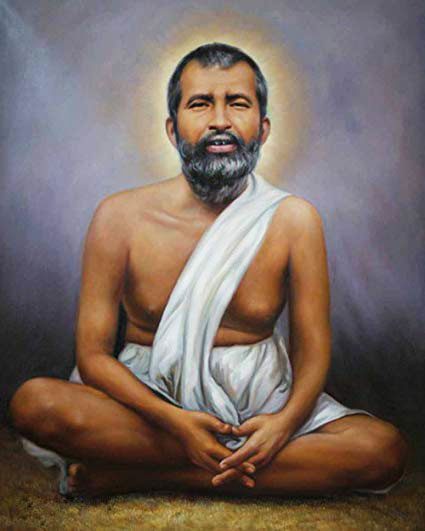
The Freedom Within: Unraveling the Mind's Bondage
In the profound words of Sri Ramakrishna, "Bondage is of the mind, and freedom too is of the mind." This statement invites us to explore the intricate relationship between our mental constructs and our experiences of liberation and constraint. It suggests that the chains that bind us are often self-imposed, residing in our thoughts and perceptions, while the key to our freedom lies within the same realm. Understanding this dynamic is crucial, as it empowers us to transcend our limitations and embrace a more expansive existence.
Ramakrishna's assertion challenges us to reconsider the nature of our suffering and liberation. It compels us to look inward, recognizing that our mental states shape our reality. The journey toward freedom is not merely an external quest but an internal exploration of consciousness. By acknowledging that both bondage and freedom originate in the mind, we are invited to cultivate awareness and discernment, ultimately leading to a more profound understanding of our true nature.
The image / the metaphor
The imagery in Ramakrishna's quote evokes a powerful dichotomy: bondage and freedom, both residing within the mind. The term "bondage" conjures feelings of restriction, confinement, and limitation, while "freedom" suggests expansiveness, liberation, and possibility. The verbs "is" and "too" indicate that both states are equally valid and originate from the same source—our thoughts. This duality invites us to examine the nature of our mental landscapes, where we often find ourselves trapped in cycles of negative thinking or limiting beliefs.
Diving deeper into the metaphor, we can see that the mind acts as both jailer and liberator. It is the architect of our perceptions, constructing walls that can feel insurmountable, yet it also holds the potential to dismantle those very barriers. This understanding encourages us to engage in a transformative process, where we learn to recognize the thoughts that bind us and cultivate those that set us free. The journey becomes one of discernment, where we consciously choose to shift our mental narratives from those that confine us to those that empower us.
In the speaker's tradition
Within the rich tapestry of Hindu philosophy, Ramakrishna's insights resonate with several key concepts, such as dharma, the moral order that guides our actions, and prajna, the wisdom that arises from deep understanding. The notion of bondage as a mental construct aligns with the idea of sunyata, or emptiness, which teaches that our attachments and identifications are the sources of suffering. By recognizing the illusory nature of these attachments, we can begin to navigate our lives with greater clarity and purpose, aligning ourselves with our true dharma.
Moreover, Ramakrishna's teachings echo the principles found in the Bhagavad Gita, where Lord Krishna imparts wisdom on the nature of the self and the importance of detachment. In Chapter 2, Verse 47, Krishna emphasizes the significance of focusing on one's duty without attachment to the results, illustrating the liberation that comes from a mind unencumbered by desires. This parallel reinforces the idea that true freedom arises from understanding the mind's role in shaping our experiences and the importance of cultivating a state of inner peace.
Living the teaching
Consider a modern scenario where this teaching can be applied: a person facing job loss. The initial reaction may be one of despair, feeling trapped by circumstances. However, by recognizing that the sense of bondage is rooted in their thoughts—fear of the future, societal expectations, and self-doubt—they can begin to shift their perspective. This shift allows them to see the opportunity for growth and reinvention, transforming what initially felt like a prison into a pathway toward new possibilities.
In relationships, this teaching can manifest during conflicts. When misunderstandings arise, individuals may feel confined by their emotions, leading to resentment or anger. By acknowledging that these feelings are products of their own minds, they can choose to respond with compassion and understanding. This conscious choice to reframe their thoughts fosters a sense of freedom, allowing for deeper connection and healing within the relationship.
A reflection
As we contemplate Ramakrishna's profound insight, we are invited to reflect on our own mental landscapes. What thoughts or beliefs do we hold that may be creating a sense of bondage in our lives? In what ways can we cultivate a mindset that embraces freedom and possibility? This inquiry encourages us to engage with our inner world, fostering a deeper understanding of ourselves and the transformative power of our thoughts.




Join the BrightStar Community
Stay connected with daily inspiration, event announcements, and community wisdom