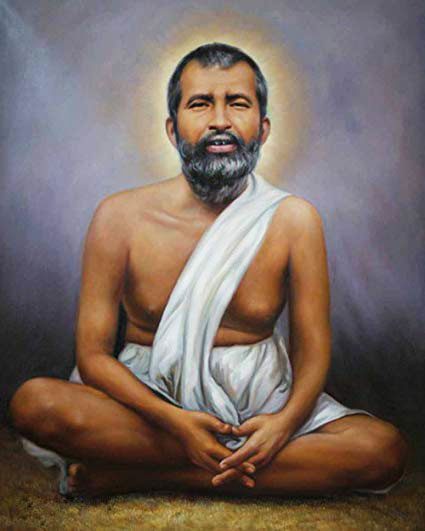
The Challenge of Authentic Spiritual Practice
In the words of Sri Ramakrishna, "It is easy to talk on religion, but difficult to practice it." This statement encapsulates a profound truth about the human experience of spirituality. While discussions about faith, ethics, and the divine can flow freely, embodying these principles in our daily lives often presents a formidable challenge. The stakes are high; our spiritual growth hinges not merely on intellectual understanding but on the transformative power of lived experience.
Ramakrishna's insight invites us to reflect on the gap that often exists between belief and action. It is one thing to articulate the tenets of a faith or to engage in philosophical discourse; it is quite another to integrate those beliefs into our actions, thoughts, and relationships. This discrepancy can lead to a sense of disillusionment or hypocrisy, where our words do not align with our deeds. Thus, the journey of spiritual practice becomes a quest for authenticity, urging us to bridge this divide and cultivate a life that resonates with our deepest convictions.
The image / the metaphor
At first glance, Ramakrishna's quote presents a stark contrast between the ease of verbal expression and the difficulty of practical application. The imagery evokes a sense of lightness associated with speech, where ideas can be shared effortlessly, juxtaposed against the weighty challenge of embodying those ideas in the fabric of daily life. The verbs "talk" and "practice" highlight this dichotomy: one is fluid and spontaneous, while the other demands commitment, discipline, and often, struggle.
Diving deeper into the metaphor, we can see that the act of talking about religion can be likened to the surface of a lake—reflective and inviting, yet ultimately shallow. In contrast, practicing religion is akin to diving into the depths of that lake, where the waters may be murky and the currents unpredictable. This metaphor serves as a reminder that true spiritual engagement requires us to confront our fears, uncertainties, and the complexities of our inner lives, rather than merely skimming the surface of ideas.
In the speaker's tradition
To understand Ramakrishna's perspective, we must situate it within the rich tapestry of Hindu philosophy, where the concepts of dharma and bhakti play pivotal roles. Dharma, or righteous duty, emphasizes the importance of aligning one's actions with ethical principles, while bhakti, or devotion, calls for a heartfelt connection to the divine. Together, these concepts underscore the necessity of not only understanding spiritual truths but also living them out in a way that reflects our commitment to a higher purpose.
Moreover, Ramakrishna's teachings resonate with the notion of prajna, or wisdom, which is not merely intellectual but experiential. In the Bhagavad Gita, for instance, Krishna advises Arjuna to act according to his dharma, emphasizing that knowledge must be coupled with action. This interplay between knowing and doing is central to the spiritual journey, reminding us that wisdom is fully realized only when it is put into practice.
Living the teaching
Consider a modern scenario where this teaching finds relevance: a workplace filled with ethical dilemmas. It is easy to discuss the importance of integrity and honesty in professional settings, yet when faced with the pressure to compromise these values for personal gain, the challenge becomes palpable. In such moments, the teachings of Ramakrishna urge us to reflect on our principles and to act in accordance with our beliefs, even when it is difficult. This is where the true test of our spiritual practice lies—navigating the complexities of life while remaining steadfast in our commitment to our values.
Another application of this teaching can be found in personal relationships, particularly during conflicts. It is simple to espouse ideals of love, forgiveness, and understanding, yet when emotions run high, practicing these virtues can feel insurmountable. Ramakrishna's wisdom encourages us to pause and consider how we can embody these principles in our interactions, fostering a space for healing and connection rather than division. In doing so, we not only honor our relationships but also deepen our spiritual practice.
A reflection
As we contemplate Ramakrishna's assertion, we are invited to examine our own lives: in what areas do we find ourselves speaking about spiritual truths without fully embodying them? This reflection can serve as a catalyst for growth, prompting us to identify the gaps between our beliefs and our actions. In this spirit, consider this contemplative question: How can I take one step today to align my actions more closely with my spiritual values?




Join the BrightStar Community
Stay connected with daily inspiration, event announcements, and community wisdom