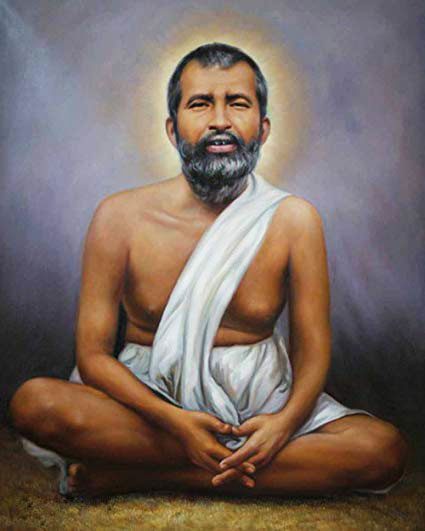
The Mind's Journey to Liberation
In the profound words of Sri Ramakrishna, "It is the mind that makes one realize God or attains liberation." This statement encapsulates the essence of spiritual awakening, suggesting that the mind is both the vehicle and the barrier to experiencing the divine. The stakes are high; understanding this relationship can transform our spiritual practice and daily lives, guiding us toward a deeper connection with the sacred. The mind, with its myriad thoughts and distractions, can either lead us to liberation or entrap us in the cycles of suffering.
Ramakrishna's assertion invites us to explore the intricate workings of the mind and its pivotal role in our spiritual journey. It emphasizes that realization of the divine is not a matter of external searching but an internal process of understanding and refining our thoughts. This perspective challenges us to examine how our mental constructs shape our perception of reality and our relationship with the divine. By recognizing the mind's power, we can begin to navigate the complexities of our inner world and move toward a state of liberation.
The image / the metaphor
The imagery in Ramakrishna's quote is striking; it presents the mind as both a tool and a hindrance. The verb "makes" suggests an active role, indicating that realization and liberation are not passive experiences but require conscious effort and engagement. The mind is portrayed as a sculptor, shaping our understanding of God and the nature of existence. This duality evokes a sense of responsibility, urging us to cultivate a mind that is conducive to spiritual growth.
In the speaker's tradition
Within the rich tapestry of Hindu philosophy, Ramakrishna's insights resonate deeply with concepts such as dharma, bhakti, and prajna. Dharma, or righteous living, emphasizes the importance of aligning one's thoughts and actions with a higher purpose, while bhakti, the path of devotion, highlights the heart's role in realizing the divine. Prajna, or wisdom, underscores the necessity of a clear and discerning mind in the pursuit of liberation. Together, these concepts illustrate that the mind must be cultivated and aligned with spiritual principles to achieve true realization.
Ramakrishna's teachings can be further illuminated by referencing the Bhagavad Gita, where Lord Krishna advises Arjuna on the importance of controlling the mind. In Chapter 6, verse 6, Krishna states, "For one who has conquered the mind, the mind is the best of friends; but for one who has failed to do so, the mind will be the greatest enemy." This echoes Ramakrishna's assertion that the mind is central to our spiritual journey, reinforcing the idea that mastery over the mind is essential for attaining liberation.
Living the teaching
Consider a modern scenario where this teaching can be applied: a busy professional grappling with stress and anxiety. In the hustle of daily life, the mind often races with worries about deadlines, expectations, and future uncertainties. By recognizing that it is the mind that shapes these experiences, the individual can begin to practice mindfulness and meditation, creating space to observe thoughts without attachment. This practice allows for a shift in perspective, transforming anxiety into a sense of calm and clarity, ultimately leading to a deeper understanding of oneself and the divine.
In relationships, this teaching can manifest in moments of conflict. When misunderstandings arise, it is often the mind that amplifies negative emotions and judgments. By applying Ramakrishna's wisdom, one can pause to reflect on the nature of their thoughts and feelings, recognizing that they are not fixed truths but rather transient experiences. This awareness fosters compassion and empathy, allowing for more constructive communication and deeper connections with others, thereby enriching one's spiritual journey.
A reflection
As we contemplate Ramakrishna's profound insight, we are invited to ask ourselves: How does my mind shape my understanding of the divine? This question encourages introspection and invites us to examine the quality of our thoughts and their impact on our spiritual lives. By engaging with this inquiry, we can begin to cultivate a mind that not only seeks liberation but also embodies the divine qualities we wish to realize.




Join the BrightStar Community
Stay connected with daily inspiration, event announcements, and community wisdom