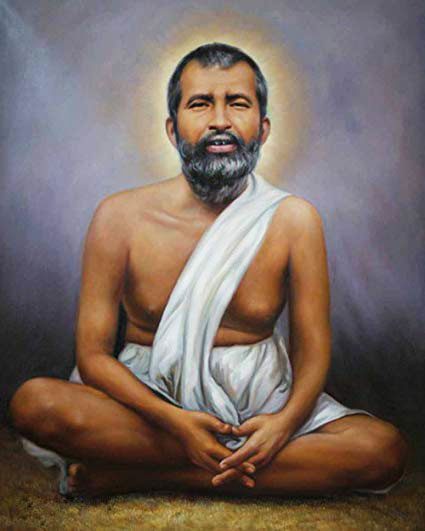
The Illusion of Duality: Embracing the Beyond
Sri Ramakrishna's profound assertion that "Knowledge and ignorance are equally false. The truth is beyond both" invites us to reconsider our understanding of reality. In a world often defined by dichotomies—right and wrong, knowledge and ignorance—this statement challenges us to transcend these limitations. It beckons us to explore a deeper, more nuanced understanding of truth, one that lies beyond the confines of intellectual grasp and emotional reaction. This exploration is not merely academic; it is a spiritual journey that can transform our perception of existence.
To grasp the weight of Ramakrishna's words, we must first recognize the implications of labeling knowledge and ignorance as equally false. This perspective urges us to question the very foundations of our beliefs and assumptions. In a society that often equates knowledge with power and ignorance with weakness, Ramakrishna's insight serves as a radical reminder that both states can lead us astray. The truth, he suggests, is not a possession to be acquired but a state of being to be realized, inviting us to embark on a quest for understanding that transcends conventional wisdom.
The image / the metaphor
The imagery in Ramakrishna's quote evokes a sense of duality that is both familiar and unsettling. Knowledge, often seen as a beacon of enlightenment, is juxtaposed with ignorance, typically viewed as a shadowy void. By declaring both as false, Ramakrishna dismantles the pedestal upon which we place intellectual achievement and the stigma we attach to lack of knowledge. The verbs "are" and "is" in his statement suggest a static existence, yet the truth he speaks of is dynamic, urging us to move beyond mere labels and into a realm of deeper understanding.
Diving deeper into the metaphor, we can see that knowledge and ignorance are not merely opposites but are intertwined in a complex dance. They represent two sides of the same coin, each capable of leading us away from the essence of truth. In this light, the truth becomes a horizon that we can approach but never fully grasp, a living reality that invites us to engage with it rather than possess it. This perspective encourages a humility that is essential for spiritual growth, reminding us that the journey toward truth is as important as the destination itself.
In the speaker's tradition
Within the rich tapestry of Hindu philosophy, Ramakrishna's assertion resonates with several key concepts. The idea of dharma, or righteous living, emphasizes the importance of aligning oneself with a higher truth that transcends personal knowledge and ignorance. Similarly, the concept of sunyata, or emptiness, invites us to recognize that both knowledge and ignorance can cloud our perception of reality. In this context, Ramakrishna's teaching encourages us to cultivate a sense of detachment from our intellectual constructs, allowing us to experience the fullness of existence without the limitations imposed by our understanding.
Moreover, this notion finds echoes in the teachings of the Upanishads, where the ultimate reality, Brahman, is described as beyond all dualities. In texts such as the Chandogya Upanishad, we are reminded that true wisdom lies in realizing the interconnectedness of all things, transcending the binaries of knowledge and ignorance. Ramakrishna's words serve as a bridge to these ancient teachings, inviting us to explore the depths of our own consciousness and the nature of reality itself.
Living the teaching
Consider a modern scenario where this teaching can be applied: a heated debate on social media about a contentious issue. Participants often cling to their knowledge, defending their positions with fervor, while dismissing opposing views as ignorance. In this context, Ramakrishna's insight serves as a reminder that both sides may be trapped in a false dichotomy, missing the opportunity for deeper understanding. By stepping back and recognizing the limitations of their own perspectives, individuals can cultivate a space for dialogue that transcends the binary of knowledge and ignorance, fostering a more compassionate exchange.
In relationships, this teaching can manifest during conflicts where one partner feels misunderstood or judged by the other's beliefs. Here, the challenge lies in recognizing that both parties may be operating from a place of partial understanding. By embracing Ramakrishna's wisdom, they can approach the situation with humility, acknowledging that their knowledge is not absolute and that true connection lies beyond the need to be right. This shift in perspective can transform conflicts into opportunities for growth, deepening the bond between individuals as they navigate the complexities of their shared experience.
A reflection
As we contemplate the essence of Ramakrishna's quote, we are invited to reflect on our own relationship with knowledge and ignorance. How often do we cling to what we think we know, allowing it to define our reality? In what ways might we be limiting ourselves by holding onto rigid beliefs? Consider this contemplative question: What would it mean for you to let go of the need to be right and to embrace the mystery of truth that lies beyond both knowledge and ignorance?




Join the BrightStar Community
Stay connected with daily inspiration, event announcements, and community wisdom