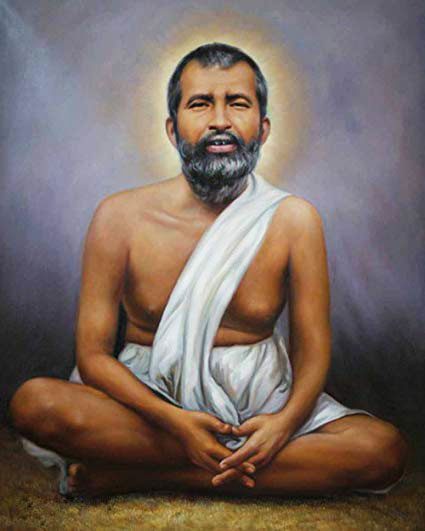
The Path from Knowledge to Unity
Sri Ramakrishna's assertion that "Knowledge leads to unity, but ignorance to diversity" invites us to contemplate the profound relationship between understanding and the interconnectedness of all beings. In a world often marked by division and misunderstanding, this quote serves as a reminder of the transformative power of knowledge. It suggests that true wisdom fosters a sense of oneness, while ignorance breeds separation and conflict. The stakes are high; as we navigate our complex social landscape, the pursuit of knowledge becomes not just a personal endeavor but a collective necessity for harmony.
Delving deeper, we find that knowledge, in the context of Ramakrishna's teachings, is not merely an accumulation of facts or intellectual prowess. It is a spiritual awakening that transcends the ego and reveals the underlying unity of existence. Ignorance, on the other hand, is often rooted in a limited perspective that sees the world through a lens of duality and division. This dichotomy between knowledge and ignorance is not just an intellectual exercise; it is a call to action, urging us to seek understanding as a means to cultivate compassion and connection in our lives.
The image / the metaphor
The imagery in Ramakrishna's quote evokes a journey from fragmentation to wholeness. Knowledge acts as a guiding light, illuminating the path toward unity, while ignorance casts shadows that obscure our vision and understanding. The verbs "leads" and "breeds" carry a sense of agency; knowledge actively propels us toward a collective consciousness, while ignorance passively allows for the proliferation of differences. This dynamic interplay suggests that our choices in seeking knowledge or succumbing to ignorance shape not only our individual lives but also the fabric of society.
Going deeper into the metaphor, we can see knowledge as a bridge that connects disparate islands of thought and experience. It invites us to explore the depths of our shared humanity, fostering empathy and understanding. In contrast, ignorance can be likened to a fog that isolates us, making it difficult to see the common threads that bind us together. The journey from ignorance to knowledge is not merely an intellectual pursuit; it is a spiritual awakening that calls us to recognize our interconnectedness and the divine essence that resides within each of us.
In the speaker's tradition
Within the rich tapestry of Hindu philosophy, Ramakrishna's insights resonate deeply with concepts such as dharma and prajna. Dharma, often translated as duty or righteousness, emphasizes the importance of understanding our roles within the larger cosmic order. Knowledge, in this context, becomes a means of aligning ourselves with our true purpose, fostering unity with others. Prajna, or wisdom, is the discerning insight that allows us to see beyond the superficial differences that often divide us, guiding us toward a deeper understanding of our shared existence.
Moreover, Ramakrishna's teachings echo the principles found in texts such as the Bhagavad Gita, where the pursuit of knowledge is seen as essential for spiritual growth. In Chapter 4, verse 38, it is stated that "In this world, there is nothing as purifying as knowledge." This aligns with Ramakrishna's assertion that knowledge leads to unity, as it purifies the mind and opens the heart to the interconnectedness of all beings. The Gita encourages us to seek knowledge not just for personal gain but as a means to serve and uplift others, reinforcing the idea that true wisdom fosters a sense of oneness.
Living the teaching
In our modern lives, the teaching of Ramakrishna can be vividly illustrated through the lens of social media and the information age. As we navigate a landscape filled with diverse opinions and perspectives, the challenge lies in discerning knowledge from misinformation. Engaging with differing viewpoints can either deepen our understanding or lead to further division, depending on our approach. By actively seeking knowledge and engaging in thoughtful dialogue, we can transform our interactions into opportunities for unity, fostering a sense of community amidst diversity.
Another application of this teaching can be found in personal relationships, particularly during conflicts. When misunderstandings arise, it is often rooted in ignorance—whether it be a lack of information or an unwillingness to empathize with the other person's perspective. By approaching these situations with a commitment to understanding and knowledge, we can bridge the gaps that divide us. This practice of seeking knowledge in our interactions not only resolves conflicts but also deepens our connections, allowing love and compassion to flourish.
A reflection
As we reflect on Sri Ramakrishna's profound words, we are invited to consider the role of knowledge in our own lives. How can we cultivate a deeper understanding of ourselves and others to foster unity in a world often marked by division? This contemplative question encourages us to explore the ways in which our pursuit of knowledge can serve as a catalyst for connection, inviting us to transcend ignorance and embrace the oneness that lies at the heart of our shared humanity.




Join the BrightStar Community
Stay connected with daily inspiration, event announcements, and community wisdom