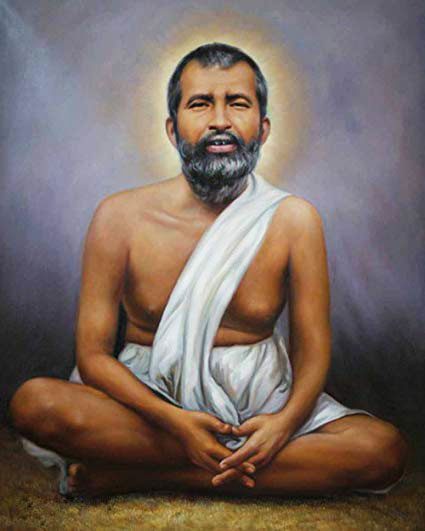
The Magnetic Pull of Divine Love
In the profound words of Sri Ramakrishna, "Love is the most attractive thing in the world; it has the power to draw God himself." This statement encapsulates the essence of love as a transformative force, one that transcends the mundane and reaches into the divine. It invites us to reflect on the nature of love—not merely as an emotion but as a spiritual magnetism that can draw the very essence of the divine closer to us. Understanding this concept is crucial, as it challenges us to reconsider our relationship with love, both in its human and divine forms.
At its core, this quote speaks to the universal longing for connection, not just with one another but with the divine. It suggests that love is not a passive experience; rather, it is an active force that can bridge the gap between the human and the divine. In a world often filled with distractions and superficial connections, Ramakrishna's words remind us of the profound depth that love can offer, urging us to cultivate a love that is both selfless and expansive. This exploration of love's power is not merely an intellectual exercise; it is a call to action, inviting us to embody love in our daily lives.
The image / the metaphor
The imagery in Ramakrishna's quote evokes a sense of magnetism, where love acts as a powerful force that can attract even the divine. The choice of the word "draw" suggests an irresistible pull, indicating that love is not just a passive state but an active force that can influence the cosmos. This metaphor of attraction implies that love has the capacity to transcend barriers, whether they be emotional, spiritual, or even existential. It paints a picture of love as a dynamic energy that can create profound connections, not only among individuals but also between humanity and the divine.
Diving deeper into this metaphor, we can see that love is portrayed as a universal language, one that resonates with the very fabric of existence. It suggests that love is the essence of creation, a force that binds all beings together in a shared experience of life. This perspective invites us to consider love not merely as a personal sentiment but as a cosmic principle, one that has the power to unite us with the divine. In this light, love becomes a pathway to spiritual awakening, a means through which we can experience the divine presence in our lives.
In the speaker's tradition
Within the context of Hindu philosophy, Ramakrishna's assertion about love aligns closely with the concept of bhakti, or devotional love. Bhakti emphasizes a personal relationship with the divine, characterized by deep affection and surrender. This tradition teaches that through love and devotion, one can attain spiritual liberation, or moksha. The idea that love can draw God closer to us resonates with the notion of kenosis, the self-emptying of the divine, where God becomes accessible to those who seek Him with a pure heart. In this way, love is not just a feeling; it is a spiritual practice that opens the heart to divine grace.
Furthermore, Ramakrishna's teachings echo the sentiments found in the Bhagavad Gita, where love and devotion are seen as essential paths to realizing one's true nature. In Chapter 12, Krishna speaks of the various forms of yoga, emphasizing that the path of devotion is one of the most accessible ways to connect with the divine. This connection through love is not merely transactional; it is transformative, allowing the devotee to experience the divine presence in their lives. Thus, Ramakrishna's quote serves as a reminder of the profound spiritual truths embedded in the tradition he represents.
Living the teaching
Consider a modern scenario where this teaching can be applied: a person grappling with feelings of isolation and disconnection in their life. In such moments, the realization that love can draw the divine closer can serve as a powerful motivator to reach out to others, fostering connections that may have been neglected. By actively engaging in acts of kindness and compassion, one can create a ripple effect of love that not only enriches their own life but also brings others closer to the divine. This practice of love becomes a means of transcending personal struggles, allowing individuals to find solace in the interconnectedness of all beings.
In a different context, consider a relationship that is strained or filled with misunderstandings. Applying Ramakrishna's teaching here means approaching the situation with an open heart, seeking to understand and empathize with the other person. By embodying love in this way, one can create a space for healing and reconciliation, drawing both individuals closer not only to each other but also to a higher understanding of love itself. This practice of love, whether in moments of joy or conflict, becomes a pathway to spiritual growth, reminding us that love is indeed the most attractive force in the universe.
A reflection
As we contemplate the depth of Ramakrishna's words, we are invited to ask ourselves: How can I cultivate a love that draws me closer to the divine and to others? This question encourages us to reflect on our own relationships and the ways in which we express love in our daily lives. It challenges us to consider how we can transform our understanding of love from a mere emotion into a powerful spiritual practice, one that has the potential to change not only our lives but also the world around us.




Join the BrightStar Community
Stay connected with daily inspiration, event announcements, and community wisdom