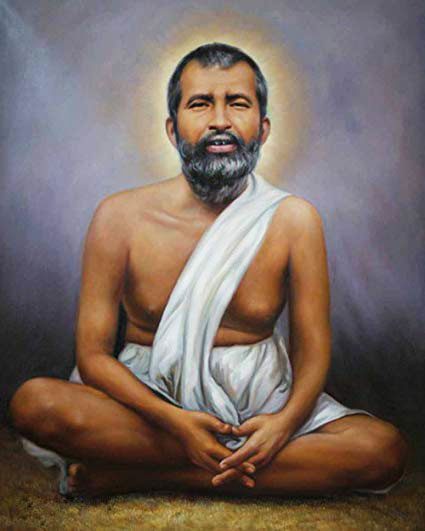
Seeing Beyond Duality: The Essence of Equanimity
In the profound words of Sri Ramakrishna, "When divine vision is attained, all appear equal; and there remains no distinction of good and bad." This statement invites us to explore the transformative power of spiritual realization, suggesting that true understanding transcends the dualities of our everyday perceptions. The stakes are high; in a world rife with division and judgment, the attainment of divine vision offers a pathway to unity and compassion, urging us to see beyond superficial differences.
As we delve deeper into this quote, we recognize that the essence of divine vision is not merely an intellectual exercise but a profound shift in consciousness. It challenges us to reconsider our attachments to labels and judgments that often cloud our interactions with others. By embracing this perspective, we can cultivate a sense of equanimity that allows us to navigate the complexities of life with grace and understanding, fostering a more harmonious existence.
The image / the metaphor
At its core, the quote evokes a vivid image of a higher state of awareness, where distinctions dissolve and all beings are perceived as equal. The phrase "divine vision" suggests a clarity that transcends ordinary sight, hinting at a deeper, spiritual perception that sees beyond the surface. The verbs "attained" and "remains" imply a journey and a state of being, respectively, indicating that this vision is both an achievement and a sustained experience.
Delving further into the metaphor, we can understand that the "distinction of good and bad" represents the dualistic nature of human thought, which often categorizes experiences and individuals into rigid boxes. This duality creates conflict and separation, whereas divine vision invites us to embrace a holistic understanding of existence. In this state, we recognize the interconnectedness of all life, fostering compassion and empathy rather than judgment and division.
In the speaker's tradition
Within the rich tapestry of Hindu philosophy, Sri Ramakrishna's insights resonate deeply with concepts such as dharma, the moral order of the universe, and bhakti, the path of devotion. His teachings emphasize the importance of transcending ego and duality to experience the oneness of all creation. This aligns with the notion of sunyata, or emptiness, which suggests that our perceptions of good and bad are ultimately constructs of the mind, obscuring the underlying unity of existence.
Moreover, the idea of kenosis, or self-emptying, parallels this teaching, as it invites individuals to relinquish their attachments to personal judgments and biases. In the Bhagavad Gita, Krishna speaks of seeing all beings with equanimity, reinforcing the notion that true wisdom lies in recognizing the divine essence within everyone. This perspective encourages us to cultivate a sense of inner peace that reflects our understanding of the interconnectedness of all life.
Living the teaching
Consider a modern scenario where this teaching can be applied: a workplace filled with diverse personalities and competing agendas. In such an environment, it is easy to fall into the trap of labeling colleagues as "good" or "bad" based on their actions or attitudes. However, by embracing the essence of divine vision, one can strive to see beyond these labels, recognizing that each individual is shaped by their unique experiences and struggles. This shift in perspective can foster collaboration and understanding, transforming the workplace into a more harmonious space.
Another application of this teaching might arise in personal relationships, particularly during conflicts. When faced with disagreements, it is common to view the other person as "wrong" or "bad." However, by practicing equanimity and striving to see the situation through the lens of divine vision, we can approach the conflict with compassion and openness. This allows for deeper communication and healing, as we recognize that our differences do not define our worth or humanity.
A reflection
As we contemplate Sri Ramakrishna's profound insight, we are invited to reflect on our own perceptions and judgments. How often do we find ourselves categorizing others as good or bad based on fleeting moments or superficial traits? In what ways can we cultivate a deeper understanding of the interconnectedness of all beings, allowing us to embrace a more compassionate and equitable worldview? This contemplation can serve as a guiding light on our spiritual journey, encouraging us to seek the divine vision that lies within us all.




Join the BrightStar Community
Stay connected with daily inspiration, event announcements, and community wisdom