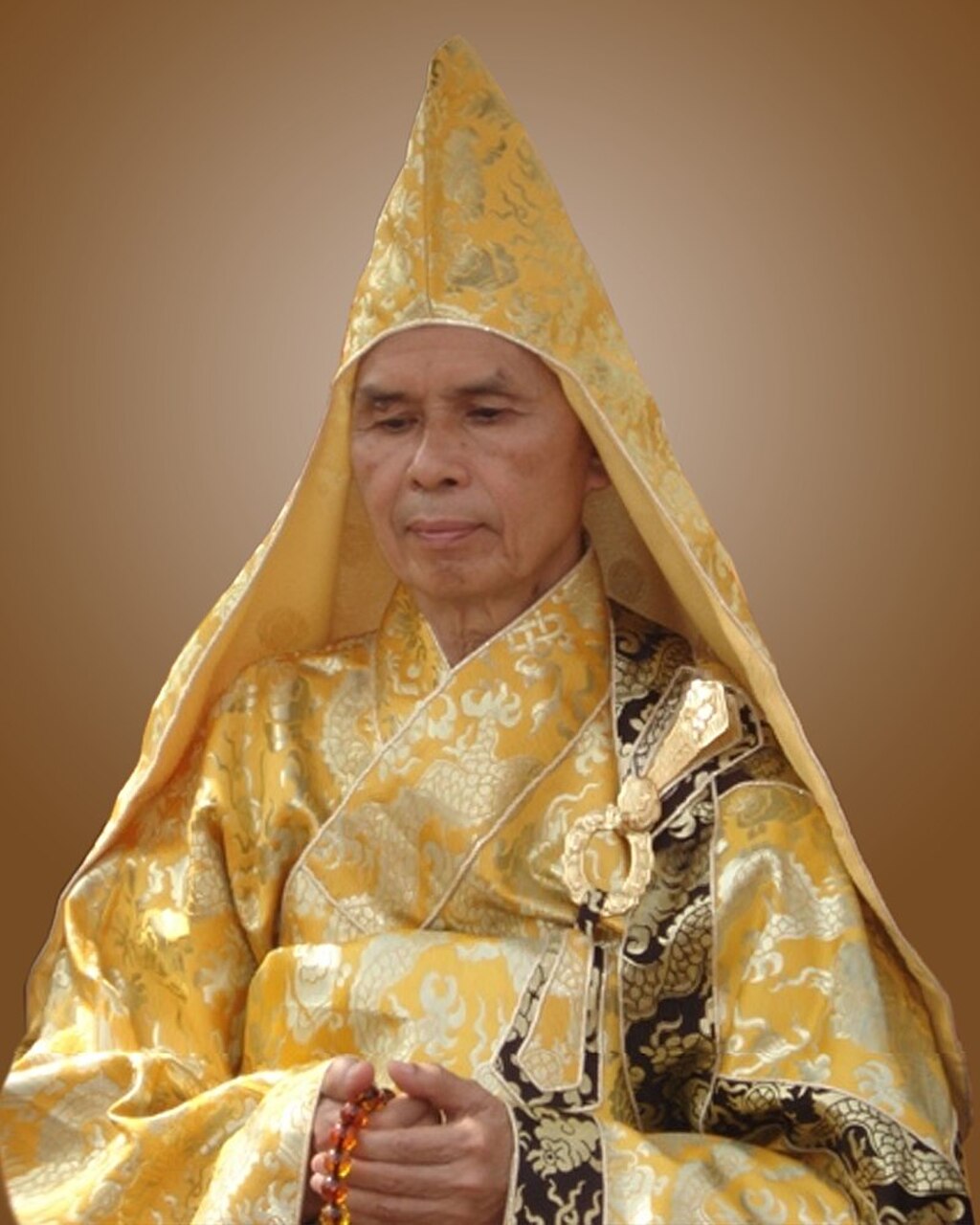
The Fragile Thread of Hope
Thich Nhat Hanh's poignant assertion that "Hope is what holds us together when we are about to fall apart" speaks to the profound role hope plays in our lives, especially during moments of crisis. In times of despair, when the weight of our struggles threatens to overwhelm us, it is hope that acts as a binding force, keeping us anchored to the possibility of renewal and resilience. This quote invites us to reflect on the nature of hope, not merely as a passive wish for better days, but as an active, sustaining energy that can guide us through our darkest hours.
In a world often marked by uncertainty and turmoil, the essence of hope becomes even more critical. It is not just a fleeting emotion but a deep-rooted belief in the potential for transformation and healing. Thich Nhat Hanh's words remind us that hope is not an abstract concept; it is a tangible thread that weaves through our experiences, connecting us to ourselves and to one another. This understanding of hope as a vital force can inspire us to cultivate resilience, fostering a sense of community and support that can uplift us when we feel we are on the brink of falling apart.
The image / the metaphor
The imagery in Thich Nhat Hanh's quote evokes a sense of fragility and interconnectedness. The phrase "holds us together" suggests a delicate balance, as if hope is a thread that binds our fragmented selves during times of distress. The verb "holds" implies an active engagement, a nurturing presence that provides stability amidst chaos. This visual metaphor captures the essence of our human experience, where hope serves as both a lifeline and a source of strength, allowing us to navigate the tumultuous waters of life.
In the speaker's tradition
Thich Nhat Hanh's teachings are deeply rooted in the Buddhist tradition, where concepts such as interbeing and mindfulness play a crucial role in understanding the nature of existence. The idea of hope aligns with the Buddhist principle of dharma, which emphasizes the interconnectedness of all beings and the potential for transformation through awareness and compassion. In this context, hope is not a solitary endeavor; it is a collective experience that arises from our shared humanity and the recognition that we are all inextricably linked.
In his work, Thich Nhat Hanh often references the concept of "sunyata," or emptiness, which invites us to let go of rigid attachments and embrace the fluidity of life. This perspective allows us to see hope as a space of possibility rather than a fixed outcome. In his book "Peace Is Every Step," he encourages us to cultivate mindfulness in our daily lives, reminding us that hope can flourish in the present moment when we are fully aware of our thoughts and feelings. By grounding ourselves in the here and now, we can nurture the hope that sustains us through life's inevitable challenges.
Living the teaching
Consider a modern scenario where this teaching resonates: a person facing the loss of a job. The initial shock and fear may lead to feelings of despair, but it is hope that can provide the strength to seek new opportunities. In this situation, hope acts as a catalyst for action, prompting the individual to explore new paths, reach out for support, and envision a future beyond the current crisis. By recognizing hope as a guiding force, one can transform a moment of potential breakdown into an opportunity for growth and renewal.
In the context of relationships, Thich Nhat Hanh's teaching on hope can be equally transformative. Imagine a couple navigating a difficult period, where misunderstandings and resentment threaten to drive them apart. In such moments, it is hope that can rekindle the desire for connection and understanding. By consciously choosing to hold onto hope, both partners can engage in open communication, fostering an environment where healing and reconciliation become possible. This practice of nurturing hope within relationships not only strengthens the bond between individuals but also cultivates a deeper sense of compassion and empathy.
A reflection
As we contemplate Thich Nhat Hanh's profound words, we are invited to consider the role of hope in our own lives. In what ways does hope serve as a lifeline for you during challenging times? Reflecting on this question can deepen our understanding of hope as an active force, encouraging us to cultivate it intentionally and share it with others. By recognizing hope as a shared experience, we can foster resilience not only within ourselves but also within our communities, creating a tapestry of support that holds us together in times of need.




Join the BrightStar Community
Stay connected with daily inspiration, event announcements, and community wisdom