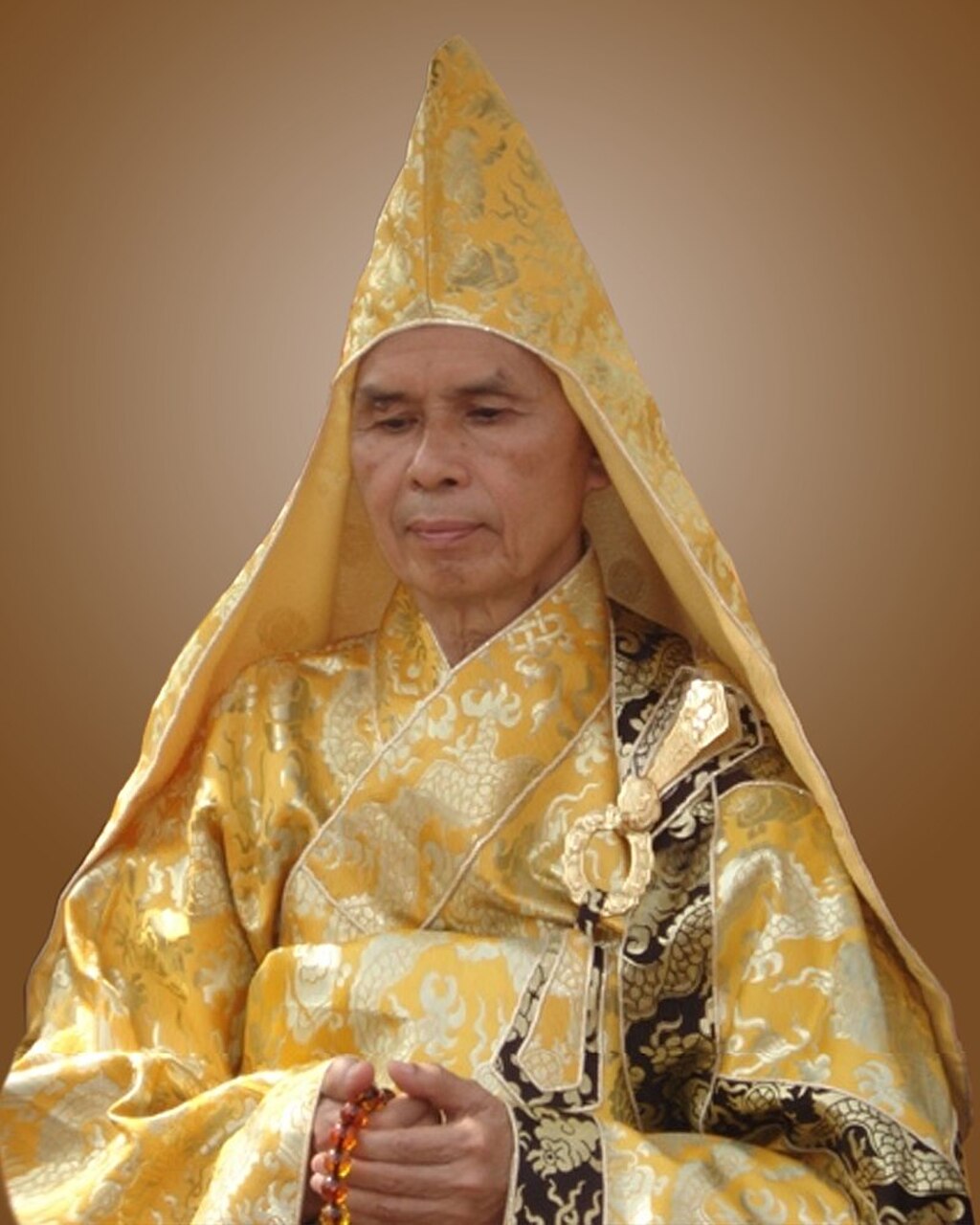
Embracing the Void: The Wisdom of Interbeing
In the words of Thich Nhat Hanh, "Look deeply and you will see emptiness, interbeing, and impermanence in everything." This profound statement invites us to explore the nature of reality, urging us to perceive the interconnectedness of all things while recognizing their transient essence. Understanding these concepts is not merely an intellectual exercise; it is a transformative journey that can lead to greater compassion and insight in our daily lives.
To look deeply is to engage in a practice of mindfulness that transcends superficial observation. It calls us to peel back the layers of our conditioned perceptions, revealing the underlying truths of existence. In a world often dominated by distraction and superficiality, this invitation to see with clarity is both a challenge and a gift, offering a pathway to deeper understanding and connection with ourselves and others.
The image / the metaphor
The imagery in Thich Nhat Hanh's quote evokes a sense of depth and introspection. "Look deeply" suggests a deliberate act of observation, a movement away from the surface of things into their essence. The words "emptiness," "interbeing," and "impermanence" are laden with meaning, each a portal into a different aspect of reality. Emptiness, in this context, does not imply a void devoid of meaning; rather, it points to the absence of inherent, independent existence in all phenomena. Interbeing speaks to the profound interconnectedness of all life, while impermanence reminds us that everything is in a constant state of flux.
Diving deeper into the metaphor, we can see that these concepts are interwoven like threads in a tapestry. Emptiness invites us to release our attachments and preconceived notions, allowing us to experience the world as it is, unfiltered by our biases. Interbeing expands this understanding, illustrating how our lives are intricately linked with the lives of others, the environment, and the cosmos. Finally, impermanence serves as a reminder that every moment is fleeting, urging us to cherish the present and cultivate a sense of urgency in our spiritual practice.
In the speaker's tradition
Thich Nhat Hanh's teachings are rooted in the rich soil of Buddhist philosophy, particularly the concepts of dharma and sunyata. Dharma refers to the teachings of the Buddha, encompassing the nature of reality and the path to liberation. Sunyata, or emptiness, is a central tenet in Mahayana Buddhism, emphasizing that all phenomena lack intrinsic existence. This understanding fosters a sense of compassion and interconnectedness, as we come to realize that our suffering is intertwined with the suffering of others.
In "The Heart of the Buddha's Teaching," Thich Nhat Hanh elaborates on these themes, drawing from the foundational texts of Buddhism. He emphasizes that recognizing the emptiness of all things leads to a profound understanding of interdependence, which is echoed in the teachings of Nagarjuna and the Heart Sutra. These texts remind us that the path to enlightenment is not a solitary journey but a collective awakening to the truth of our shared existence.
Living the teaching
Consider a modern scenario where this teaching can be applied: a heated conversation with a colleague. In the midst of conflict, it is easy to become entrenched in our views, perceiving the other as an adversary. However, if we take a moment to "look deeply," we might recognize the shared humanity in our differences. By acknowledging the impermanence of our emotions and the interconnectedness of our experiences, we can approach the conversation with empathy and openness, transforming potential discord into an opportunity for understanding.
Another application of this teaching can be found in our relationships. Imagine a moment of frustration with a loved one, where misunderstandings seem insurmountable. By reflecting on the principles of emptiness and interbeing, we can cultivate patience and compassion. Recognizing that our loved ones are also navigating their own struggles allows us to respond with kindness rather than defensiveness. This shift in perspective not only deepens our connection but also fosters a more harmonious environment.
A reflection
As we contemplate Thich Nhat Hanh's invitation to "look deeply," we are called to engage with the world in a more profound way. What does it mean for you to see emptiness, interbeing, and impermanence in your own life? Consider the moments when you feel most connected to others and the times when you experience the weight of impermanence. How can this awareness transform your relationships and your understanding of self? Allow these questions to guide your reflections and deepen your practice.




Join the BrightStar Community
Stay connected with daily inspiration, event announcements, and community wisdom