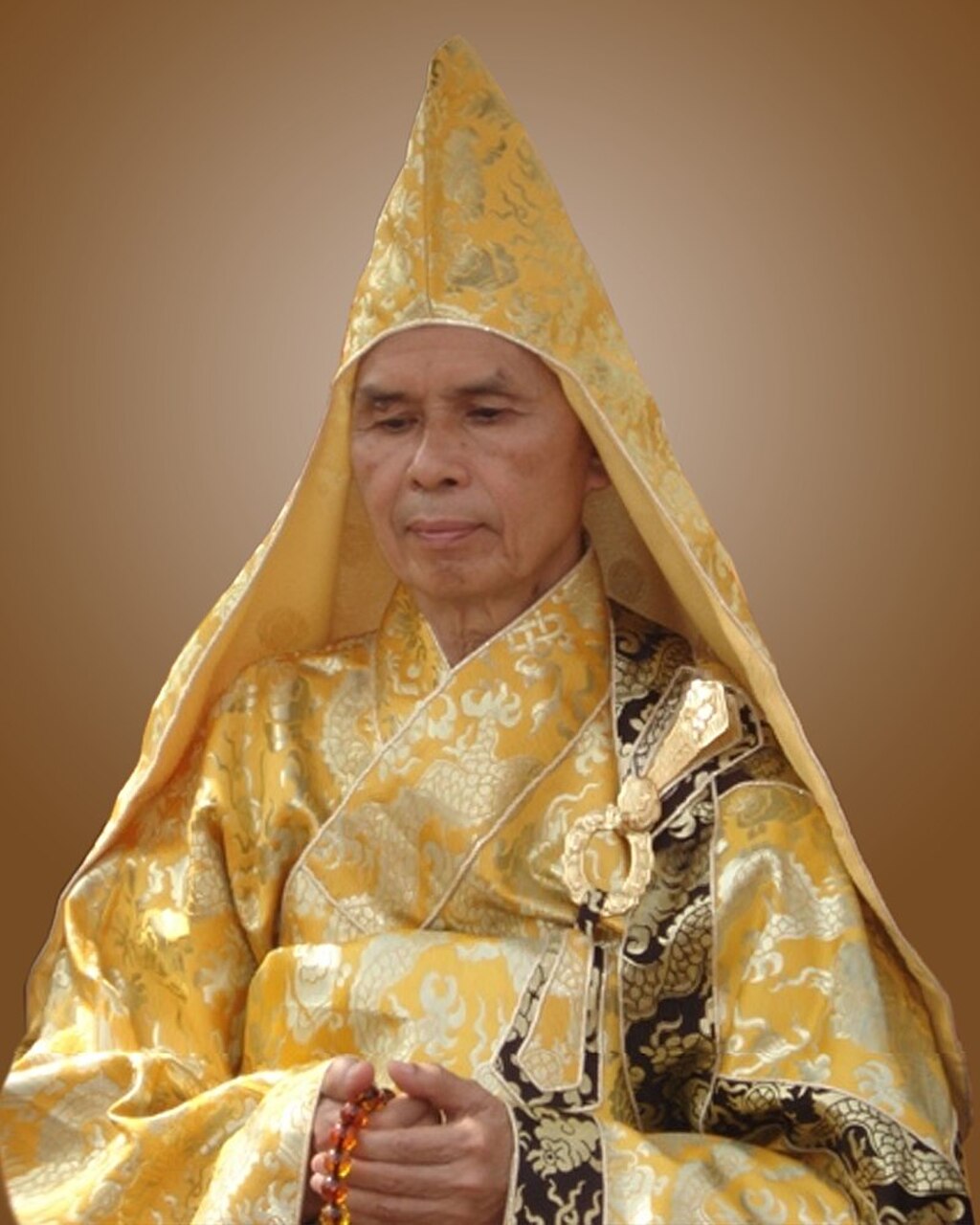
Embracing Freedom Through Non-Attachment
Thich Nhat Hanh's profound assertion, "Right view is to be without views — to be without the views that bind us," invites us to reconsider the nature of our beliefs and perceptions. At its core, this quote challenges the very foundations of how we construct our understanding of the world. It suggests that true wisdom and liberation arise not from clinging to fixed ideas, but from cultivating a fluid and open perspective. In a world often dominated by rigid ideologies and divisive opinions, this teaching serves as a beacon of hope, urging us to transcend the limitations imposed by our own views.
To grasp the depth of this teaching, we must first recognize the pervasive influence of our views on our lives. Our beliefs shape our experiences, often leading us to a sense of separation and conflict. Thich Nhat Hanh's call to be "without views" is not an invitation to nihilism or indifference; rather, it is a profound invitation to embrace the impermanence of all things. By letting go of our attachments to fixed viewpoints, we open ourselves to a more expansive understanding of reality, one that fosters compassion, connection, and ultimately, freedom.
The image / the metaphor
The imagery in Thich Nhat Hanh's quote evokes a sense of liberation and lightness. To be "without views" suggests a state of being unencumbered by the weight of preconceived notions and judgments. The verb "to be" implies a presence that is fully engaged with the moment, free from the constraints of past experiences or future expectations. This state of non-attachment allows us to experience life as it is, unfiltered by the biases that often cloud our perception.
Diving deeper into the metaphor, we can envision views as chains that bind us to a limited understanding of ourselves and others. When we cling to our views, we create barriers that prevent us from experiencing the richness of life in its entirety. By releasing these chains, we cultivate a sense of spaciousness within ourselves, allowing for the possibility of new insights and connections. This metaphor of liberation resonates deeply within the Buddhist tradition, where the path to enlightenment is often depicted as a journey of unbinding and awakening.
In the speaker's tradition
Thich Nhat Hanh's teaching is deeply rooted in the Buddhist tradition, where the concept of "right view" is foundational to the Noble Eightfold Path. In Buddhism, right view is not merely about holding correct beliefs; it encompasses a profound understanding of the nature of reality, including the principles of impermanence (anicca), suffering (dukkha), and non-self (anatta). This understanding invites practitioners to engage in a process of kenosis, or self-emptying, which aligns closely with the idea of being without views. By relinquishing our attachments to fixed identities and beliefs, we create space for deeper wisdom to emerge.
A relevant text that echoes this sentiment is the Heart Sutra, which teaches the concept of sunyata, or emptiness. The sutra emphasizes that all phenomena are empty of inherent existence, encouraging us to see beyond our limited perspectives. In this light, Thich Nhat Hanh's call to be without views becomes a pathway to experiencing the interconnectedness of all beings, fostering a sense of compassion and understanding that transcends individual differences.
Living the teaching
Consider a modern scenario where this teaching can be applied: a heated discussion about political beliefs among friends. Each person clings to their views, creating an atmosphere of tension and division. By embodying Thich Nhat Hanh's teaching of being without views, one might approach the conversation with curiosity rather than defensiveness. This shift in perspective allows for a more open dialogue, where individuals can share their experiences without the need to convince or convert one another. In this way, the practice of non-clinging to views can transform conflict into connection.
Another application of this teaching can be found in personal relationships, particularly during moments of disagreement. When we cling to our perspectives, we often lose sight of the other person's feelings and experiences. By practicing non-attachment to our views, we can cultivate empathy and understanding, allowing us to engage in more constructive conversations. This approach not only deepens our relationships but also fosters a sense of harmony and peace within ourselves, as we learn to navigate the complexities of human interaction with grace and compassion.
A reflection
As we contemplate Thich Nhat Hanh's profound insight, we are invited to reflect on the nature of our own views and the ways they shape our experiences. What beliefs or perspectives are we clinging to that may be limiting our understanding of ourselves and others? In this moment of reflection, we can ask ourselves: How might my life change if I were to embrace a more open and fluid perspective, free from the constraints of fixed views?




Join the BrightStar Community
Stay connected with daily inspiration, event announcements, and community wisdom