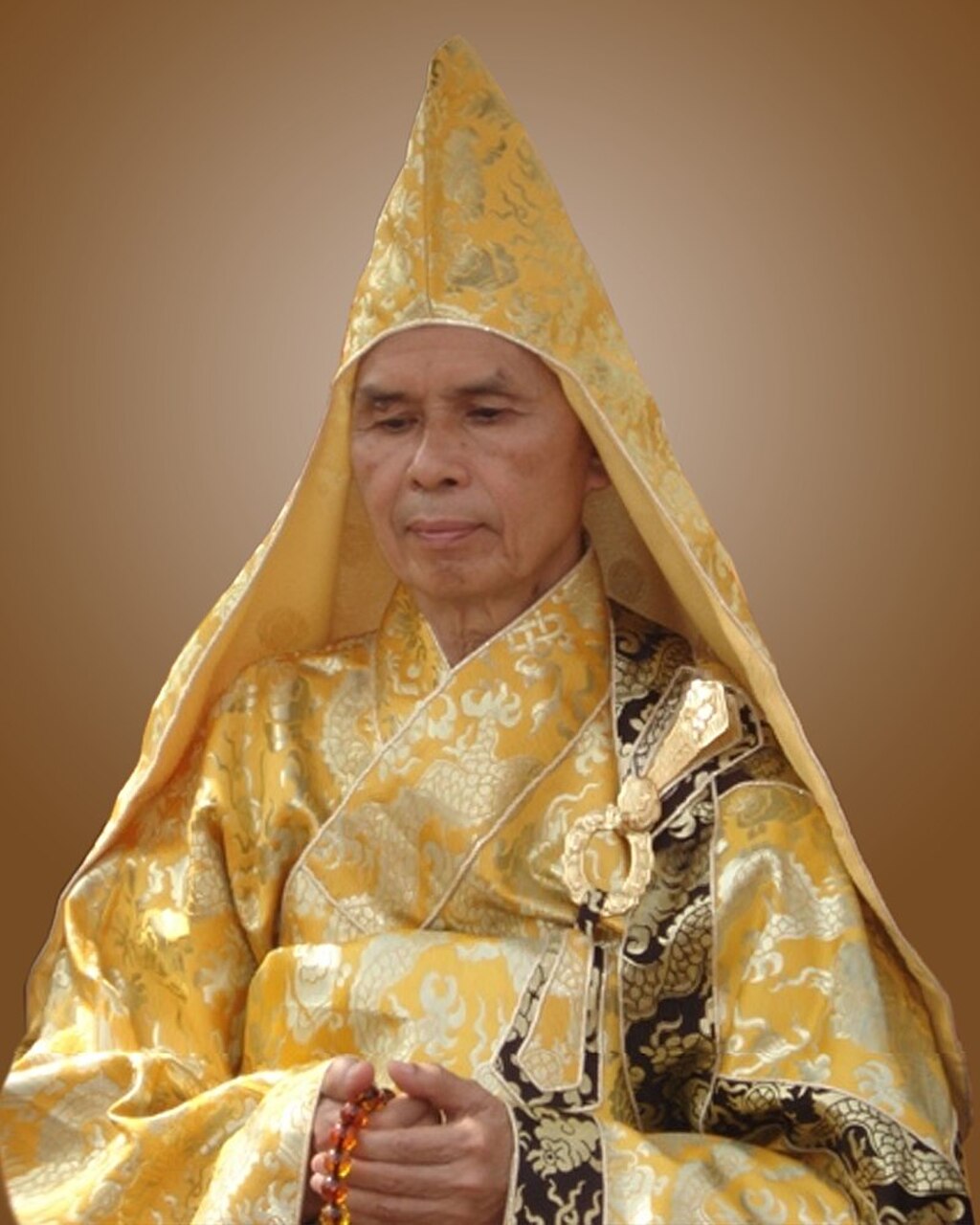
The Beauty of Authenticity: Embracing the Self
Thich Nhat Hanh's profound assertion, "To be beautiful means to be yourself. You don't need to be accepted by others. You need to accept yourself," invites us to explore the essence of beauty as an internal state rather than an external validation. In a world often driven by the desire for approval and acceptance, this quote challenges us to shift our focus inward, emphasizing the importance of self-acceptance as the foundation of true beauty. The stakes are high; our sense of self-worth and authenticity hinges on our ability to embrace who we are, free from the constraints of societal expectations.
Delving deeper, we recognize that this teaching is not merely about self-acceptance; it is a call to authenticity that resonates with the core of our being. In a society that frequently equates beauty with conformity, Thich Nhat Hanh reminds us that the most profound beauty arises from the courage to be ourselves. This journey toward self-acceptance is not always easy, as it requires us to confront our insecurities and the fear of rejection. Yet, it is through this courageous embrace of our true selves that we can cultivate a beauty that is both radiant and enduring.
The image / the metaphor
The imagery in Thich Nhat Hanh's quote evokes a sense of liberation and empowerment. To be beautiful, in this context, is to shed the layers of pretense and societal expectation, revealing the authentic self that lies beneath. The verbs "to be" and "to accept" are particularly significant; they suggest a state of existence rather than a pursuit. This beauty is not something to be chased or attained; it is a natural expression of our true nature, waiting to be uncovered.
Moreover, the metaphor of beauty as authenticity invites us to reconsider our understanding of what it means to be beautiful. It suggests that beauty is not a fixed standard but a dynamic quality that emerges when we align with our true selves. This perspective encourages us to redefine beauty in terms of authenticity, where the unique qualities of each individual contribute to a richer tapestry of human experience. In this light, beauty becomes a celebration of diversity rather than a narrow ideal.
In the speaker's tradition
Thich Nhat Hanh's teaching is deeply rooted in the Buddhist tradition, where concepts such as dharma and sunyata (emptiness) play a crucial role in understanding the self. The notion of dharma emphasizes the importance of living in accordance with one's true nature, while sunyata invites us to recognize the impermanence and interconnectedness of all things. In this context, self-acceptance becomes a pathway to realizing our inherent beauty, as we let go of the attachments and illusions that obscure our true selves.
In his work "True Love," Thich Nhat Hanh elaborates on the idea of love as a practice of deep understanding and acceptance. He encourages us to cultivate compassion not only for others but also for ourselves. This self-compassion is essential for embracing our authentic selves, as it allows us to acknowledge our flaws and imperfections without judgment. By integrating these teachings, we can begin to see that true beauty is not about perfection but about the genuine expression of who we are.
Living the teaching
Consider a modern scenario where this teaching resonates: a young professional grappling with the pressures of workplace expectations. In striving for acceptance and recognition, they may find themselves compromising their values and authenticity. By embracing Thich Nhat Hanh's message, this individual can begin to shift their focus from seeking external validation to cultivating self-acceptance. This shift not only enhances their sense of self-worth but also allows them to contribute more authentically to their work environment, fostering genuine connections with colleagues.
In a different context, imagine a relationship where one partner struggles with feelings of inadequacy. The pressure to conform to an idealized version of love can lead to misunderstandings and resentment. By applying Thich Nhat Hanh's teaching, both partners can engage in open conversations about their insecurities and desires, fostering an environment of acceptance and understanding. This practice of self-acceptance and mutual support can transform their relationship, allowing both individuals to flourish as their authentic selves.
A reflection
As we reflect on Thich Nhat Hanh's profound words, we are invited to consider the ways in which we seek acceptance from others. How often do we compromise our true selves in pursuit of external validation? In this moment of contemplation, let us ask ourselves: What does it mean for me to accept myself fully, and how can this acceptance transform my experience of beauty in my life?




Join the BrightStar Community
Stay connected with daily inspiration, event announcements, and community wisdom