The Eternal Now: Embracing the Present Moment
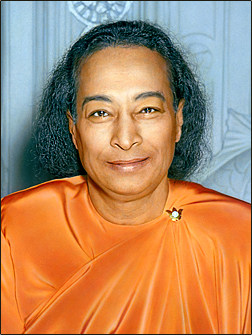
Paramahansa Yogananda's assertion that "In the land of eternity there is no past or future; there is only the all-pervading present" invites us to reconsider our relationship with time. This profound statement challenges the conventional understanding of existence, urging us to transcend the linear confines of past regrets and future anxieties. In a world often dominated by the ticking clock, Yogananda beckons us to explore the transformative power of the present moment, where true life unfolds.
To grasp the depth of this teaching, we must recognize that our perception of time shapes our experience of reality. The past, with its memories and lessons, and the future, with its hopes and fears, can distract us from the richness of the now. Yogananda's words serve as a reminder that the eternal present is not merely a philosophical concept but a lived experience that can lead to profound peace and clarity. By anchoring ourselves in the present, we can access a deeper understanding of our existence and the divine.
The image / the metaphor
Yogananda's quote paints a vivid picture of eternity as a vast, unbounded landscape where time ceases to exist. The phrase "all-pervading present" evokes a sense of omnipresence, suggesting that the essence of life is not confined to moments that have passed or those yet to come. Instead, it invites us to immerse ourselves in the immediacy of existence, where every breath and heartbeat resonates with the pulse of the universe. The imagery here is one of liberation, encouraging us to break free from the shackles of temporal constraints.
Diving deeper into the metaphor, we can see that the "land of eternity" symbolizes a state of consciousness rather than a physical place. It represents an inner realm where the soul can experience unity with the divine, free from the dualities of time. This perspective aligns with the yogic understanding of samadhi, a state of meditative absorption where the individual self merges with the universal consciousness. In this state, the distinctions between past, present, and future dissolve, revealing the eternal truth of our being.
In the speaker's tradition
Paramahansa Yogananda's teachings are deeply rooted in the spiritual tradition of Hinduism, particularly in the concepts of dharma and moksha. Dharma, often translated as duty or righteousness, emphasizes living in accordance with one's true nature, which can only be fully realized in the present moment. Moksha, or liberation, is the ultimate goal of life, achieved through the realization of one's eternal essence beyond the temporal world. Yogananda's insights encourage us to align our actions with our higher purpose, fostering a sense of presence that transcends the limitations of time.
In the Bhagavad Gita, a foundational text of Hindu philosophy, Lord Krishna imparts wisdom on the nature of action and detachment. He teaches that one should perform their duties without attachment to the fruits of their actions, emphasizing the importance of being fully present in each moment. This resonates with Yogananda's message, as both highlight the significance of engaging with life as it unfolds, rather than being ensnared by the past or future. The Gita's teachings on yoga and self-realization echo Yogananda's call to embrace the eternal now.
Living the teaching
Consider a modern scenario where this teaching can be applied: a busy professional caught in the whirlwind of deadlines and responsibilities. In such a life, the mind often oscillates between past mistakes and future uncertainties, leading to stress and burnout. By consciously practicing mindfulness and grounding oneself in the present moment, this individual can transform their experience. Simple techniques such as focused breathing or taking brief pauses throughout the day can help cultivate a sense of presence, allowing them to engage more fully with their work and relationships.
Another application of Yogananda's teaching can be found in personal relationships. Imagine a couple navigating the complexities of life together, often distracted by their individual concerns and future plans. By embracing the present moment, they can deepen their connection, fostering genuine communication and understanding. Engaging in shared activities that encourage presence—such as mindful walks or shared meals—can help them appreciate each other more fully, nurturing their bond in the eternal now rather than getting lost in the distractions of time.
A reflection
As we contemplate Yogananda's profound insight, we are invited to ask ourselves: How often do I allow my thoughts to drift into the past or future, and what might I discover if I fully embraced the present moment? This question encourages us to reflect on our daily habits and the ways we can cultivate a deeper awareness of the now. By exploring this inquiry, we may uncover the transformative potential of living in the all-pervading present, where life unfolds in its fullest expression.




Join the BrightStar Community
Stay connected with daily inspiration, event announcements, and community wisdom