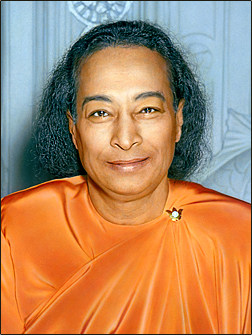
The Dual Edge of Intelligence: A Contemplation on Yogananda's Wisdom
Paramahansa Yogananda's poignant observation that "keen intelligence is two-edged" invites us to reflect on the profound responsibility that accompanies our mental faculties. He suggests that intelligence, much like a knife, can either serve as a tool for healing and understanding or become a weapon that inflicts harm. This duality is not merely a philosophical musing; it is a call to mindfulness in how we wield our thoughts and insights in the world. The stakes are high, as our choices can either uplift or devastate those around us.
In a world increasingly driven by information and rapid communication, the implications of Yogananda's words resonate deeply. The intelligence we cultivate can lead to constructive dialogue and compassionate action, or it can spiral into divisive rhetoric and emotional violence. This dichotomy compels us to examine not just the content of our thoughts but also the intention behind them. As we navigate our relationships and societal interactions, we must ask ourselves: Are we using our intelligence to foster connection or to sever bonds?
The image / the metaphor
The imagery of a knife in Yogananda's quote evokes a visceral understanding of intelligence as a powerful force. The verbs "cut" and "slash" carry weight, suggesting that our mental acuity can either dissect an issue to reveal its core or recklessly harm those we care about. This metaphor of the knife serves as a reminder that intelligence is not inherently good or bad; rather, it is the application of that intelligence that determines its impact. The heart, often associated with love and vulnerability, contrasts sharply with the throat, a symbol of communication and expression, highlighting the delicate balance we must maintain.
Diving deeper into this metaphor, we see that the knife represents the sharpness of discernment. It can be used to navigate the complexities of life, cutting through confusion and revealing truth. However, when misused, it can lead to betrayal and pain, severing the ties that bind us to one another. This duality urges us to cultivate not just intelligence, but wisdom—the ability to discern when and how to apply our insights for the greater good.
In the speaker's tradition
Yogananda's teachings are deeply rooted in the spiritual tradition of Hinduism, where concepts such as dharma and prajna play a crucial role in guiding ethical behavior and wisdom. Dharma, the moral order of the universe, calls upon individuals to act in accordance with their highest understanding, while prajna refers to the wisdom that arises from deep insight and discernment. In this context, Yogananda's assertion about the dual nature of intelligence aligns with the idea that true wisdom is not merely intellectual but is also deeply ethical and compassionate.
In the Bhagavad Gita, a foundational text in Hindu philosophy, we find similar themes of discernment and responsibility. Arjuna's struggle on the battlefield serves as a metaphor for the moral dilemmas we face in life, where the right use of intelligence can lead to righteous action (dharma) and the wrong use can lead to chaos and suffering. The Gita teaches that wisdom must be coupled with a sense of duty and compassion, echoing Yogananda's call for a mindful approach to our intelligence.
Living the teaching
Consider a modern scenario in which a colleague makes a mistake at work, and the immediate reaction is to criticize them harshly. In this moment, the keen intelligence to analyze the situation can either lead to constructive feedback that helps the colleague learn and grow or to a destructive outburst that damages their confidence and the team dynamic. By choosing to approach the situation with empathy and understanding, one can wield their intelligence as a tool for healing rather than harm, embodying Yogananda's wisdom in a tangible way.
In the realm of personal relationships, the application of this teaching becomes even more nuanced. Imagine a disagreement with a loved one where the temptation to "slash" with sharp words is strong. Here, the challenge lies in recognizing that our intelligence can either deepen our connection through honest communication or create a rift through careless remarks. By practicing mindfulness and choosing our words with care, we can transform potential conflict into an opportunity for growth and understanding, honoring the heart of the relationship.
A reflection
As we contemplate Yogananda's insight into the dual nature of intelligence, we are invited to reflect on our own lives. How do we wield our mental faculties in our daily interactions? Are we using our intelligence to uplift and support those around us, or are we inadvertently causing harm? This contemplation encourages us to cultivate a deeper awareness of our thoughts and words, guiding us toward a more compassionate and responsible use of our keen intelligence.




Join the BrightStar Community
Stay connected with daily inspiration, event announcements, and community wisdom