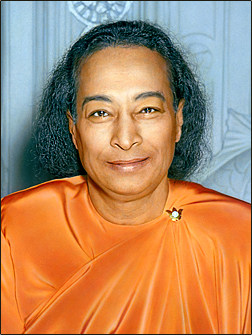
The Soul's Melodic Offering
Paramahansa Yogananda beautifully encapsulates a profound truth when he states, "Love is the song of the soul singing to God." This quote invites us to consider love not merely as an emotion or a fleeting sentiment, but as a fundamental expression of our innermost being, a divine melody that resonates with the essence of the universe. In a world often clouded by distractions and superficial connections, this perspective on love serves as a reminder of our true purpose: to cultivate a relationship with the divine through the purity of our hearts.
Delving deeper, we find that this notion of love as a song suggests an active engagement with the divine, a dynamic interplay between the soul and God. It implies that our very existence is a form of worship, where each act of love becomes a note in a larger symphony. This understanding elevates love beyond the personal realm, positioning it as a universal force that connects all beings. In recognizing love as the soul's song, we are called to reflect on how we express this love in our lives and the impact it has on our spiritual journey.
The image / the metaphor
The imagery of a song evokes a sense of harmony, rhythm, and beauty, suggesting that love is not a solitary experience but rather a collective expression. The use of the word "singing" implies an active, joyful participation in the act of loving, where the soul's essence resonates with the divine. This metaphor invites us to envision love as a continuous flow, much like a melody that evolves and transforms, echoing the ever-changing nature of our spiritual lives.
Moreover, the metaphor of a song implies that love has a structure and a purpose, much like musical composition. Just as a song can evoke emotions and inspire action, love has the power to uplift our spirits and guide us toward a deeper understanding of ourselves and our relationship with the divine. In this light, we can see love as a sacred art form, where each note represents a moment of connection, a whisper of devotion, and a celebration of our shared humanity.
In the speaker's tradition
Within the context of Yogananda's teachings, this concept of love as the soul's song aligns closely with the principles of bhakti, or devotional love. Bhakti emphasizes the importance of surrendering oneself to God, allowing love to flow freely and unconditionally. This path of devotion encourages practitioners to cultivate a deep, personal relationship with the divine, where love becomes the driving force behind all actions and intentions. In this sense, Yogananda's quote serves as a reminder that our souls are inherently connected to the divine through love, and that this connection is the essence of our spiritual journey.
Furthermore, the idea of love as a song resonates with the teachings found in the Bhagavad Gita, where the concept of dharma, or righteous duty, is intricately linked to the expression of love and devotion. In Chapter 12, Krishna speaks of the various paths to realization, emphasizing that the path of love is one of the most accessible and profound. This connection between love and duty reinforces the notion that our actions, when rooted in love, become a form of worship, allowing us to sing our soul's song in harmony with the universe.
Living the teaching
Consider a modern scenario where this teaching can be applied: a busy parent juggling work, household responsibilities, and the needs of their children. In the midst of this chaos, the parent may find moments to express love through small acts—preparing a favorite meal, offering a comforting hug, or simply listening attentively. Each of these actions becomes a note in the song of their soul, a reminder that love can be expressed in the mundane and the everyday, transforming routine into a sacred practice.
In a different context, imagine a relationship facing challenges, where misunderstandings and frustrations may cloud the connection between partners. By consciously choosing to approach each interaction with love, the couple can begin to heal and reconnect. This practice of viewing love as a song encourages them to communicate openly, listen deeply, and express their feelings with compassion. In doing so, they create a harmonious space where love can flourish, allowing their souls to sing together in unity.
A reflection
As we contemplate Yogananda's profound assertion that "Love is the song of the soul singing to God," we are invited to reflect on our own lives and the ways we express love. Are we allowing our souls to sing freely, or are we holding back due to fear, doubt, or distraction? In what ways can we cultivate a deeper relationship with the divine through our expressions of love? Let this contemplation guide you as you seek to harmonize your life with the melody of your soul.




Join the BrightStar Community
Stay connected with daily inspiration, event announcements, and community wisdom