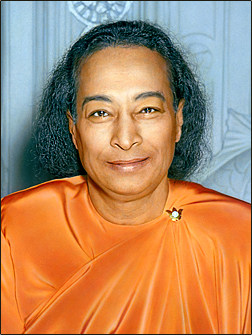
The Heart of Contemplation: A Journey Through Yogananda's Wisdom
Paramahansa Yogananda's succinct yet profound instruction, "Read a little. Meditate more. Think of God all the time," serves as a guiding light for those seeking a deeper connection with the divine. In this quote, Yogananda emphasizes the importance of balancing intellectual engagement with spiritual practice, suggesting that while knowledge is valuable, it is through meditation and constant awareness of the divine that we truly cultivate our spiritual lives. This teaching resonates deeply in a world often distracted by the noise of daily existence, reminding us of the essential practices that lead to inner peace and enlightenment.
As we delve into Yogananda's wisdom, we uncover layers of meaning that invite us to reflect on our own spiritual journeys. The call to "read a little" suggests that while scripture and spiritual literature can provide insights, they are merely stepping stones on the path to a more profound experience of the divine. The emphasis on meditation and the continuous contemplation of God invites us to immerse ourselves in a practice that transcends mere intellectual understanding, urging us to embody the teachings we encounter. This balance between knowledge and experience is crucial for anyone seeking a genuine connection with the divine.
The image / the metaphor
At first glance, Yogananda's quote presents a clear hierarchy of spiritual practice: reading, meditating, and then the constant awareness of God. The verbs chosen—"read," "meditate," and "think"—carry distinct weights. Reading is a solitary act, often confined to the mind; meditation is a deeper engagement, a surrendering of the self; and thinking of God all the time is a continuous thread that weaves through our daily lives. The imagery evokes a journey from the surface of knowledge to the depths of spiritual experience, illustrating the transformative power of devotion.
Diving deeper into the metaphor, we see that Yogananda is not merely advocating for a sequence of actions but rather a holistic approach to spirituality. The act of reading serves as an introduction to the vast ocean of spiritual wisdom, while meditation is the diving into those waters, allowing us to experience their depth and richness. Thinking of God all the time is akin to swimming in that ocean, where the divine becomes the very essence of our existence. This metaphor invites us to consider how we can integrate these practices into our lives, fostering a continuous relationship with the divine.
In the speaker's tradition
Paramahansa Yogananda's teachings are deeply rooted in the tradition of Hinduism, particularly the paths of bhakti (devotion) and jnana (knowledge). The concepts of dharma and prajna also play a significant role in understanding his message. Dharma, or righteous living, encourages us to align our actions with our spiritual values, while prajna, or wisdom, invites us to discern the deeper truths of existence. Yogananda's emphasis on meditation as a means of connecting with God reflects the bhakti tradition, where love and devotion are central to the spiritual journey.
In the Bhagavad Gita, a foundational text of Hindu philosophy, Krishna advises Arjuna to engage in selfless action while maintaining a constant awareness of the divine. This aligns closely with Yogananda's teaching, as both emphasize the importance of integrating spiritual practice into daily life. The Gita's call to "perform your duty" while remaining connected to God mirrors Yogananda's assertion that our spiritual lives should be an ongoing dialogue with the divine, guiding our thoughts and actions in every moment.
Living the teaching
Consider a modern scenario where Yogananda's teaching can be applied: a busy professional navigating the demands of work and personal life. In this context, one might find themselves overwhelmed by responsibilities, often neglecting their spiritual practice. By consciously setting aside time to read a few verses from a spiritual text, followed by a dedicated period of meditation, the individual can create a sacred space that allows them to reconnect with their inner self. This practice not only provides solace but also fosters a deeper awareness of the divine presence in their daily activities.
Another application of this teaching can be found in interpersonal relationships. Imagine a moment of conflict with a loved one, where emotions run high and communication falters. By taking a step back to meditate and reflect on the divine presence within both oneself and the other, one can cultivate compassion and understanding. This practice of thinking of God in challenging moments transforms the way we engage with others, allowing love and patience to guide our interactions, ultimately enriching our relationships and deepening our spiritual journey.
A reflection
As we contemplate Yogananda's profound instruction, we are invited to consider how we can integrate these practices into our lives. What does it mean for you to "meditate more" and "think of God all the time"? In what ways can you cultivate a deeper awareness of the divine in your daily activities? Reflecting on these questions can illuminate the path forward, guiding us toward a more enriched spiritual existence that harmonizes knowledge, practice, and devotion.




Join the BrightStar Community
Stay connected with daily inspiration, event announcements, and community wisdom