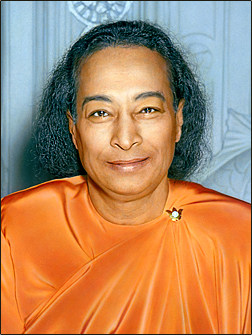
From Failure to Flourishing: The Seeds of Success
Paramahansa Yogananda's assertion that "the season of failure is the best time for sowing the seeds of success" invites us to reconsider our relationship with failure. In a culture that often equates success with unbroken achievement, this perspective challenges us to see failure not as an endpoint but as fertile ground for growth. The stakes are high; embracing this wisdom can transform our understanding of personal setbacks into opportunities for profound learning and eventual triumph.
In this light, Yogananda's quote serves as a reminder that the path to success is rarely linear. Rather, it is often punctuated by moments of struggle and disappointment. By reframing our failures as essential components of our journey, we cultivate resilience and perseverance. This shift in perspective not only alleviates the fear of failure but also empowers us to take risks and explore new avenues for growth, ultimately leading us toward a more fulfilling life.
The image / the metaphor
The imagery in Yogananda's quote evokes the cyclical nature of life, where seasons change and with them, the opportunities for growth. The "season of failure" suggests a time when the landscape of our endeavors may appear barren or desolate, yet it is precisely during these moments that we are called to sow the "seeds of success." The verbs chosen—"sowing" and "season"—imply an active engagement with our circumstances, urging us to take initiative even when the outcome seems uncertain.
In the speaker's tradition
Paramahansa Yogananda's teachings are deeply rooted in the spiritual tradition of Hinduism, which emphasizes the concepts of dharma and karma. Dharma, or one's duty, often involves navigating the trials and tribulations of life with grace and integrity. In this context, failure can be seen as a necessary part of fulfilling one's dharma, providing essential lessons that guide us toward our true purpose. The interplay of failure and success reflects the karmic cycle, where our actions—whether perceived as successes or failures—shape our future experiences.
Furthermore, Yogananda's insights resonate with the Buddhist concept of sunyata, or emptiness, which teaches that our perceptions of success and failure are often illusory. In his writings, Yogananda often referenced the Bhagavad Gita, where Lord Krishna advises Arjuna to perform his duty without attachment to the results. This principle aligns seamlessly with Yogananda's assertion, suggesting that it is through our willingness to engage with failure that we can ultimately realize our potential for success and spiritual growth.
Living the teaching
Consider a modern scenario where this teaching might resonate: an entrepreneur who faces repeated setbacks in launching a new product. Each failure could be disheartening, yet if the entrepreneur embraces Yogananda's wisdom, they might view these moments as invaluable learning experiences. By analyzing what went wrong and adjusting their approach, they can cultivate resilience and innovation, ultimately leading to a successful launch that reflects their growth through adversity.
Similarly, in the realm of personal relationships, one might encounter moments of conflict or misunderstanding. Rather than viewing these challenges as failures, we can approach them as opportunities to deepen our understanding of ourselves and our partners. By engaging in open communication and reflection, we can sow the seeds of connection and empathy, transforming potential rifts into pathways for greater intimacy and trust. In both scenarios, the act of sowing during times of difficulty becomes a powerful practice of perseverance and growth.
A reflection
As we contemplate Yogananda's profound insight, we are invited to reflect on our own experiences with failure. What seeds of success might we be able to sow in the wake of our setbacks? This question encourages us to embrace our challenges as integral to our journey, fostering a mindset that sees beyond immediate disappointments to the potential for growth and transformation that lies ahead.




Join the BrightStar Community
Stay connected with daily inspiration, event announcements, and community wisdom