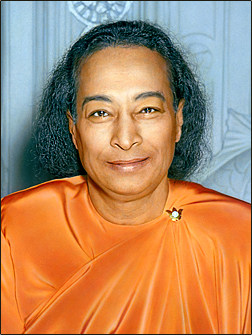
Transforming Obstacles into Opportunities
Paramahansa Yogananda's assertion that "There are no obstacles; there are only opportunities" invites us to reconsider the very nature of our challenges. This perspective shift is not merely a motivational platitude; it is a profound invitation to engage with life’s difficulties as fertile ground for growth and transformation. In a world often dominated by fear and resistance, this teaching beckons us to embrace a courageous outlook, one that recognizes the potential for learning and evolution inherent in every setback.
To internalize this wisdom is to cultivate a mindset that sees beyond the immediate discomfort of obstacles. It encourages us to approach life with a sense of curiosity and resilience, viewing each challenge as a stepping stone rather than a stumbling block. This reframing is essential not only for personal development but also for fostering a deeper connection with the world around us, as it aligns us with the flow of life and its inherent unpredictability.
The image / the metaphor
At first glance, Yogananda’s words evoke a vivid imagery of a landscape devoid of barriers, where every hill and valley transforms into a canvas of potential. The choice of the word "opportunities" suggests a dynamic, almost playful interaction with life’s challenges. It implies that obstacles are not fixed entities but rather transient moments that can be reinterpreted through the lens of possibility. This perspective invites us to engage actively with our circumstances, to see them not as hindrances but as invitations to explore new paths.
Diving deeper into this metaphor, we can perceive obstacles as the very catalysts for our growth. Just as a seed must break through the soil to reach the light, we too must confront and navigate our challenges to uncover the opportunities they conceal. This metaphor extends beyond mere resilience; it speaks to a transformative process where each struggle becomes a vital part of our journey, shaping our character and expanding our horizons.
In the speaker's tradition
Yogananda's teaching resonates deeply within the broader framework of Hindu philosophy, particularly the concepts of dharma and bhakti. Dharma, often translated as duty or righteousness, encourages individuals to embrace their life circumstances as part of a larger cosmic order. By viewing obstacles as opportunities, we align ourselves with our dharma, recognizing that each challenge is a necessary part of our spiritual evolution. Bhakti, or devotion, further enriches this understanding, as it invites us to surrender our fears and trust in the divine flow of life.
In the Bhagavad Gita, a foundational text of Hindu philosophy, Krishna advises Arjuna to see beyond the battlefield of his immediate fears and doubts. This call to action mirrors Yogananda's message, urging us to recognize that our struggles are not merely personal battles but integral to the unfolding of our spiritual path. The Gita teaches that through selfless action and devotion, we can transcend our limitations and discover the opportunities hidden within our challenges.
Living the teaching
Consider a modern scenario where this teaching can be applied: a professional facing unexpected job loss. Initially perceived as a devastating obstacle, this situation can be reframed as an opportunity for reinvention. It may prompt the individual to explore new career paths, develop new skills, or even pursue long-held passions that had been set aside. By embracing this perspective, the individual not only navigates the immediate crisis but also opens themselves to a broader range of possibilities that may lead to greater fulfillment.
This teaching can also find resonance in personal relationships. Imagine a conflict with a loved one that feels insurmountable. Instead of viewing this disagreement as a barrier, one might approach it as an opportunity for deeper understanding and connection. By engaging in open dialogue and active listening, both parties can uncover underlying needs and desires, transforming the conflict into a pathway for growth and intimacy. In this way, the very challenges that threaten to divide us can become the threads that weave us closer together.
A reflection
As we contemplate Yogananda's profound assertion, we are invited to reflect on our own lives: What obstacles do we currently perceive, and how might we reframe them as opportunities for growth? This question encourages us to engage with our challenges not as burdens but as invitations to explore new dimensions of ourselves and our relationships. In this contemplative space, we can begin to cultivate a mindset that embraces the inherent possibilities within every struggle, allowing us to navigate life with greater courage and grace.




Join the BrightStar Community
Stay connected with daily inspiration, event announcements, and community wisdom