Beyond Logic: The Spiritual Quest for Truth
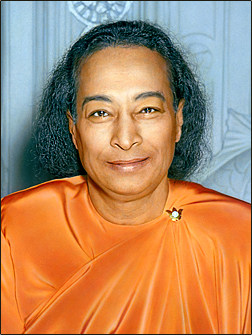
Paramahansa Yogananda's assertion that "Truths are spiritually known. Logic and reason cannot reveal all truth" invites us to explore the profound distinction between intellectual understanding and spiritual insight. In an age dominated by empirical evidence and rational thought, this statement challenges us to consider the limitations of our cognitive faculties in grasping the deeper realities of existence. It beckons us to recognize that some truths transcend the boundaries of logic, urging us to cultivate a more intuitive, heart-centered approach to understanding our lives and the universe.
Yogananda's words resonate deeply within the spiritual landscape, where the quest for truth is often seen as the ultimate goal of human existence. This perspective encourages us to look beyond the surface of our experiences and to seek a more profound connection with the essence of reality. By acknowledging that truth can be known through spiritual insight, we are invited to embark on a journey of inner exploration, where intuition and direct experience become our guiding lights. This journey is not merely an intellectual exercise; it is a transformative process that can lead to greater self-awareness and a deeper connection with the divine.
The image / the metaphor
The imagery in Yogananda's quote evokes a sense of duality between the seen and the unseen, the known and the unknown. The phrase "spiritually known" suggests a realm of understanding that transcends the confines of the rational mind, hinting at a deeper, more profound way of perceiving truth. The verbs "reveal" and "know" imply an active engagement with truth, one that requires not just observation but a deep, intuitive recognition that comes from within. This evokes a sense of inner awakening, where the heart and spirit play a crucial role in discerning what is true.
Diving deeper into the metaphor, we can envision truth as a vast ocean, with logic and reason serving as mere rafts that can only skim the surface. While these tools are invaluable for navigating the complexities of life, they cannot plumb the depths of spiritual reality. The invitation here is to dive beneath the surface, to immerse ourselves in the waters of intuition and spiritual experience, where the richness of truth awaits. This metaphor encourages us to trust our inner guidance and to seek wisdom beyond the confines of analytical thought.
In the speaker's tradition
Within the context of Yogananda's teachings, this quote aligns with the broader Hindu concepts of prajna, or intuitive wisdom, and dharma, the path of righteousness and truth. Prajna emphasizes the importance of direct experience and insight as pathways to understanding the nature of reality, while dharma serves as a guiding principle that helps individuals align their actions with universal truths. Yogananda's perspective encourages practitioners to cultivate a sense of inner knowing that transcends mere intellectual understanding, fostering a deeper connection to the divine and to one another.
Moreover, this idea resonates with the teachings found in the Bhagavad Gita, where Lord Krishna imparts wisdom to Arjuna, emphasizing the importance of inner knowledge and the realization of one's true self. In Chapter 4, Verse 38, Krishna states, "In this world, there is nothing so purifying as knowledge." This knowledge, however, is not solely intellectual; it is a profound understanding that arises from spiritual practice and self-inquiry. Yogananda's assertion invites us to engage with this transformative knowledge, which can only be fully realized through spiritual experience.
Living the teaching
Consider a modern scenario where an individual faces a significant life decision, such as choosing a career path. While logic and reason may provide a framework for evaluating options—considering salary, job security, and societal expectations—there remains an inner voice that speaks to the heart's true desires. This inner guidance often reveals a truth that logic alone cannot capture, urging the individual to pursue a path that resonates with their authentic self. In this way, Yogananda's teaching becomes a practical tool for navigating life's complexities, encouraging individuals to listen to their intuition alongside rational analysis.
In relationships, the application of Yogananda's insight can be equally profound. When conflicts arise, couples may rely on logical arguments to defend their positions, often leading to misunderstandings and emotional distance. However, by embracing the idea that truth is spiritually known, partners can cultivate a deeper understanding of each other's feelings and perspectives. This shift towards intuitive listening and empathy allows for a more compassionate resolution, fostering connection and healing. In both scenarios, the essence of Yogananda's teaching encourages us to honor the wisdom of the heart as we navigate the intricacies of life.
A reflection
As we contemplate Yogananda's assertion, we are invited to reflect on our own relationship with truth. How often do we rely solely on logic and reason to guide our decisions, neglecting the deeper insights that arise from our intuition and spiritual awareness? In what areas of our lives might we benefit from tuning into our inner wisdom, allowing it to illuminate our path? This contemplation invites us to embrace a holistic approach to truth, one that honors both the mind and the spirit, guiding us toward a more profound understanding of ourselves and the world around us.




Join the BrightStar Community
Stay connected with daily inspiration, event announcements, and community wisdom