The Eternal Garment: Understanding Immortality Through Yogananda's Wisdom
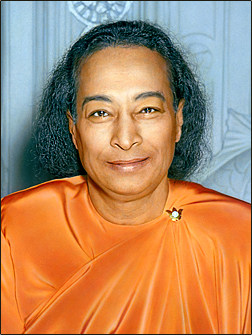
Paramahansa Yogananda's assertion that "You are immortal and can never die. Your mortal body is like a coat you put on and take off" invites us to reflect deeply on the nature of existence and the essence of our being. In this profound statement, Yogananda challenges the conventional understanding of life and death, urging us to recognize the eternal soul that transcends the physical form. This perspective is not merely philosophical; it holds significant implications for how we navigate the complexities of life, loss, and the fear of mortality.
By framing our mortal bodies as temporary garments, Yogananda encourages us to cultivate a sense of detachment from the physical realm. This detachment does not imply a disregard for life or relationships; rather, it invites us to engage with the world from a place of deeper awareness. Understanding ourselves as immortal beings can transform our approach to challenges, grief, and the inevitable transitions we face. It is a call to embrace a more expansive view of existence, one that recognizes the continuity of the soul beyond the confines of the physical body.
The image / the metaphor
The metaphor of the body as a coat is rich with imagery and evokes a sense of impermanence. Just as we don and doff our clothing according to the seasons or occasions, so too do we inhabit our physical forms temporarily. The verbs "put on" and "take off" suggest an active choice, highlighting that our identity is not solely defined by our physical presence. This imagery invites us to consider the fluidity of existence and the transient nature of our earthly experiences.
Diving deeper into this metaphor, we can see that the coat represents not just the body, but also the roles and identities we assume throughout our lives. Just as a coat can be tailored to fit different occasions, our identities can shift based on context, relationships, and experiences. Yogananda's teaching encourages us to recognize that while these identities may feel substantial, they are ultimately temporary. The essence of who we are—the soul—remains unchanged and eternal, regardless of the physical form we inhabit at any given moment.
In the speaker's tradition
Paramahansa Yogananda's teachings are deeply rooted in the spiritual tradition of Hinduism, which emphasizes the eternal nature of the soul (Atman) and its relationship to the universal consciousness (Brahman). Concepts such as dharma, the moral order of the universe, and moksha, the liberation from the cycle of birth and death, resonate with Yogananda's assertion of immortality. In this context, the body is viewed as a temporary vessel for the soul's journey, reinforcing the idea that our true essence transcends physical existence.
In the Bhagavad Gita, a foundational text in Hindu philosophy, Lord Krishna imparts wisdom about the eternal nature of the soul, stating that it neither kills nor can be killed. This aligns with Yogananda's message, emphasizing that while the body may perish, the soul continues its journey. Such teachings encourage practitioners to cultivate a sense of inner peace and resilience, knowing that the essence of their being is unassailable by the trials of the material world.
Living the teaching
Consider a modern scenario where this teaching can be applied: a loved one’s passing. The grief that accompanies such a loss can feel overwhelming, often rooted in the belief that death signifies an end. However, by embracing Yogananda's perspective of immortality, one can find solace in the understanding that the soul of the departed continues to exist beyond the physical realm. This shift in perception allows for a celebration of life rather than a singular focus on loss, fostering a deeper connection to the enduring spirit of those we cherish.
Another application of this teaching can be found in our daily interactions and relationships. When faced with conflict or misunderstanding, remembering that our true selves are immortal can help us navigate these challenges with compassion and understanding. Instead of becoming entangled in the temporary emotions and identities that arise, we can approach each situation with a sense of detachment, recognizing that our essence remains unchanged. This perspective fosters forgiveness and empathy, allowing us to engage more authentically with ourselves and others.
A reflection
As we contemplate Yogananda's profound assertion, we are invited to reflect on our own understanding of life and death. How might our lives change if we fully embraced the idea that we are immortal beings, temporarily inhabiting physical forms? This question encourages us to explore our fears, attachments, and the ways we engage with the world, inviting a deeper inquiry into the nature of our existence and the eternal journey of the soul.




Join the BrightStar Community
Stay connected with daily inspiration, event announcements, and community wisdom