The Wisdom of Knowing and Not Knowing
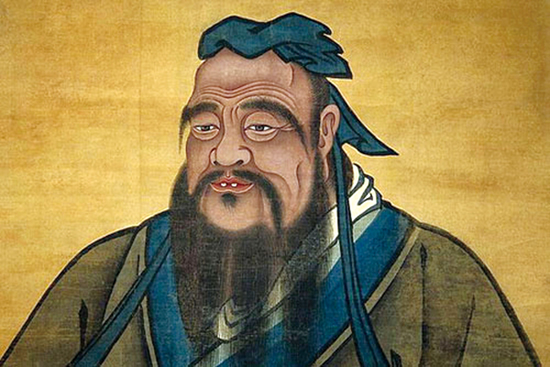
Confucius offers a profound insight into the nature of knowledge with his assertion: "When you know a thing, to hold that you know it; and when you do not know a thing, to allow that you do not know it — this is knowledge." This statement encapsulates a delicate balance between confidence and humility, urging us to embrace both our understanding and our ignorance. In a world that often prizes certainty, this wisdom invites us to cultivate a deeper awareness of our own limitations and the vastness of what remains unknown.
At its core, this teaching challenges the conventional notion of knowledge as merely the accumulation of facts or the assertion of opinions. Instead, it emphasizes the importance of self-awareness and honesty in our intellectual pursuits. By recognizing and accepting the boundaries of our understanding, we open ourselves to growth and learning. This duality of knowing and not knowing is not just an intellectual exercise; it is a pathway to a more authentic and meaningful existence.
The image / the metaphor
The imagery in Confucius's quote evokes a sense of balance, akin to a tightrope walker navigating the space between two extremes. The verbs "hold" and "allow" suggest a dynamic interplay between assertion and acceptance. To "hold" implies a firm grasp on knowledge, a confident stance that acknowledges what we have learned and understood. Conversely, to "allow" indicates a gentle openness to the unknown, a willingness to embrace uncertainty without fear or defensiveness.
In the speaker's tradition
Confucius's wisdom is deeply rooted in the tradition of Confucianism, which emphasizes the cultivation of virtue, moral integrity, and the importance of education. Central to this philosophy is the concept of ren, often translated as "benevolence" or "humaneness," which encourages individuals to act with compassion and understanding. The acknowledgment of both knowledge and ignorance aligns with the Confucian ideal of self-cultivation, where one strives to improve oneself through learning and reflection.
Moreover, this teaching resonates with the Confucian principle of zhongyong, or the Doctrine of the Mean, which advocates for moderation and balance in all aspects of life. Just as the Doctrine encourages individuals to find harmony between extremes, Confucius's quote invites us to navigate the space between knowledge and ignorance with grace. In the Analects, he often emphasizes the importance of lifelong learning, suggesting that true wisdom lies not in the accumulation of facts but in the ability to discern when we know and when we do not.
Living the teaching
Consider a modern scenario where this teaching might resonate: a workplace meeting where team members are expected to present their ideas confidently. One individual, aware of their limited expertise on a particular subject, chooses to speak up honestly about their uncertainty. By acknowledging their lack of knowledge, they create a space for collaboration and deeper inquiry, inviting others to share their insights and fostering a culture of openness. This act of humility not only enriches the discussion but also encourages others to embrace their own uncertainties.
In personal relationships, this teaching can manifest in moments of conflict or misunderstanding. Imagine a conversation where one partner feels misunderstood. By practicing the art of knowing and not knowing, each person can express their feelings while also acknowledging the limits of their understanding of the other's perspective. This approach fosters empathy and connection, allowing both individuals to navigate their differences with grace and compassion. In daily practice, this teaching can serve as a reminder to approach conversations with curiosity rather than defensiveness, creating opportunities for deeper connection and understanding.
A reflection
As we contemplate Confucius's wisdom, we might ask ourselves: "In what areas of my life am I holding onto knowledge too tightly, and where might I benefit from embracing my ignorance?" This question invites us to reflect on our own experiences, encouraging a deeper exploration of our beliefs and assumptions. By engaging with this inquiry, we can cultivate a more profound sense of humility and openness, allowing us to grow and learn in ways we may not have previously considered.