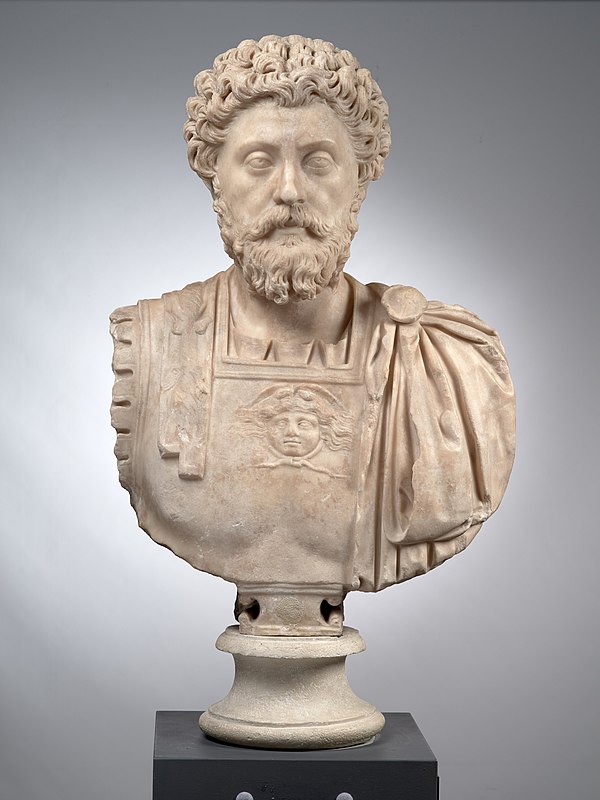
The Art of Letting Go: A Stoic Perspective
Marcus Aurelius, in his profound reflection, suggests that we possess the remarkable ability to dismiss and cleanse our minds of troubling and ungrateful thoughts. This assertion speaks to the heart of Stoic philosophy, emphasizing the power of our mental faculties in shaping our experience of reality. In a world rife with distractions and negativity, the ability to repel unhelpful impressions becomes not just a skill, but a vital practice for cultivating inner peace and resilience.
To truly grasp the significance of Aurelius's words, we must recognize the implications of our mental landscape. The Stoics believed that our thoughts and perceptions are within our control, and thus, we can choose how we respond to the myriad impressions that life presents. This notion of mental sovereignty is not merely theoretical; it is a practical guide for navigating the complexities of existence, allowing us to cultivate a sense of freedom amidst the chaos.
The image / the metaphor
In this quote, Aurelius employs vivid imagery to convey the act of mental cleansing. The verbs "repel" and "wipe away" evoke a sense of agency and deliberate action, suggesting that we are not passive recipients of our thoughts but active participants in our mental well-being. The felt sense of this imagery is one of liberation; it invites us to envision our minds as spaces that can be cleared of clutter, much like a room that can be tidied up to create a more serene environment.
Diving deeper into the metaphor, we can see that the act of repelling and wiping away is not just about rejecting negativity but also about cultivating discernment. It implies a conscious choice to engage with thoughts that serve our well-being while dismissing those that do not. This process of mental filtration is akin to a gardener tending to their garden, removing weeds to allow the flowers to flourish. In this way, Aurelius encourages us to nurture a mental landscape that reflects our values and aspirations.
In the speaker's tradition
Marcus Aurelius stands as a pillar of Stoic philosophy, a tradition that emphasizes rationality, self-control, and the importance of virtue. Central to Stoicism is the concept of *apatheia*, or freedom from destructive emotions, which aligns closely with Aurelius's assertion. By cultivating a mind that can repel ungrateful impressions, we move toward a state of emotional resilience, echoing the Stoic ideal of living in accordance with nature and reason.
Moreover, Aurelius's insights resonate with the Buddhist concept of *sunyata*, or emptiness, which encourages the release of attachments and unwholesome thoughts. Just as the Stoics teach the importance of focusing on what is within our control, Buddhism emphasizes the liberation found in letting go of clinging. In both traditions, the underlying message is clear: our mental freedom is contingent upon our ability to discern and detach from thoughts that do not serve our higher purpose.
Living the teaching
Consider a modern scenario where this teaching can be applied: imagine facing a challenging work environment filled with criticism and negativity. In such a space, it is all too easy to internalize the ungrateful impressions of others, allowing them to cloud our judgment and affect our self-worth. By embracing Aurelius's wisdom, we can consciously choose to repel these negative thoughts, recognizing them as external opinions that do not define our value or capabilities. This practice not only fosters resilience but also empowers us to maintain our focus on constructive feedback and personal growth.
In a different context, think about a relationship that has become strained due to misunderstandings and unkind words. Here, the ability to wipe away troublesome impressions becomes crucial. By choosing to let go of past grievances and focusing instead on the present moment, we create space for healing and reconnection. This act of mental cleansing can transform our interactions, allowing love and understanding to flourish in place of resentment and bitterness.
A reflection
As we contemplate Marcus Aurelius's profound insight, we are invited to reflect on our own mental habits. What ungrateful impressions are we holding onto that hinder our peace of mind? In a world that often bombards us with negativity, the practice of repelling these thoughts becomes essential for cultivating a life of freedom and clarity. Consider this: how might your life change if you consciously chose to wipe away the mental clutter that no longer serves you?




Join the BrightStar Community
Stay connected with daily inspiration, event announcements, and community wisdom