The Power of Stillness: Embracing Silence in a Noisy World
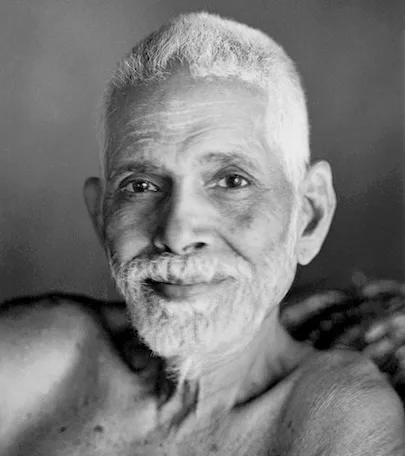
“Just be quiet.” In these three simple words, Ramana Maharshi encapsulates a profound invitation to stillness and introspection. In a world filled with incessant noise—both external and internal—this directive serves as a gentle reminder of the importance of silence in our spiritual journey. The stakes are high; in our relentless pursuit of understanding and connection, we often overlook the transformative power of quietude. Maharshi's call to silence is not merely about the absence of sound; it is an invitation to explore the depths of our being, to listen to the whispers of our soul, and to cultivate a space where true insight can arise.
To "just be quiet" is to step away from the chaos of daily life and to create a sanctuary within ourselves. This stillness is not passive; rather, it is an active engagement with our inner landscape. In the silence, we confront our thoughts, fears, and desires, allowing them to surface without judgment. This process of introspection can lead to profound revelations about our true nature and our place in the universe. Maharshi’s words resonate deeply in a time when distractions abound, urging us to reclaim our attention and find solace in the quietude that lies within.
The image / the metaphor
The phrase “just be quiet” evokes a vivid imagery of stillness, akin to a tranquil lake reflecting the sky. The verb "be" suggests a state of existence rather than a call to action, emphasizing the importance of presence over productivity. In this context, quietness becomes a fertile ground for self-discovery, where the noise of the mind can settle like sediment in water, revealing clarity beneath. The simplicity of the command belies its depth; it is an invitation to pause, to breathe, and to simply exist without the incessant need to fill the silence with words or thoughts.
Diving deeper into the metaphor, silence can be seen as a canvas upon which the colors of our thoughts and emotions can be observed without interference. Just as a painter requires a blank canvas to create, we too need moments of quiet to allow our inner landscape to unfold. In this stillness, we can begin to discern the patterns of our mind, recognizing the transient nature of our thoughts and the deeper truths that lie beneath. Maharshi’s directive encourages us to embrace this silence, not as an absence, but as a presence that holds the potential for transformation.
In the speaker's tradition
Ramana Maharshi's teaching is deeply rooted in the Advaita Vedanta tradition, which emphasizes non-duality and the realization of the Self. Concepts such as *dharma* (righteousness), *kenosis* (self-emptying), and *bhakti* (devotion) intertwine with the essence of his message. The call to silence aligns with the practice of *sadhana*, where the seeker engages in disciplined spiritual practice to quiet the mind and realize the unity of the Self with the Absolute. In this context, silence becomes a means of transcending the ego, allowing the seeker to experience the profound truth of *tat tvam asi*—“that thou art.”
In the *Upanishads*, a foundational text of Hindu philosophy, silence is often associated with the ultimate reality, *Brahman*. The *Mandukya Upanishad* speaks of the fourth state of consciousness, *turiya*, which is characterized by pure awareness beyond the waking, dreaming, and deep sleep states. This state is often described as silent and still, where the individual self merges with the universal consciousness. Maharshi’s exhortation to “just be quiet” resonates with this ancient wisdom, inviting us to explore the depths of our own consciousness and to recognize the silence that is our true nature.
Living the teaching
Consider a modern scenario where the teaching of silence can be applied: imagine a busy office environment filled with the sounds of ringing phones, chatter, and the constant hum of activity. In such a space, taking a moment to “just be quiet” can be revolutionary. By stepping away from the noise, perhaps into a quiet room or even a peaceful corner, one can engage in a brief meditation or simply breathe deeply. This practice not only calms the mind but also enhances focus and clarity, allowing for more effective engagement with the tasks at hand. Such moments of stillness can serve as anchors in a chaotic day, reminding us of the power of silence amidst the clamor.
In the realm of relationships, the teaching of silence can be equally transformative. During a conflict, the urge to speak and defend oneself often leads to escalation rather than resolution. By choosing to “just be quiet,” one can create a space for reflection and understanding. This pause allows emotions to settle and opens the door for deeper listening, fostering empathy and connection. In this way, silence becomes a tool for healing, enabling us to approach difficult conversations with a sense of calm and clarity, ultimately leading to more meaningful interactions.
A reflection
As we contemplate Ramana Maharshi’s directive to “just be quiet,” we are invited to explore the role of silence in our own lives. How often do we allow ourselves the gift of stillness amidst the noise? In what ways can we cultivate moments of quiet to deepen our understanding of ourselves and our relationships? Reflecting on these questions can guide us toward a more intentional practice of silence, revealing the profound insights that lie waiting in the stillness.



