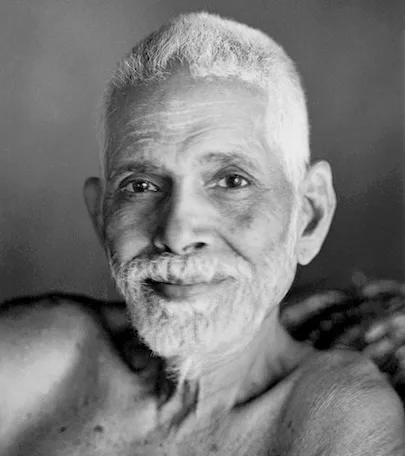
The Essence of Being: Unraveling Consciousness
Ramana Maharshi's assertion that "Pure consciousness is the same as Being" invites us to explore the profound interconnection between our awareness and the essence of existence itself. This statement challenges us to reconsider our understanding of consciousness, urging us to recognize it not merely as a passive observer but as an active participant in the fabric of reality. The implications of this teaching are vast, as they touch upon the nature of self, the universe, and the ultimate purpose of our lives.
In a world often dominated by distractions and superficial engagements, Maharshi's words serve as a reminder of the deeper truths that lie beneath the surface of our daily experiences. By equating pure consciousness with Being, he invites us to transcend the limitations of our conditioned minds and to awaken to a more profound state of awareness. This awakening is not just an intellectual exercise; it is a transformative journey that can lead to a more authentic and fulfilling existence.
The image / the metaphor
At first glance, the quote presents a striking image: pure consciousness and Being are not separate entities but rather two sides of the same coin. The term "pure" suggests a state of clarity and untainted awareness, while "consciousness" evokes the idea of an active, living presence. The verb "is" serves as a bridge, indicating that the relationship between consciousness and Being is not one of distinction but of unity. This imagery invites us to feel the interconnectedness of all things, suggesting that our awareness is not an isolated phenomenon but a manifestation of the greater reality of existence.
Diving deeper into this metaphor, we can see that Maharshi's words encourage us to dissolve the boundaries we often impose between ourselves and the world around us. The notion of Being encompasses all that exists, while pure consciousness represents the awareness that perceives this existence. Together, they form a holistic understanding of reality, where the observer and the observed are intertwined. This realization can evoke a sense of peace and belonging, as we come to understand that our individual consciousness is a reflection of the universal Being.
In the speaker's tradition
Ramana Maharshi's teachings are deeply rooted in the Advaita Vedanta tradition, which emphasizes non-duality and the oneness of all existence. Concepts such as dharma, the moral order of the universe, and prajna, or wisdom, are integral to understanding his perspective. In this context, the idea of pure consciousness as Being aligns with the notion of sunyata, or emptiness, found in Buddhist philosophy, which also points to the interconnectedness of all phenomena. By recognizing that our individual consciousness is not separate from the greater whole, we can cultivate a sense of unity and compassion in our lives.
In his seminal work, "Talks with Sri Ramana Maharshi," the sage often referred to the practice of self-inquiry as a means to realize this truth. He encouraged seekers to ask themselves, "Who am I?" This question serves as a powerful tool for peeling away the layers of ego and illusion that obscure our understanding of pure consciousness. By engaging in this inquiry, we can begin to experience the profound realization that our true nature is not separate from Being but is, in fact, an expression of it.
Living the teaching
Consider a modern scenario where this teaching can be applied: a busy professional grappling with the demands of work and personal life. In the midst of deadlines and responsibilities, it is easy to become lost in the chaos, identifying solely with the roles we play. However, by reflecting on Maharshi's assertion, one might pause to recognize that their true essence transcends these external pressures. This awareness can lead to a more centered approach to life, allowing the individual to navigate challenges with a sense of calm and clarity, rooted in the understanding that they are more than their circumstances.
In relationships, the teaching of pure consciousness as Being can foster deeper connections. Imagine a moment of conflict between partners, where misunderstandings and emotions run high. By invoking the wisdom of Maharshi, one partner might take a step back, recognizing that their reactions stem from a place of conditioned thought rather than their true self. This shift in perspective can open the door to compassion and understanding, allowing both individuals to engage from a place of awareness rather than ego, ultimately deepening their bond.
A reflection
As we contemplate Ramana Maharshi's profound statement, we are invited to explore the nature of our own consciousness and its relationship to Being. How often do we find ourselves caught in the web of our thoughts, forgetting the deeper essence that connects us to all of existence? In moments of stillness, we can ask ourselves: What does it mean to experience pure consciousness in my daily life, and how can this awareness transform my understanding of self and others?