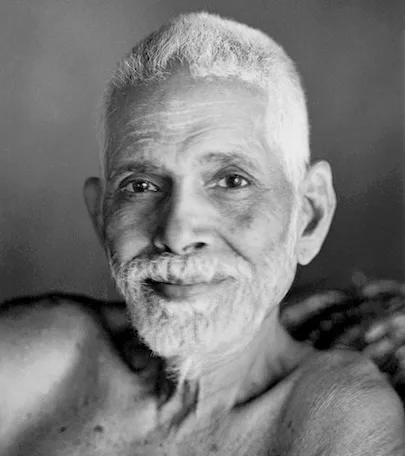
The Dissolution of the Questioner: A Journey Within
Ramana Maharshi's profound assertion, "The question 'Who am I?' is not really meant to get an answer; the question 'Who am I?' is meant to dissolve the questioner," invites us into a deep exploration of identity and self-inquiry. This statement challenges the very foundation of our understanding of self, suggesting that the quest for an answer may be less significant than the transformative process it initiates. In a world often preoccupied with labels and definitions, Maharshi's words remind us that true awakening lies not in the accumulation of knowledge but in the unraveling of the self that seeks to know.
At the heart of this inquiry is the recognition that the self, as we commonly perceive it, is an illusion—a construct shaped by experiences, beliefs, and societal expectations. Maharshi's teaching encourages us to look beyond the surface, to question the essence of our being rather than seeking a definitive answer. This approach is not merely philosophical; it is an invitation to engage in a transformative practice that leads to a profound awakening, where the questioner dissolves into the vastness of existence itself.
The image / the metaphor
The imagery in Maharshi's quote evokes a sense of introspection and depth. The act of questioning, particularly the inquiry into "Who am I?", is portrayed not as a straightforward search for identity but as a process that leads to the dissolution of the ego—the questioner. This dissolution is not a loss but a liberation, freeing us from the confines of a limited self-concept. The verbs chosen—'dissolve' and 'question'—suggest a fluidity, a movement away from rigid definitions toward a more expansive understanding of being.
Diving deeper into this metaphor, we can envision the questioner as a wave in the ocean, momentarily rising and falling, yet ultimately inseparable from the vast body of water. Just as the wave cannot exist apart from the ocean, our individual identities cannot be fully understood outside the context of the greater whole. The inquiry into "Who am I?" serves as a catalyst for this realization, prompting us to recognize that our essence is not separate from the universe but intricately woven into its fabric.
In the speaker's tradition
Ramana Maharshi's teachings are rooted in the non-dual tradition, which emphasizes the interconnectedness of all existence. Concepts such as *advaita* (non-duality) and *sunyata* (emptiness) resonate deeply with his assertion. In this framework, the dissolution of the questioner aligns with the idea of *kenosis*, or self-emptying, where one relinquishes the false self to experience the true nature of reality. This process is not merely intellectual; it is a spiritual practice that leads to a direct experience of oneness with all that is.
Living the teaching
Consider a modern scenario where an individual grapples with their professional identity. In a world that often defines us by our job titles and achievements, one might find themselves asking, "Who am I?" This inquiry can lead to a deeper understanding that transcends the confines of career and status. By engaging with this question, the individual may begin to dissolve the rigid identity tied to their profession, discovering instead a more expansive sense of self that encompasses their passions, values, and connections to others.
In relationships, this teaching can manifest in moments of conflict or misunderstanding. When faced with a disagreement, one might instinctively cling to their perspective, asking, "Who am I in this situation?" Instead of seeking to defend their position, they can use this inquiry to dissolve the ego's need for validation. This shift allows for greater empathy and understanding, fostering a deeper connection with the other person and revealing the shared humanity that lies beneath individual differences.
A reflection
As we contemplate Maharshi's profound insight, we are invited to reflect on our own lives: What identities do we cling to that may be limiting our experience of true self? In what ways can we engage with the question "Who am I?" not as a search for a definitive answer but as a means to dissolve the barriers that separate us from our authentic being? This inquiry is not merely an intellectual exercise; it is a path toward liberation, inviting us to explore the depths of our existence and the interconnectedness of all life.



