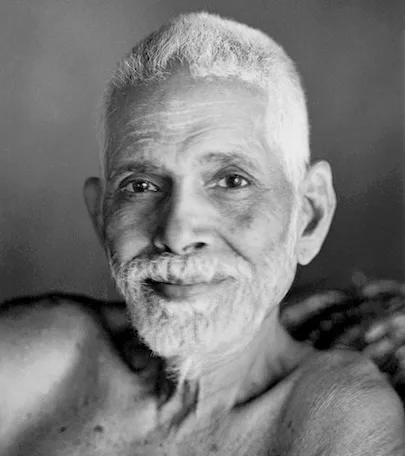
The Essence of Self: A Journey into Reality
In the profound words of Ramana Maharshi, "Self is the only Reality. If the world is real, you have to admit that the world has its origin in the Self." This statement invites us to explore the intricate relationship between our individual consciousness and the external world. It challenges us to reconsider our perceptions of reality, urging us to delve deeper into the nature of existence itself. The stakes are high, as this inquiry can lead to transformative insights about who we are and our place in the cosmos.
At its core, Maharshi's assertion compels us to confront the fundamental question of identity. What do we mean when we refer to the "Self"? Is it merely the ego, or does it encompass a more profound essence that transcends the transient nature of worldly experiences? By recognizing the Self as the foundation of all reality, we are invited to embark on a journey of self-discovery that can illuminate the interconnectedness of all beings and the world around us.
The image / the metaphor
To unpack Maharshi's quote, we must first consider the imagery it evokes. The term "Self" suggests a singular, unchanging essence that serves as the bedrock of our existence. In contrast, the "world" represents the myriad forms and phenomena that arise and dissolve in the flow of time. The verbs "is" and "has" in the quote imply a relationship of causality, where the Self is not merely a passive observer but an active source from which the world emanates. This relationship invites us to feel the weight of our own consciousness as the lens through which we perceive reality.
Diving deeper into the metaphor, we can envision the Self as a vast ocean, with the world as the waves that rise and fall upon its surface. While the waves may appear distinct and separate, they are ultimately expressions of the same oceanic essence. This imagery encourages us to recognize that our individual experiences, thoughts, and emotions are not isolated occurrences but rather manifestations of a singular, underlying reality. In this light, the world becomes a canvas painted by the brush of the Self, inviting us to explore the depths of our own being.
In the speaker's tradition
Ramana Maharshi's teachings are deeply rooted in the Advaita Vedanta tradition, which emphasizes non-duality and the unity of the Self with the ultimate reality, Brahman. Concepts such as *dharma* (righteous duty) and *prajna* (wisdom) play a crucial role in understanding this relationship. In Advaita, the realization of the Self as the only reality leads to liberation (*moksha*), freeing us from the illusions of duality and separation. This perspective aligns with the notion of *kenosis*, or self-emptying, where one relinquishes the ego to embrace a more expansive consciousness.
In the *Upanishads*, ancient texts that explore the nature of reality and the Self, we find echoes of Maharshi's insights. The *Chandogya Upanishad* states, "Tat Tvam Asi," meaning "That Thou Art," which reinforces the idea that the individual Self is not separate from the universal essence. This interconnectedness invites us to recognize that the world we perceive is a reflection of our own inner state, urging us to cultivate awareness and understanding of our true nature.
Living the teaching
Consider a modern scenario where this teaching can be applied: a person facing a challenging situation at work. Perhaps they feel overwhelmed by the demands of their job, perceiving the external pressures as separate from their inner self. By reflecting on Maharshi's teaching, they might begin to understand that their stress and anxiety are not merely reactions to external circumstances but are rooted in their perception of self-worth and identity. This realization can empower them to shift their focus inward, cultivating a sense of peace and clarity that transforms their experience of the external world.
In a different context, imagine a relationship fraught with misunderstandings and conflict. By applying the principle that the world originates from the Self, individuals can begin to see their partner not as an adversary but as a reflection of their own inner landscape. This perspective fosters empathy and compassion, allowing for deeper connections and healing. In daily practice, one might engage in meditation or self-inquiry, asking, "Who am I?" This contemplative question can lead to profound insights that reshape their interactions and experiences, ultimately aligning them more closely with the reality of their true Self.
A reflection
As we contemplate Ramana Maharshi's assertion that "Self is the only Reality," we are invited to explore the depths of our own consciousness. What does it mean for you to recognize that the world you perceive is a manifestation of your own inner reality? In moments of stillness, consider how your understanding of the Self shapes your experiences and relationships. This inquiry can lead to transformative insights, guiding you toward a more profound connection with both yourself and the world around you.



