Beyond the Veil of Identity: Understanding the Self
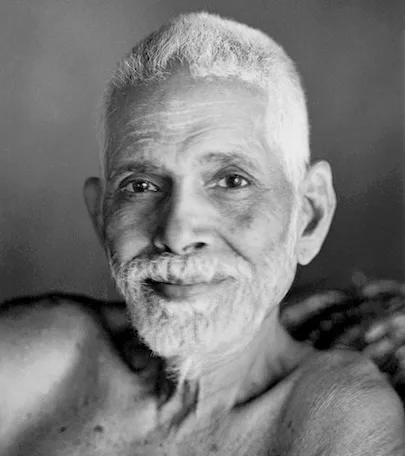
Ramana Maharshi's assertion that "The thought 'I am the body' is the ignorance" invites us to explore the profound depths of self-identity and the illusions that often cloud our understanding of who we truly are. This statement challenges the very foundation of our existence, urging us to look beyond the physical form and recognize the deeper essence of our being. In a world where identity is frequently tied to external appearances and societal roles, this teaching holds significant relevance, prompting us to question our attachments and the nature of our reality.
At its core, this quote speaks to the universal human experience of suffering and confusion that arises from misidentification. When we cling to the notion that we are merely our bodies, we become ensnared in a cycle of desire, fear, and ultimately, suffering. Maharshi's wisdom encourages us to transcend this limited perspective, inviting us to engage in a journey of self-inquiry that reveals our true nature, which is far more expansive and profound than the physical form we inhabit.
The image / the metaphor
The imagery in Maharshi's quote is strikingly simple yet deeply evocative. The phrase "I am the body" encapsulates a common misconception that many individuals hold, one that is rooted in sensory perception and societal conditioning. The use of the word "ignorance" suggests a veil that obscures our understanding, a darkness that prevents us from seeing the light of our true selves. This metaphor of ignorance as a shroud invites us to consider how our thoughts and beliefs can limit our perception of reality, trapping us in a narrow understanding of existence.
In the speaker's tradition
Ramana Maharshi's insights are deeply rooted in the Advaita Vedanta tradition, which emphasizes non-duality and the oneness of existence. Central to this philosophy is the concept of *Atman*, the true self, which is seen as identical to *Brahman*, the ultimate reality. This teaching aligns with the notion of *Maya*, the illusion that creates a false sense of separation between the self and the universe. By recognizing that "I am the body" is a manifestation of *Maya*, we can begin to peel away the layers of ignorance that obscure our understanding of the self.
In the context of Maharshi's teachings, we can draw parallels to the Buddhist concept of *Sunyata*, or emptiness, which also speaks to the illusory nature of the self. Just as Maharshi encourages us to transcend the identification with the body, Buddhist teachings invite practitioners to recognize the impermanence of all forms. The *Bhagavad Gita* echoes this sentiment, reminding us that the soul is eternal and beyond the physical realm, thus reinforcing the idea that our true essence is not confined to our bodily existence.
Living the teaching
Consider a modern scenario where this teaching can be applied: a person facing the challenges of aging. As physical changes occur, one might grapple with feelings of loss and fear, identifying more closely with the declining body than with the enduring spirit within. Maharshi's teaching serves as a gentle reminder that while the body may age and change, the essence of who we are remains untouched by these external transformations. By embracing this perspective, one can cultivate a sense of peace and acceptance, recognizing that true identity transcends the physical form.
In the realm of relationships, this teaching can also illuminate the dynamics we often encounter. When conflicts arise, individuals may become entrenched in their roles—parent, partner, friend—leading to misunderstandings and emotional turmoil. By remembering that these identities are not the entirety of who we are, we can approach conflicts with greater compassion and understanding. This shift in perspective allows us to engage with others from a place of connection rather than separation, fostering deeper, more meaningful relationships.
A reflection
As we contemplate Maharshi's profound statement, we are invited to ask ourselves: "What lies beyond my identification with the body?" This question encourages a deep exploration of our beliefs, attachments, and the narratives we construct about ourselves. By engaging in this inquiry, we may begin to uncover the layers of ignorance that obscure our true nature, leading us toward a more authentic and liberated existence.



