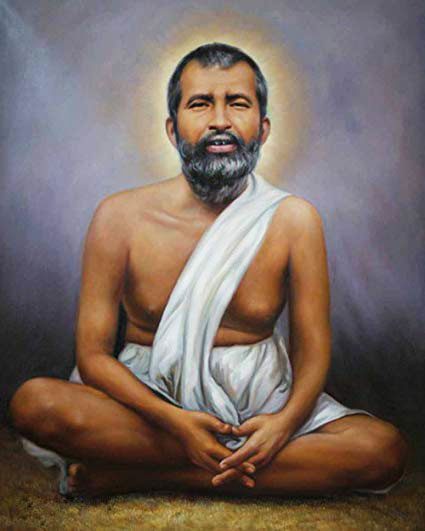
Seeing Beyond Illusion: The Equality of All in Divine Vision
When Sri Ramakrishna states, "When the divine vision is attained, all appear equal," he invites us to consider a profound shift in perception that transcends the ordinary. This quote encapsulates the essence of spiritual realization, suggesting that true understanding reveals the inherent equality of all beings. In a world often divided by distinctions of race, class, and belief, this teaching serves as a powerful reminder of our shared essence and interconnectedness, urging us to look beyond superficial differences.
At its core, this statement challenges the ego's tendency to categorize and judge. It speaks to the transformative power of spiritual awakening, where the veils of ignorance are lifted, allowing us to perceive the underlying unity of existence. The stakes are high; embracing this vision can lead to a more compassionate and harmonious world, where empathy replaces division and love supersedes fear. In exploring this quote, we embark on a journey toward understanding the nature of reality and our place within it.
The image / the metaphor
The imagery in Sri Ramakrishna's quote evokes a sense of clarity and enlightenment, suggesting that divine vision acts as a lens through which we can see the world as it truly is. The term "divine vision" implies a state of consciousness that transcends ordinary perception, where the distinctions that often separate us dissolve into a unified whole. The use of the word "attained" indicates that this vision is not merely a gift but a realization that requires effort, introspection, and spiritual practice.
Diving deeper into the metaphor, we can understand that this divine vision is akin to awakening from a dream. In the dream state, we may perceive ourselves as isolated individuals, each with our own struggles and identities. However, upon awakening, we recognize that these identities are transient and illusory. The realization of equality in this context is not just an intellectual understanding; it is a profound experiential shift that transforms how we relate to ourselves and others.
In the speaker's tradition
Sri Ramakrishna's teachings are deeply rooted in the Hindu tradition, where concepts such as dharma, bhakti, and prajna play significant roles in the spiritual journey. Dharma, or righteous living, emphasizes the importance of ethical conduct and duty, while bhakti, the path of devotion, encourages surrender to the divine. Both paths ultimately lead to the realization of oneness, where the distinctions between self and other fade away. This aligns with the idea of sunyata, or emptiness, found in Buddhist thought, which suggests that clinging to identity is a source of suffering.
In the Bhagavad Gita, a foundational text in Hindu philosophy, Lord Krishna speaks of the eternal nature of the soul, stating that it is neither born nor dies, but is ever-present. This teaching resonates with Sri Ramakrishna's assertion of equality, as it highlights the unchanging essence of all beings. When we recognize that our true nature is beyond the physical form, we can begin to see others not as separate entities but as manifestations of the same divine reality.
Living the teaching
Consider a modern scenario where this teaching can be applied: a workplace filled with diverse individuals, each bringing their unique backgrounds and perspectives. In such an environment, it is easy to fall into the trap of competition and comparison, leading to conflict and misunderstanding. However, if we approach our colleagues with the awareness that we are all equal in our humanity, we can foster a culture of collaboration and respect. This shift in perspective not only enhances workplace dynamics but also enriches our personal growth.
Another application of this teaching can be found in our relationships. Imagine a moment of conflict with a loved one, where emotions run high, and differences seem insurmountable. By invoking the understanding that, at a deeper level, both individuals share the same essence, we can cultivate compassion and empathy. This realization allows us to navigate disagreements with grace, recognizing that our true connection transcends the temporary challenges we face.
A reflection
As we contemplate Sri Ramakrishna's profound insight, we are invited to reflect on our own perceptions of equality and division. How often do we allow superficial differences to cloud our understanding of others? In what ways can we cultivate a divine vision in our daily lives, fostering a sense of unity and compassion? These questions serve as a guiding light on our spiritual journey, encouraging us to seek the deeper truths that connect us all.



