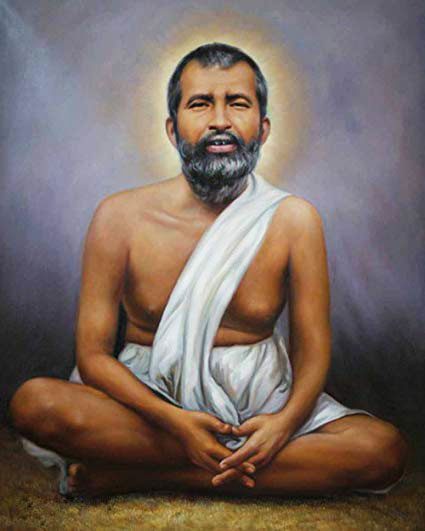
The Divine Thread of Love: Embracing All Beings
Sri Ramakrishna's profound assertion, "When you have love for God, you cannot but love every creature, for God is in every creature," invites us to explore the interconnectedness of existence through the lens of divine love. This statement serves as a reminder that our relationship with the divine is intrinsically linked to our relationships with one another. In a world often marked by division and strife, this teaching beckons us to cultivate a love that transcends boundaries, urging us to recognize the divine essence within every being.
At its core, this quote challenges us to reconsider our understanding of love and kinship. It suggests that true devotion to God naturally extends to all of creation, fostering a sense of unity that is both radical and transformative. By acknowledging the divine presence in every creature, we are called to embody compassion and empathy, nurturing a world where love reigns supreme. This perspective not only enriches our spiritual journey but also has the potential to heal the fractures within our communities and ourselves.
The image / the metaphor
The imagery in Sri Ramakrishna's quote is striking in its simplicity yet profound in its implications. The verbs "have love" and "cannot but love" suggest an inevitable flow of affection that arises from a genuine connection to the divine. This love is not merely an emotion but a state of being that compels us to act with kindness and understanding toward all creatures. The phrase "God is in every creature" serves as a powerful reminder that the divine is not confined to sacred spaces or rituals; rather, it permeates the very fabric of existence, inviting us to see the world through a lens of reverence.
Diving deeper into the metaphor, we can perceive love as a thread that weaves through the tapestry of life, binding us to one another and to the divine. This interconnectedness implies that our treatment of others reflects our understanding of God. When we embrace this perspective, every act of kindness becomes a form of worship, and every moment of compassion becomes a sacred encounter. Thus, the quote encourages us to cultivate a love that is expansive, inclusive, and deeply rooted in the recognition of the divine presence in all beings.
In the speaker's tradition
Within the rich tapestry of Hindu philosophy, Sri Ramakrishna's teaching resonates with several key concepts, including bhakti (devotion), dharma (righteousness), and the idea of oneness (advaita). Bhakti emphasizes a personal relationship with the divine, where love for God naturally extends to love for all beings. This aligns with the notion of dharma, which calls us to act in accordance with our highest values, including compassion and empathy. The recognition that God resides in every creature invites us to live out our dharma by treating all beings with respect and kindness.
Moreover, this teaching echoes the wisdom found in texts such as the Bhagavad Gita, where Lord Krishna speaks of the interconnectedness of all life. In Chapter 5, Verse 18, it is stated that "the wise see all beings with an equal eye." This perspective reinforces the idea that true wisdom and love are intertwined, urging us to transcend our limited perceptions and embrace the divine essence within each other. By situating Sri Ramakrishna's quote within this broader context, we can appreciate the depth of its meaning and its call to embody a love that is both universal and transformative.
Living the teaching
Consider a modern scenario where this teaching can take root: a bustling urban environment where individuals often feel isolated amidst the crowd. In such a setting, the practice of recognizing the divine in every person can transform our interactions. A simple act of kindness, such as offering a smile or lending a helping hand to a stranger, becomes a manifestation of love for God and a reminder of our shared humanity. By consciously choosing to see the divine in others, we can foster a sense of community and belonging, even in the most unlikely of places.
Another application of this teaching can be found in our personal relationships, especially during challenging moments. When conflicts arise, remembering that the divine resides within the other person can shift our perspective from one of anger or frustration to one of compassion and understanding. This practice of seeing the divine can help us navigate difficult conversations with grace, allowing us to respond with love rather than react with hostility. In this way, Sri Ramakrishna's teaching becomes a guiding principle in our daily lives, encouraging us to embody love in every interaction.
A reflection
As we contemplate Sri Ramakrishna's profound words, we are invited to reflect on our own capacity for love. How can we cultivate a deeper awareness of the divine presence in those around us? In what ways can we extend our love beyond our immediate circles to embrace all beings? These questions challenge us to examine our hearts and inspire us to live out the truth that love for God inherently leads to love for every creature, creating a ripple effect of compassion and unity in our world.



