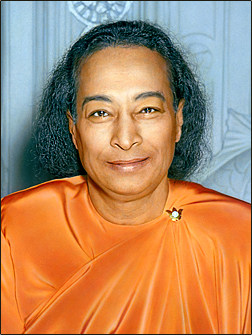
The Radiance of Compassionate Joy
In the profound words of Paramahansa Yogananda, he invites us to envision a state where our soul emanates joy through our heart, which in turn expresses that joy through our eyes. This beautiful imagery suggests a cascading effect of love and compassion, where our inner state of being can touch and uplift those around us, particularly those who are burdened by sadness. The stakes are high; in a world often overshadowed by despair, the ability to share genuine smiles can serve as a beacon of hope and connection.
Yogananda's quote encapsulates a deep spiritual truth: that our emotional and spiritual states are interconnected and can influence the collective atmosphere of our communities. By allowing our inner joy to manifest outwardly, we not only enrich our own lives but also contribute to the healing of others. This teaching is not merely about personal happiness; it is a call to cultivate a compassionate presence that actively seeks to alleviate the suffering of those around us. In this way, the act of smiling becomes a sacred practice, a form of spiritual service.
The image / the metaphor
The imagery in Yogananda's quote is rich and evocative. The soul, heart, and eyes are not just anatomical parts; they represent layers of our being. The soul symbolizes our true essence, the heart embodies our emotional capacity, and the eyes serve as windows to our inner world. The verbs "smile" and "scatter" evoke a sense of active participation in the world, suggesting that joy is not a passive state but rather something to be shared and spread generously. This interplay creates a vivid picture of how inner joy can transform not only ourselves but also the emotional landscape of those we encounter.
Diving deeper into the metaphor, we can see that Yogananda is not merely advocating for superficial happiness. Instead, he is pointing to a profound spiritual truth: that true joy arises from a deep connection with the divine and a commitment to love. The act of smiling, then, becomes a spiritual practice, a way of embodying the divine light within us. It is an invitation to cultivate an inner state of joy that is so profound it cannot help but overflow into the world, touching the hearts of others and encouraging them to find their own joy.
In the speaker's tradition
Paramahansa Yogananda's teachings are deeply rooted in the tradition of Hinduism, particularly in the concepts of bhakti and compassion. Bhakti, or devotion, emphasizes the importance of love and surrender to the divine, which aligns beautifully with the idea of allowing our souls to express joy through our hearts. This act of devotion is not self-serving; rather, it is a way of aligning ourselves with the greater good, recognizing that our joy is intertwined with the joy of others. The concept of kenosis, or self-emptying, also resonates here, as it suggests that by letting go of our ego, we can become vessels for divine love and compassion.
In the Bhagavad Gita, we find a parallel to Yogananda's message in the idea of selfless action (karma yoga). The Gita teaches that when we act without attachment to the fruits of our actions, we can experience a profound sense of peace and joy. This aligns with Yogananda's vision of scattering smiles; when we engage in acts of kindness and compassion without expectation, we not only uplift others but also cultivate our own inner joy. The teachings of the Gita remind us that our spiritual journey is not solely about personal enlightenment but also about how we can serve and uplift the collective consciousness.
Living the teaching
Consider a modern scenario where this teaching can be applied: walking through a busy city street, one might encounter countless faces, each carrying their own burdens. In such moments, the simple act of making eye contact and offering a genuine smile can create a ripple effect. A smile can break the monotony of a hurried day, offering a moment of connection that reminds us of our shared humanity. This small gesture can be transformative, not just for the recipient but also for the giver, reinforcing the idea that joy is a shared experience.
In a more personal context, think about a challenging relationship, perhaps with a family member or a colleague. When tensions run high, it can be easy to retreat into our own frustrations. However, if we approach the situation with the intention of allowing our hearts to smile, we may find that our demeanor softens, creating space for compassion and understanding. This practice of consciously embodying joy can shift the dynamics of our interactions, fostering deeper connections and healing old wounds. By choosing to smile through our hearts, we invite others to do the same.
A reflection
As we contemplate Yogananda's invitation to let our souls smile through our hearts and eyes, we are called to reflect on our own capacity for joy and compassion. How can we cultivate an inner state of joy that naturally spills over into our interactions with others? In what ways can we become conduits of love and light in a world that often feels heavy with sorrow? These questions invite us to explore the depths of our own hearts and consider the transformative power of a simple smile.



