Carrying Paradise Within: The Essence of Inner Happiness
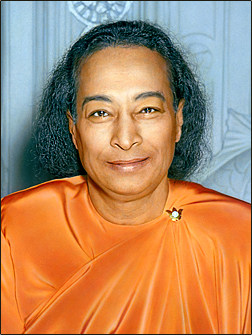
Paramahansa Yogananda's profound statement, "To work with God's happiness bubbling in the soul is to carry a portable paradise within you wherever you go," invites us to explore the nature of happiness as an intrinsic state of being. This quote suggests that true joy is not contingent upon external circumstances but rather arises from a deep connection with the divine. The stakes are high; in a world often marked by chaos and discontent, understanding how to cultivate this inner paradise can transform our lives and interactions with others.
Yogananda's words resonate deeply in a time when many seek happiness through fleeting pleasures or material gains. By emphasizing the notion of "God's happiness," he points us toward a more profound source of joy that transcends the ephemeral. This inner happiness, described as "bubbling," evokes a sense of vitality and spontaneity, suggesting that when we align ourselves with this divine essence, we become conduits of joy, radiating it into the world around us.
The image / the metaphor
The imagery in Yogananda's quote is rich and evocative. The phrase "God's happiness bubbling in the soul" conjures a vivid picture of an effervescent joy that is alive and dynamic, suggesting that happiness is not a static state but a vibrant force that can be accessed at any moment. The use of "portable paradise" further emphasizes the idea that this inner joy is not confined to specific locations or situations; rather, it is a state of being that we can carry with us, regardless of our external circumstances.
Diving deeper into the metaphor, we can see that "paradise" symbolizes an ideal state of existence, one characterized by peace, love, and fulfillment. By describing happiness as something we can carry, Yogananda encourages us to recognize our agency in cultivating joy. This perspective shifts the focus from seeking happiness outside ourselves to nurturing it within, allowing us to experience a sense of paradise wherever we may find ourselves.
In the speaker's tradition
Paramahansa Yogananda's teachings are deeply rooted in the spiritual tradition of Hinduism, particularly the concepts of bhakti (devotion) and prajna (wisdom). In this context, the idea of working with God's happiness aligns with the practice of surrendering to the divine will, allowing us to experience joy as a natural byproduct of our connection with the divine. This inner happiness can be seen as a manifestation of dharma, where living in accordance with our true purpose brings about a sense of fulfillment and joy.
Moreover, Yogananda's emphasis on inner happiness echoes the teachings found in the Bhagavad Gita, where Lord Krishna speaks of equanimity and the importance of finding joy within oneself, regardless of external circumstances. In Chapter 5, Verse 10, Krishna states, "One who performs their duty without attachment, surrendering the results unto the Supreme Lord, is unaffected by sinful action, as the lotus is untouched by water." This illustrates the profound connection between inner happiness and spiritual practice, reinforcing Yogananda's message of carrying paradise within.
Living the teaching
Consider a modern scenario where this teaching can be applied: imagine a busy professional navigating the daily grind of work, deadlines, and interpersonal challenges. In such an environment, it is easy to become overwhelmed and lose sight of inner joy. However, by consciously tapping into the "God's happiness" within, this individual can approach their tasks with a renewed sense of purpose and positivity, transforming their work experience into a manifestation of their inner paradise.
In relationships, the application of Yogananda's teaching can be equally transformative. Picture a moment of conflict between partners, where frustration and misunderstanding threaten to overshadow the love they share. By invoking the inner happiness that Yogananda speaks of, each partner can choose to respond with compassion and understanding, allowing the bubbling joy within to guide their interactions. This shift not only fosters deeper connection but also creates a shared space of paradise, where love and understanding flourish.
A reflection
As we contemplate Yogananda's profound insight, we are invited to reflect on our own lives: How often do we seek happiness externally, and how can we cultivate the inner paradise that is our birthright? This question encourages us to explore the depths of our own souls, seeking the divine happiness that resides within. In doing so, we may discover that the key to a fulfilling life lies not in the pursuit of external validation but in the nurturing of our inner connection to the divine.



